
Dials are attempts at a conversation
Nikki got into sales by heckling a car salesman. Her case for the phone is that it is the fastest route to an answer, and the no was never the part that hurt.
 Hosted by Alex McNaughten
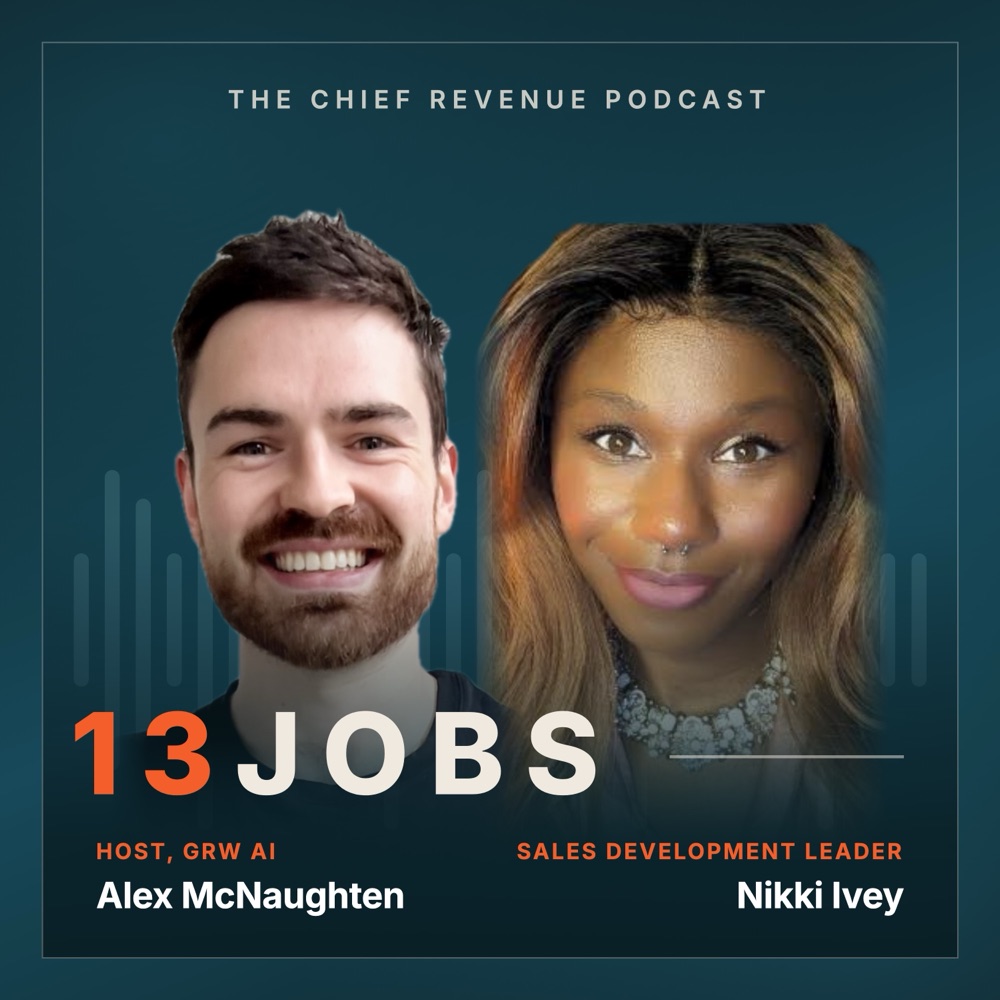
Nikki Ivey · Sales Development Leader
Nikki Ivey is a sales development leader with two decades in the profession, going back to selling cars in Austin in 2004. She co-founded SDRDefenders, which was acquired by Pavilion, and Sales For The Culture.
She is a LinkedIn Top Voice and a two-time Salesforce Top Sales Influencer, and writes for a large audience on sales development, leadership and culture. Much of what she describes here comes from doing the job, leading the teams and then building the strategies.
In this episode, we discuss:
- Heckling a car salesman, and being chased out of the lot with a job offer
- The SDR job that turned out to be a podcast
- Why phone first: the fastest route to an actual answer
- Reframing dials as attempts at a conversation
- If everyone believes the phone is dead, being alive on it is the edge
- Falling email rates, and what AI-written outreach did to them
- Why people abandon the channel after judging it by email maths
- Hiding in a cubbyhole, terrified of being overheard
- Role plays as the final boss of phone sales
- The impact question, and accepting "it's easy" as an answer
- Curiosity in place of heavy pre-call research
- The Post-it note from a twenty-year car salesman
Quote of the show
“I started to think of them not as dials, but as attempts at a conversation.”
Key takeaways
- The phone gives you an answer. Email leaves you in limbo. For most sellers the no is not the painful part, the maybe is, and the phone resolves it in one attempt.
- Dials are attempts at a conversation. The reframe is small and it is what makes the activity bearable enough to keep doing.
- The abandoned channel is the open one. Email rates are falling, social is crowded with content. If most of the industry has decided the phone is dead, being alive on it is the whole advantage.
- Do not judge call volume by email maths. Fifty a day may simply not be enough in your industry. People set the target from email intuition, miss, and conclude the channel does not work.
- Research the list, be curious on the call. The research belongs in choosing who to call. On the call, a relevant persona-level impact question beats a personalised fact scraped off their profile.
- Accept "it's easy" as an answer. If they say they do not have the problem, take it and move on. Not everyone you dial has to be in market for the call to have been worth making.
- Some will, some won't, so what. A car salesman of twenty years wrote it on a Post-it and handed it over. It is still the cleanest answer to rejection anyone has offered.
Transcript
Nikki, good to have you on the show. How you doing?
Alex, I'm doing so well. I'm having a wonderful day. I, um, I don't know if you follow college football in, in the US, but my team is Florida State and we beat LSU again.
So nice.
So really excited about that. Got to watch, um, the reason why I'm a Florida State fan, Deion Sanders. His team went out there and shocked the world. Um, so I'm still kind of riding high. Nice.
Nice. Awesome. Well, for those of you who don't know Nikki, firstly, thank you for coming on the show. For those of you who don't know, you're an outbound whiz is probably the best way I describe you. And you're working for a company called OpGen right now. But tell us a little bit about yourself, how you ended up where you are and built this community on LinkedIn as well whilst doing it.
I ended up here by pure happenstance like most They book people. Um, and we'll get into the long story of how I first got into sales. But long story short, I went on to a car lot with a friend of mine. She was looking to buy a car. This guy was trying to sell her a car, and he was just doing all the salesy things that we see people do in movies that makes us not want to interact with them.
And I was trying to, like, get him to break veneer, right?
Yeah.
Like, get him to break character. But he couldn't. And so I basically heckled him, which, sorry if you're out there. But as we were leaving, his boss chased me out the door and was like, hey, you ever thought about sales? And that was the beginning of me being a salesperson. Yeah, it was wild.
It was wild. And so, you know, I still was kind of, you know, needed a little bit more more training, more like life skills like everybody else. So I went to school, I actually studied broadcast journalism.
Okay.
And what I'm most proud of is I still use a lot of those, a lot of those principles today because at the end of the day, they're communication principles. Um, which, which is part of how, you know, to answer your broader question, how I got here. So I started as an SDR. And quickly learned that, you know, there's this level of, and this is like in 2015, 2016, there's this level of creativity, right?
And all around boisterousness that kind of had to lie dormant with the way that sales were done then.
Mm-hmm.
Because it was largely one channel back then, right? Maybe, you know, email blessed which we were still calling them back then, from marketers. But then I found myself in this role where, yes, I was an SDR, but the way the job went was I was actually hosting a podcast. I would look on LinkedIn and just find people who were talking about B2B sales topics and reach out and say, hey, I think our audience could really benefit from hearing this.
So we have the conversation. I ask them to talk about 3 things they really want the audience to know about or leave the conversation. And then on that call, this person who I'm interviewing, who is someone that I want to actually do business with, telling me all the things that are important to them.
Hmm.
And we're simultaneously collaborating on content. So at the end of the conversation, it was as simple as asking, all right, so we've just done this. You, by the way, are incredible at this. You should do hashtag all the podcasts. I saw that you're, you're doing a lot of content on LinkedIn. Have you ever thought about podcast, right, to impact that brand awareness?
That was it. I just asked the question. They say yes or they say no. And it just again clued me into, okay, content is the thing that builds relationships, that draws people to you and that ultimately gives you a leg up on the competition. It's why, though I am a phone-first seller, I will never be a single-channel seller.
And that just led to other opportunities like being on actual marketing teams, which led to other opportunities. Anyway, long story short, within a 3-year timeframe, I went from being an SDR to being a CRO, and I attribute that to 2 things. Uh, this phone-first mentality, um, because it's just the quickest way to get to a yes or no and set yourself apart.
And B, this sort of semi-marketing skill set, uh, that I've been just trying to learn and perfect. And now it's sort of the way people do business all the time.
Yeah.
But yeah. It wasn't, it wasn't then back in my day.
No, but you're right. You know, it, it, it has changed a lot in terms of how I think salespeople's jobs has definitely changed and content is a part of it now. Like content and being a little bit different because you're right. Like a lot of sales has just been quite dry for years and years.
Like when I started in outbound, it literally, it was exactly as described. Email blast and cold call, and that was it. Um, so before we dive into our topic of phone-first selling and outbound, um, I'd love for you to share that story about how you ended up in your current role, because I think it's just the perfect— it's the perfect, um, example of creativity, um, in a sales setting.
So I'd love for you to share that if you're cool with it.
Yeah, yeah. So like many of my sales colleagues, I found myself on the job market this year. It's been kind of tough, but we thugging it out. But so I found myself in the job market and I just got to this point where I was like, I've tried relationships, you know, and, you know, going to my network.
I, of course, have tried, you know, all the things that we as salespeople try to get a foot in the door. But I was already going to dress up. As Princess Leia on May the 4th. That's the thing that I do. Like, you should know that about Nikki is I, I'm a fan of these things.
And so I thought, all right, I need, I need the help of my network. This is an opportunity. And I think I see content, generally speaking, as like a homing beacon, right? To find your tribe and draw people to you who are about what you're about. Anyway, so I post this video. As Princess Leia, I look into the camera and I say, help me, Obi-Wan, you're my only hope.
And then the caption on the video was, you know, a woman's place is in the rebellion, dot, dot, dot, and on your sales team. And another Star Wars May the 4th nerd like me happened to see this, right? He's the VP of sales at the company I work at now, OpGen. And yeah, he basically saw it, went to the rest of his team and was like, let's talk to this woman.
And this is from the time I posted to the time they offered the role is maybe 2, 3 days.
Yeah, it's amazing. Such a cool story. I love that story. That's like I said to you before we started rolling, that's my favorite, my favorite job search story yet. So that's awesome. Let's talk about our topic today, phone-first selling. Why the phone? Why phone first?
I think the first reason is because it is the quickest way to a yes or a no.
Okay.
That factor alone is what built that early, like, allegiance, if you will, to phone-first selling. And that's because For most salespeople, it isn't the no that hurts the worst, especially when you're doing prospecting. For most of us, it's the maybe, right? Or the hearing nothing. It's the living in limbo, not knowing. I sent this email, they didn't respond.
I know they read it. What's going on? That type of existential crisis, that being ghosted. Can cause. And so at first it really was, this was me protecting my energy. This was me protecting my mindset. Like, look, I just want to get to the conversation. And then I started to measure my success, like unit economics-wise.
I, I went from counting calls, right, to factor that in, right? 50 calls to a conversation and blah, blah, blah. And I started it at the conversation point.
Mm-hmm.
Right? So I started to think of them not as dials, but as attempts at a conversation.
Hmm.
And that shift in mindset made the calls a lot easier. So there's that piece, there's that mindset piece. The other, I think it's pretty obvious, is that, I mean, all of the LinkedIn salesfluencers, not all, many seem to believe that the phones are dead. If everyone else thinks the phones are dead, but I'm alive on the phone, I'm already cutting through.
Yeah.
Email response rates are dropping, right? Precipitously. It's fine. It's, that's the climate that, that we're in. And it's even increasingly more difficult to get in front of people on on social now that more people have started to create content. So again, this particular channel is the way to cut through these days. And I think thirdly, why is that important as a salesperson, especially if you sell to sellers, but even if you don't, that phone call gives you a much bigger opportunity to demonstrate who you are, what you know, and why, you know, it matters.
There's a level of passion that can only be communicated in a conversation.
Yeah.
You know, versus I can't read someone's passion. I can't read their conviction, uh, in an email. So, so those 3 things, right? Are what has me like, okay, we gotta do this. Uh-oh. One other little bonus piece.
Yeah.
Um, it's this, what keeps me coming back, um, is this idea of, you know, I'm tired. I don't wanna make any more calls. I'm drained. Let me make one more phone call. And then I do. And the person on the other end says, wow, your timing couldn't be better.
Yeah. Yeah.
And so then, right? And so then when I think about this is an opportunity that I would not have known about, I would not have been aware of it if I relied solely on any one channel, right? Because the fact that this person is answering the phone after I've sent emails might suggest, right, that they haven't opened or responded to, you know, seems to suggest that this is their preferred channel.
So, I'm just meeting people where they are and having fun and having conversations and, you know, shooting my shot. And it's been successful, particularly recently, because I'm, you know, calling up these large Fortune 500 companies, in some cases talking to like chief technology officers, which I know can be really intimidating a lot of the time.
Mm-hmm.
But just calming down, asking a question, attempting the conversation. And trying to see, does this person have the level of passion and conviction for their space that I've developed in working with people in their space? And when I find someone, when I find that match, those are the deals that move more quickly.
And more importantly, those are the people who become the the happiest customers and evangelize. And it all starts with that one phone call, that one willingness to put yourself out there and have a conversation.
Well, I'm sold on the phone after that impassioned pitch. There's a few things I wanna unpack there. I think one thing you mentioned is email open rates are like going down. And I think that's kind of been the trend for a long time, to be honest. But with the advent of AI-generated content, I think that has, that has really just, yeah, poured gasoline on, on the burning dumpster fire that is a lot of outreach.
Why do you think though that that a lot of the salesfluencers, as you describe them, are calling cold calling dead and saying the phone is dead. You know, when they're looking at this picture of declining email outreach, getting harder to stand out from a content perspective, why are they saying the phone's dead when there are clearly people like you making it work?
And I know a lot of SDRs who swear by the phone still and have done for the last few years. So yeah. Any thoughts on that?
Yeah, I mean, I think it's a couple of things. First, whenever this conversation comes up, the conversation about phones, people worry that it's going to take too many calls, read differently, too much time to produce the same result that I could with an email because I could make the case that the phone is faster.
And I will make that case. I have made that case. But as an individual, yes, I get to the yes or no faster. But calling 50 people is going to take longer than emailing 50 people if you're talking to a segment of people and you've already got relevant messaging, right? Sales-ready messaging for them.
So I think that's what it is. I think it's a— at least this is what I hear from my clients, right? It's a time thing that they believe I had this SDR. I had them on the phones for 2, 3 hours today and nothing because they're used to, from an email perspective, outbound being, I mean, most AEs I know are sending maybe SDRs, maybe 50 emails a day.
Mm-hmm.
Right. Which makes sense, I believe. For email. But people are reluctant to accept that 50 calls a day, depending on your industry, might not be enough to get you the result. That being the case, they abandon the channel altogether when the truth is—. Right? When the truth is, if we keep our minds open and think about, well, how do these 2 things interact with one another, then we start to see the results and we start to understand that it's in fact not dead.
But that's what I think. I think it's— they hear it when they hear phones, they think you're being asked to choose between quality and quantity when that just hasn't been my experience. In fact, like we talked about, for me, that passion, that conviction, there's your quality.
Mm-hmm.
And because I am so passionate and convicted about those things, yes, yes, I can call 75 people in a day. And if I talk to whatever percentage of those people, everyone's going to get the same passion because I believe in what I'm doing, which, you know, some folks aren't fortunate enough to be doing.
So there's that. And I think that sometimes it, you know, people run businesses. And the way that sales tech is going, it doesn't feel like it's as booming a space in terms of new startups and people who are making money. It doesn't feel like it's as big a moneymaker to talk about the phones as it is to talk about email.
I mean, think about it.
Yeah, that makes sense.
Right? This webinar is coming up, or this PDF or SlideShare on LinkedIn just came out. Almost all of them are about email. They're telling you how to generate one with AI, right? They're telling you to show up to this webinar where I'm going to tell you these 3 subject lines that will 10x your reply rate.
Yeah.
And so a lot of it is just There's a hunger for that kind of content because the direction that things have gone. But I think just like you said, because these email rates have been dropping and bigger than that, buyer trust has been diminishing as well. And if AI can write an email, I'm sure AI can also make phone calls in some capacity.
But right now, phone calls are the most human way to communicate with folks. So yeah, I think that that's what it is, is they believe it's quantity over quality to choose the phones, and they are giving the people what they want in terms of the content that's out there.
You know, the other thing I think is that cold calling is intimidating and a lot of people find it hard. So it's just easy to send an email. So people wanna be told that. They wanna be told that actually you don't need to cold call.
Yeah.
Because everyone, like a lot of people intimidated by it, they're scared to pick up the phone. So I think there's a little bit of that too. But it is interesting that all the top performing outbound folks I speak to, they're dialing and they're having great conversations. Which kind of begs the question, because I think a lot of people's experience, especially when they start out in sales or start doing calls, is that it's really hard.
It's difficult to stand out. Their success rate's not great. They're dialing a lot and they're not getting somewhere. How do you do a good call? Like, obviously you're a master at this. You, you know, so enthusiastic and, you know, I can feel the energy come through. You know, this call right now and I'm imagining that's what you're bringing to your cold calls.
But like, how do you turn that on? How do you stand out in a call? Yeah. How do you think about what a good call looks like?
It hasn't always been this way.
I should say.
Okay. I did, I think I did show up to SaaS sales with the same, you know, gregarious nature, but I was afraid to get on the phone. Like I would hide, like my manager let me go back and there was a tiny little cubbyhole. You know, with dividers on it because I was terrified that if somebody heard me on the phone and I said something dumb, uh, then it was just gonna be the end of the world.
Yeah.
So part of it is, yes, it takes reps and it takes grit. And the only way to get that grit is to keep doing it even when you do feel stupid and even when you are afraid. So the next step in that, right, once this leader was kind enough to hold my hand through making these calls.
The next role I was in, they were really heavy, right? It was a training-driven culture. So regular batting cages, right? Regular call reviews and role plays, which is the scariest of them all, right?
Right.
Role plays are the freaking Bowser of outbound phone sales. The big boss, the King Koopa. And, you know, with good reason, like I just mentioned, it's going to be scary if your peers are there. But going through that and understanding the structure of the script, the heuristics of it, right? And understanding, uh, the words themselves aren't usually what make the call, right?
Mm-hmm.
It's The specific question that you ask will make or break the call. The question that you ask and how soon you get to it, right? That impact question. So say for me, I'm, you know, I sell to sales leaders and founders at companies with small teams, right? Because like I was explaining to you offline, in my role as a CRO, it was just me selling.
Mm-hmm.
And the only alternative I thought I had was regen, which we might get to in a minute. But anyway, it's this, I'm doing it all on my own. So I'm sorry, I lost my train of thought.
No, no, you're good as gold. What does a good cold call look like? Like, how do you— Yeah.
So, so there's that, there's the understanding the structure of it. But the thing that's working for me the most is curiosity.
Okay.
If If I can bring curiosity and passion into a conversation along with a well-researched, relevant persona-driven impact question, generally speaking, that's what's going to work. And so when I say curiosity, I mean in place of a lot of the heavy research that many sellers are doing before they reach out. And that's again coming from the LinkedIn SaaSfluencer sphere of influence.
And it's not wrong necessarily, right? This idea that if you're going to call someone, then you have to be crystal clear on what your reason for calling is.
Mm-hmm.
My challenge though is, does that reason have to be a business reason that you know? Because to an extent, you can't really know. If they have that business problem until you ask.
Yeah.
So I'm calling— if I see that you are a leader at a company and you have a small team altogether, I am wondering if that means that you're running into some of the same things that the folks I work with are having. Specifically, I would pose the question, how easy is it? You've got one person that's trying to do you know, manage pipeline, do outbound prospecting, and because it's such a small business, they have like administrative, you know, stuff around the, around the business that they're doing.
How easy is it for them to get all of that done? Right?
That's your impact question.
That is my impact question, right? And if they, or a version of it, and the thing is, if they say it's super easy, I accept that, right? I might ask another follow-up question, but I don't put all this pressure that everybody I talk to has to be in the market. So what we're talking about is a level of curiosity.
Yeah.
Outside of the research that you need and a level of, you know, some knowledge, right, of not necessarily this particular person, which a lot of the personalized, well-researched outreach is based around, but around a general relevant business trigger. But further, right, as it differs from emails and a lot of this outreach, I'm not going into that conversation pretending that I know that they face this problem, simply that they're in that category.
And I use that language. I use that language. So I saw that you have this sales team. You've got about between 5 to 20 people. And it got me wondering, because it did, that's what I say. And it got me wondering, How easy is it?
Yeah.
This is how I speak. It's an organic way to ask that question. And it's working for me much better than if I tried too hard to tailor it to that specific individual. Also, like, not to mention, not everybody's persona exists on LinkedIn or in some way where you're going to be able to have access to all this, you know, information about them.
They've been on this podcast, they were featured in this blog, right? You sell to salespeople, you're more likely to find that. But if you're selling to CTOs or you're selling to, you know, folks in these supply chain folks, it's gonna be a lot harder. So you have to just take a deep breath, let it go, put yourself out there and ask the question.
Yeah, I think what, you know, what I'm hearing here is like, it's not don't do the research, it's not don't know your personas, but it's like, don't just rely on that, like actually be curious in the conversation too, um, and come at it from a place of I'm not here to convince you, I'm here to see if there's a genuine need here and see how things are going in your world.
And if I can help, then great. And if not, I'm not going to be tied to this outcome. Is that kind of fair to say?
Yeah, yeah, that's, that's basically, that's basically it. I think Another way that might help people sort of reconcile this research versus curiosity piece is that the research is taken care of in the list. So you research the topic or the segment, the industry, whatever your ICP criteria are, you research to find those people so that then you can create Sales ready messaging that is relevant enough that you can get it out quickly, right?
Not listen. There are everybody on their territory list might have one or two you know companies that you are going to have to do a tailored approach with no matter what. But beyond that, again, that's one of the things that gives me so much confidence going into my conversations. If I if I sell consulting around, say, e-commerce, and I'm looking for people who use a particular e-commerce platform, I can get a list of people who use that actual platform.
And then if I know further that their version of the platform, say, is being sunset, there's a new one coming out, they're going to be making a transition, I can control for that as well. So now I know I'm calling people who have this, you know, this platform that I know I can help with and who may be going through this process that can give people problems.
So not going in blind, right?
No, no.
I'm not going in knowing nothing, you know? And again, it's, it's, it makes it so much easier to just relax and be curious and make friends. People want to help you when you don't call and try and sound like you know better than they do about their business.
Yeah, yeah, I think that's a good point too. It's humble curiosity rather than kind of salesperson arrogance and pressure, uh, definitely works a lot better. Um, I got 2 final questions for you.
Rejection.
It's kind of part and parcel of sales and certainly part and parcel of any kind of outreach. How do you handle it? Have you figured out anything that— yeah, how do you handle rejection?
So I pour a glass of wine. I'm just kidding.
By the end of the day, like many glasses later.
No, but I mean, there is this element, right? The answer to the question is to, for me anyway, to accept it, like you just mentioned, as part of the job and try to detach from the outcome. That curiosity piece is what helps me detach from the outcome.
Mm-hmm.
So it doesn't end up feeling like rejection, if all someone has said is, I'm not experiencing the thing that you help people with, it's not actually rejection, is it? It's information helpful for you. It's a data point, right?
Yeah.
Yeah. Which can help in so many different ways as far as how you measure what it's going to take for you to build pipeline even. So first, I don't really experience it as rejection the way I used to, but I think it's a fair question to ask. Because it hasn't always been part of sales culture to even acknowledge, you know, the way that it can impact you if you are experiencing no after no after no.
There's very few jobs in the world that subject you, right, to this volume of no.
Even when you're doing really well, like you're probably still facing more nos than yeses in sales, irrespective of whether you're an SDR, an AE, VP, 30-40% conversion in your, across your pipeline, that's damn good.
So I remember when this first, you know, got ingrained in me was when I was selling cars.
Oh yeah.
You know, I had spent, we worked every, this was in Austin, everybody had to work every Saturday, 12-hour shifts. I was out there in a pencil skirt and high heels trying to sell some cars, right? And so I had been with this one individual who was, you know, looking to buy a car and we had so much fun together on the test drive.
Uh, we were playing Taylor Swift and stuff. It was tight. But anyway, spent all day with that person. They didn't end up buying a car because I couldn't, you know, make the money part work for them. And that felt like rejection.
Right.
Because I was like, this person spent time with me. Experienced that passion, that conviction. And in this case, yeah, I know a little something about how to help you get the car you want. And so I was kind of sad about it. And this, this salesperson, this guy who had been selling cars for like 20 years, didn't say anything to me.
He just takes a Post-it note and he writes, SW, SW, SW, and a smiley face.
Yeah.
And I looked at him and I was like, what does this mean? Some will, some won't. So what? That's it. Right? And so he just— and, and for me, he made it seem so simple in that moment. I had to like confront, well, maybe I am putting too much weight on this. Maybe a lot of the, you know, the receiving it as rejection or the kind of like doubt that can creep in When, you know, you think you did everything right and it still doesn't go your way.
A lot of that is probably internal work I can do to set myself up to be able, you know, to experience this job in a way that feels happier and healthier. But it starts with accepting that some will, some won't, and so what?
Yeah.
So what? There are people who want to talk to you, who need what you have. Just look for those people, you know, forgive the ones that don't.
That's it. Forgive them. Last question. Knowing everything you know today, go back first day on the job in sales. What's the one thing? And maybe you've already answered this, but what's the one thing you wish you knew?
I wish that I knew that I didn't have to follow the same career path, the same sort of cookie-cutter trajectory that every other salesperson is sort of socialized into wanting, right? It's very, you know, sort of sequential. I'm an SDR, I must want to be an AE next. I'm an AE, I must want to be, right, some VP of sales or an SDR manager or whatever it is, right?
And those are all, you know, fair and worthy things to pursue. But what I didn't understand is that that is not necessarily, right, taking this upward to leadership path, not necessarily what makes me happy. But the culture at the time, I think we have to be careful. Sales culture at the time just kind of pushes you.
And then you start to feel like, oh, if I don't If I'm an SDR and I like this job and I don't want to be an AE, is there something wrong with me? If I am an AE and I'm not chasing some VP of sales or C-suite title, does this make me lazy?
Does it mean I can't handle it? Well, it might just mean that you would rather go into content because that's the part of sales that resonated with you the most.
Mm-hmm.
It might just mean that you could go into writing copy because again, you realize, oh, I had a lot of fun. Right? Writing call scripts, writing emails, it resonated with me. So if I had known that sooner, I would've started creating content sooner, and I would've started letting my impact on the industry come from that place versus trying to like prove something, right?
I belong. I can be an AE. I can be a sales leader. But other than that, I mean, I did prove it.
So I think that's a really awesome, I think, reminder lesson for folks that you don't have to take the most obvious path, and that if you're passionate about something and that's actually what you want to enjoy doing, you can follow that and turn that into a super successful career. So yeah, I love that.
That's, that's great. Nikki, I've really enjoyed this conversation. Where can people find you, connect with you, if they want to work with you? Yeah, where's the best place to go?
LinkedIn. I live there. So LinkedIn is by far the best place to find me because I'm not even kidding, I spend so much time there. I would not suggest email. It's a dumpster fire. But beyond that, I did mention opt-in. So if you have heard everything I said, and are still not convinced, your arms are folded, I'm not going to make cold calls, Nikki.
Ain't nobody got time for that. I got time for that. So what— so Option takes that off of people's hands. We recognize not everybody is going to be as passionate about doing that outreach and doing that opportunity follow-up as we are. Um, so, so reach out if that's something that you're, that you're struggling with.
Otherwise, I like to make friends, so Connect with me on LinkedIn, say hi, and if I can be a resource or be helpful at all, I'd love to do it.
Thank you for coming on the show. Really enjoyed it. I appreciate your time.
Thanks so much.