All episodes
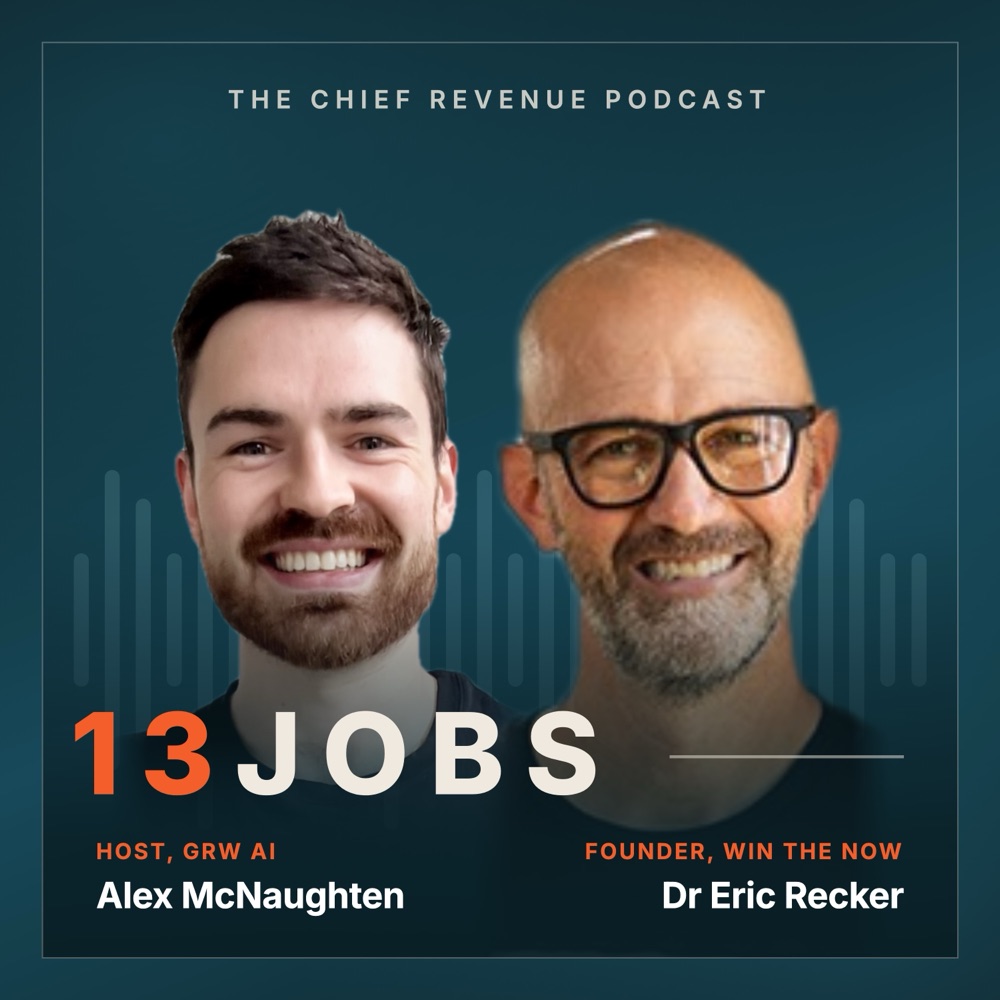
There is always another now with Dr Eric Recker
Episode 041 · Aug 30, 2023
There is always
another now
0:0024:01

There is always another now

Twenty years into dental practice, COVID handed Eric the first discretionary time of his adult life. What he did with it became a way of thinking about attention.

Hosted by Alex McNaughten
Share

Dr Eric Recker · Founder, Win The Now

Dr Eric Recker is a dentist, keynote speaker, coach and author, and the founder of Win The Now. He is also, by his own account, a husband, a father, a pilot and a recovered triathlete, which he offers as evidence that he overcommits easily.

Win The Now came out of the pandemic, when his practice was shut and he had real discretionary time for the first time in almost twenty years. He now works with practice owners and leaders on burnout, attention and getting out of their own way.

In this episode, we discuss:

  • A dentist, a pilot and a recovered triathlete walk into a podcast
  • Where Win the Now came from, and a practice shut by the pandemic
  • Carrying a supercomputer built to interrupt you
  • Not every moment gets a win, and why that is the point
  • Leaders who look after the team, the number and not themselves
  • Why encouragement pays the person sending it too
  • Working down his contact list sending unprompted encouragement
  • Waking at five, dreading seven, and where this all started
  • The relationships that notice before you do
  • The warning signs: reactivity, snapping, and the quiet going missing
  • The excuse that there is no time, and the time audit that answers it
  • Starting day one with an overly full book, and never easing off

Quote of the show

There's another now right around the corner, and you have an opportunity to get back on a win streak.
Dr Eric Recker, founder, Win The Now

Key takeaways

  • Not every moment gets a win. The best baseball teams in history win about two thirds of the time. Losing one now matters less when another is arriving immediately behind it.
  • Distraction is engineered, not personal. The device in your pocket was unimaginable twenty years ago and is built to take the moment off you. Losing it is not a character flaw.
  • Leaders protect the team, the number, and not themselves. That order is how burnout becomes an epidemic. It usually shows up as being empty rather than as being busy.
  • Encouragement pays the sender. There is a measurable return to the person sending it, before it reaches anyone. Working down your contact list costs nothing and is not weird as often as you fear.
  • Other people notice first. Relationships where someone can tell you that you are not yourself are the earliest warning system available. Without them you are exposed.
  • Reactivity is the tell. Snapping at people, being quick to anger, losing the quiet in your week. Those arrive well before the collapse does.
  • "No time" does not survive an audit. Even the busiest people have it. Write down what a week actually contains and the argument tends to fall apart on its own.

Transcript

Alex McNaughten

Eric, good to have you on the show. How you doing today?

Dr Eric Recker

I'm doing great, Alex. Good to be here.

Alex McNaughten

No, it's great to have you here. For those of you who haven't Encountered Eric before. He's a dentist, a father, a husband, coach, speaker, and a recovered triathlete. But tell us a little bit more about yourself. And today we're going to be talking about winning the now.

Dr Eric Recker

Yeah, Alex. So some of those things probably just speak to the fact that I get myself overcommitted pretty easily. I forgot to mention pilot in there as well. If I if I didn't wear enough hats, that would probably be. Probably be another one to add. But really what I'm hoping to do in this part of my life, and I guess being 46, I'm most likely in the second half of my life, I want to help people shorten the distance to where they can become, how they can become their best version.

And a lot of that is through learning to help them win the now.

Alex McNaughten

Talk to me a little bit more around what, what does winning the now mean to you?

Dr Eric Recker

Yeah. Win the Now was something that I discovered during COVID And I don't know about you, Alex, or many of the listeners here, but COVID had the potential to kind of be a time for reinvention for us. It was the first time in my life where I had really had a lot of discretionary time after almost 20 years in dental practice.

My dental practice was shut down because we were seen as kind of the evil spreaders of COVID with our aerosol procedures that we did. So, our office had to be closed for 8 weeks and we could only see emergencies. So, I had discretionary time, which was an odd thing for me, and I committed to spending 30 minutes a day in quiet because my head was just spinning and I needed to find some quiet time.

During that time, I discovered that phrase, win the now. And really what Win the Now is all about is living in the moment that you're in, being in the same space, mind and body. So right now, a win in this time that we're at right now is the two of us having a great podcast.

Earlier today, a win was me working on an upcoming event that I'm leading. Later today, a win is probably going to look like a meeting that I have tonight. And it's all about being mindful of not being stuck in the past and not being worried about the future. But what does right now look like?

And what does a win look like in this moment that we're in right now?

Alex McNaughten

Yeah, it's an interesting concept. And I think it's something that a lot of people find quite difficult. Like, I'm speaking from personal experience, you know, I'm, I'm the classic you know, future thinking. Oh God, I've got this, this, this and this on and struggle to, you know, sometimes, you know, be as present as probably I should be.

And it's certainly something I've worked on, but I'm still not there yet. So talk to us maybe before we dive into the how do you do it, talk about why it's so important.

Dr Eric Recker

Yeah, we're in a time in history and you know this as well as anybody that we've never, it's never been easier to be distracted. So we carry around supercomputers in our pockets that were unimaginable 20 years ago, the amount of ways we were able to be distracted. You can have your phone routine where you pick up your phone and you go through your email and your news and your social media and maybe get stuck in YouTube for a while or some reels.

And all of a sudden, you've burnt through 2 hours, your mind is fried. On something that was supposed to be, I guess, restful, and you've totally lost that time. So I'm not one of these people that says phones are completely bad, but I think we have to be conscious of what we are allowing them to do with our most valuable currency, which is our time.

Time is what we have, and the present time is truly the one thing that we have. Right now is what we have. So, we certainly have to plan for the future. We certainly have to learn from the past, but being in that moment. And so, for me, one of the things that I've had to do is one with my phone.

I've had to ask the question when I'm getting ready to reach into my pocket for it is, why am I picking this up? What's the purpose of picking it up? Am I picking it up to Avoid something that I actually need to deal with in the present? Am I feeling uncomfortable? Is there something I need to address and I just want to zone out and get a nice little dopamine drip for a little while?

Is that why I'm picking my phone up? And really, you look at a moment and what does a win look like? So during this half hour or so that we're going to be spending together, A win looks like a great conversation. A win looks like creating value for your listeners. A win looks like maybe sharing an idea that someone else can take and it can help them become a better version of themselves.

And then when I'm at my office, my schedule is broken down into 15-minute increments. So I look at each one of those increments. What does a win look like? Maybe it looks like getting a good procedure done. Maybe it looks like a great conversation with one of my patients when we're at the end of the appointment.

Maybe it looks like a great conversation with one of my team who's struggling with something and I can help them work through that. So it's just breaking our life down into those simple moments. And then what does a win look like? Because I think I'm going to guess 90-plus percent of people who are listening to this like to get wins.

Alex McNaughten

Yeah, I'd say so. And I think especially in sales, which is sort of a naturally competitive industry profession, you know, winning, you want to stack as many wins as you can in the day in some, in some respects. One thing I was curious though, listening to you talk there, is does every moment need a win?

Dr Eric Recker

Yeah, I love that you brought that up because every moment is not going to get a win. You know, you look at the most successful sports teams of all time and baseball, a winning baseball team only gets a win about 2/3 of the time, even the best teams ever. So then what Win the Now, what's really great about it is if you take a loss, No big deal.

There's another now right around the corner, and you have an opportunity to get back on a win streak. Because for me, what I noticed in a full day, if I had, let's say I had a grumpy patient, which I'm sure you can imagine in a dental practice, I get a few grumpy patients, or a procedure doesn't go as well as I had hoped it would.

I can look at my whole day and say, I had that one procedure that wasn't great, and I can define my day Based on that, or I can remember all the wins that I got during the day. So in a sales environment, you're not gonna get a win every time. But if you can look at the next moment, dust yourself off from that loss, and maybe it wasn't a loss, maybe you look at it and okay, I didn't get the sale, but I created a new connection.

I learned about something new. I learned a new technique. Now I get to move on to the next one. So it may not have been as big of a loss as I thought it was. But the next potential for a win is right around the corner.

Alex McNaughten

Yeah, that's it. That's an interesting reframe. How does this relate to, you know, I guess, self-care, health and wellness, you know, and I suppose with a particular emphasis on mental wellness?

Dr Eric Recker

Yeah, I think one of the biggest things that we can do as leaders is not take care of ourselves. We get pretty concerned about taking care of our team. We get really concerned about taking care of the bottom line, making our sales, doing all of those things. But what we don't do is take great care of ourselves.

So we have an epidemic of burnout. And I think burnout more times than not is the result of we're just empty. We just don't have anything left in the tank. So constantly asking ourselves, what is something that I can do to help refill myself? And it doesn't have to be anything really life-changing or earth-shattering.

It can even be a moment of if we're driving somewhere and we're at a stoplight, maybe we just take a little time for quiet. Maybe we just take a couple of really deep breaths during that time and refresh a little bit. Maybe instead of looking at videos for a while, maybe we can use our phone for something positive.

Maybe we can send someone else an encouraging text. Hey, Alex, I was thinking of you. Hope you're doing well. I saw this podcast I wanted to share with you. Something along those lines, because the cool thing about encouragement, if I send you an encouraging text and say the benefit that you get out of that, is it a 10?

I get 70% of that benefit just by sending that encouragement, which is crazy to me. And there's probably a chance if we know each other that you're gonna send me something back. So it ends up being a double benefit for both of us.

Alex McNaughten

Walk us through that a little bit. The 70%, is that, is that enough? Is that based on research, that number or? Yeah. Yeah. Talk us through that.

Dr Eric Recker

That is scientific. So encouragement is, is really a superpower. So when you encourage someone else, there is value to you in sending that encouragement. We're lifted up by that. We get release of dopamine, we get endorphins, we get lots of chemical reactions that are going on in our body. And then the person who receives that, first of all, probably wasn't expecting it.

They weren't expecting to open their phone and something that says, hey, you're awesome. I appreciate you because of X, Y, or Z. So then what does that do to them? They get that same chemical reaction in their body. They actually get it a little bit on a little higher level than the person who sent it.

And then the natural reaction to that is, boy, I feel good. I should either send something back to the person who sent it to me or I should pass it on. So I did an experiment several months ago where I decided to send one encouraging text every single day.

Alex McNaughten

Hmm.

Dr Eric Recker

So I just started at the beginning of my contact list and as long as it wasn't somebody that would be completely weird to get something out of the blue from me, I just started sending an encouraging text. It usually started with, hey, so-and-so, just wanted to let you know you're awesome. I remember this time that you did this for me.

Or this conversation we have, that was significant to me. I hope you have a great day. So, it doesn't take much effort. And then I bet out of 30 text messages that I sent, I bet I got 25 back. So, it was an incredible month. Why I stopped it, I don't know. I got busy with other stuff, hoping to pick it back up soon.

It's one of, it's just some of those little habits that we can get that really can lift us up and lift other people up.

Alex McNaughten

How did you get interested in this stuff? Because I usually find that when people do get interested in something like this, it's because they've learned the hard way. Yeah. Is there a story there that you'd be comfortable sharing?

Dr Eric Recker

Absolutely. So I remember when I was in 2nd, 3rd, 4th grade, waking up in the morning, looking at my clock, and it was 5 or 5:30 in the morning on a Monday morning, and I did not want it to get to 7 o'clock because I knew I needed to get up and face the bullies at school.

So there's a history of being bullied at school, being bullied on the playground. Not being able to play kickball at recess. Kickball was life when I was growing up. And if you did not get picked to play, that was pretty harsh. And then when your 2nd, 3rd, and 4th grade classmates told you that you weren't good enough to play, you start to believe that.

And I think a lot of people, when they have a story like that, they end up either plateauing Or believing that they're not good enough. Well, I overcompensated and decided that I was going to be the best I could possibly be at everything, hence the triathlon, hence all of a lot of other stuff that I've chased after.

But in the meantime, I realized over a lot of years that I'm not the only one who's had that experience, that we're all in this together. And how can we collectively as a society help each other to get better because we're in a society right now where everybody's offended, everybody's grumpy, people are mad at other people because they don't agree and uplift their opinions.

And I just think we can do better and I want to be a part of the doing better.

Alex McNaughten

It's very cool and thank you for sharing, sharing that story. It's incredible how experiences when we're a lot younger can shape, can shape the direction of the future. You know, you mentioned the word burnout a little bit before, and I think that's something that— look, it's something I've been— I've had in my career, and it's something that's, I think, fairly common for people, especially sort of conscientious types.

Which is often salespeople in my experience, certainly the good ones. Talk to us around how do you identify the signs of burnout before it's at the point where we talked about before we start a recording where your body's just like, hey, I give up, you know, like how do you figure it? How do you notice?

Dr Eric Recker

Yeah, I think One of the ways that we notice is that we're conscious about being in relationships with other people. I think it's super important to be in relationship with other people, other people who know you, other people who you have an understanding that if they're not being themselves, then you get called out on it or you call them out on it.

Alex McNaughten

Yeah.

Dr Eric Recker

I think without having a little bit of quiet space in our lives and without having good relationships, I think we're exposed. We're in big trouble. So when the people who know us well and see us regularly see that we're different and call us out on it, I think that's a huge warning sign.

But a couple other warning signs that I see are when we get really reactive with people, that's a bad sign. When we're quick to snap back at people instead of handling things reasonably. When we— one thing that I see in burnout is people take even less care of themselves. They're empty, but they still allow themselves to get even more empty.

So if you find yourself pushing, pushing, pushing with no quiet space and it's getting worse, that's another sign to look for. And I actually, created a 5-day challenge called, uh, 5 Days to Knock Back Burnout that you can find on my website because I wanted some people, I wanted people to have something basic that they could go through to be able to look for some of those, some of those kind of signs.

Because yeah, and, and you know this, Alex, when you're full on in it and I've been full on in it, it's scary and it's hard to start to claw your way out of it unless you really know that's what it is.

Alex McNaughten

Just to kind of, I guess, challenge you a little bit there. You know, you're in a leadership role and you've got people who depend on you. You know, some people might say, well, actually, you don't have time to burn out. Like, you've got, you've got stuff to do. You've got people who rely on you.

Playing devil's advocate a little bit. Yeah. What would you respond to that?

Dr Eric Recker

Yeah, I mean, that's the excuse that's been used forever that we don't have time to become a better version of ourselves because we have too many responsibilities. We have time. I assure you we have time. Even the busiest people have time. And I would challenge people who say they don't have any time to do a time audit of what a week looks like.

And it doesn't take a lot of time to work on yourself. It doesn't take a lot of time to have people that you check in with. But as we were talking about before the podcast started, Alex, you either take care of yourself or your body's gonna decide it for you.

Alex McNaughten

Yeah. And I've heard many stories from particularly very successful entrepreneurs who've just pushed themselves to the absolute limit and their bodies have just Given up. And when you get to that point, that's, you know, where your body's like really at that point, that can sometimes be a while to come back. If you know, especially the, especially the older you get too.

You know, like when you're a teenager, you can kind of keep pushing and pushing and look, you'll probably be fine. And then your 20s, you're probably still gonna be okay. Start creeping into your 30s though. And then it's, it's a little bit trickier and it takes longer to recover.

Dr Eric Recker

I can tell you that rings true at 46.

Alex McNaughten

I've got one last question for you, Eric, and it's the question we ask everyone on the show, which is knowing everything you know now, go back to your first day on the job. What's the one thing you wish you'd known? On day 1.

Dr Eric Recker

Yeah, it's interesting. When I, when I started in my dental practice, my— I started practicing with my dad. My dad's practice wasn't big enough to support both of us, so he bought another dental practice and we merged our 2 practices. So, uh, I started from day 1 with a 6-week full schedule.

Alex McNaughten

Hmm.

Dr Eric Recker

So I, a lot of my classmates, people I talked to kind of ramped into it. They started with a slower schedule and eventually worked out, worked into a full schedule. I started with an overly full schedule from day 1. And so I just put the pedal down and went. And if I could tell that guy something, I'd say, You gotta take time for yourself.

You have to, you just absolutely have to take care of yourself. The answer is not always in more, more, more, more. And I, I didn't learn that lesson for a long time. So I even went, as I did triathlon, it, it wasn't enough, wasn't enough, wasn't enough. I even got up to the Ironman distance where I was doing 20 to 24 hours of training a week.

I was working a full-time job. Coaching my kids in soccer. I was on 2 boards that I served on. I look back on that and I say, how in the crap did I do that? And I didn't sleep well and I was having major stress issues, burnout issues. I wonder why.

Alex McNaughten

Yeah.

Dr Eric Recker

And the reality is I would just go back and tell my younger self, you gotta take time, be in the moment, and take care of yourself.

Alex McNaughten

Thank you for sharing that. Um, Eric, where can people find you if they want to connect with you? You know, read your content, get, you know, check out your book, all of that good stuff. What's the best place?

Dr Eric Recker

So home base for me is my website. It's ericrecker.com, and on there you can find my blog, information about having a conversation about coaching, about speaking. My book is available on there. I'm also on LinkedIn. I'm on Instagram as Doc Wrecker and then Facebook. So I'm on the usual channels, but you can find all of those links from my website.

Alex McNaughten

Fantastic, Eric. Thank you for jumping on the show.

Dr Eric Recker

It's been a pleasure Yeah, thanks for having me, Alex. It's been great.