
Start with the buying journey, not your process
Amanda has four pillars for scaling a B2B tech company. The mistake she sees most often happens before any of them: going too broad.
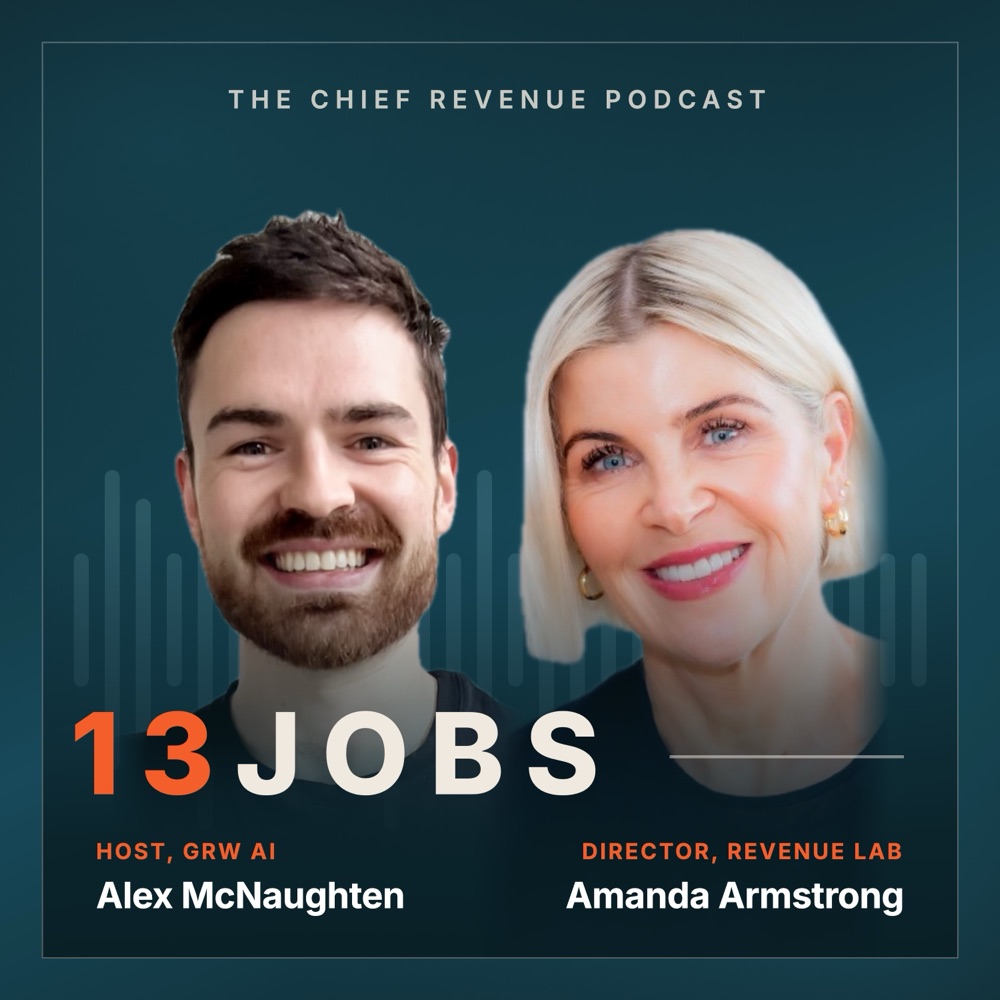
 Hosted by Alex McNaughten
Amanda Armstrong · Director, Revenue Lab
Amanda Armstrong runs Revenue Lab, working with B2B tech companies that are past the growth stage and want to scale, often into other countries. The work is building a repeatable, scalable revenue engine that can carry that.
Like most people she fell into sales by accident, having just moved to Auckland from Wellington, and expected to stay about twelve months. She has since led revenue at New Zealand tech companies including Vend.
In this episode, we discuss:
- Falling into sales, and never leaving
- The four pillars of a scalable revenue engine
- Everything starts with the strategy
- Going too broad, and trying to be all things to all people
- Process, and mapping the buying journey first
- A sales process that did not match how they were being bought from
- Discounting, negotiating late, and consistent pricing
- The sale does not end at signature
- People: structure, industry expertise, and what a leader needs
- A light capability framework, not an over-engineered one
- Technology and data, and the spend gap against the US
- The one thing: be more ambitious, sooner
Quote of the show
“Expect what you inspect.”
Key takeaways
- Pick a segment and hold it. Asked who the ideal customer is, most companies at this stage answer too broadly. One rep cannot swim in five lanes, and the marketing cost of a wide net shows up long before the revenue does.
- Map the buying journey, then the sales process. One client was selling to an enterprise CRO and rarely reaching the decision maker, because the process they ran did not match the buying committee they were actually facing.
- The process is not done once. Revisit it as the company changes. Well-mapped stages become the pipeline stages, which is what makes a forecast worth anything.
- Discount to make the deal bigger. Multi-year in exchange, and negotiate late rather than early. Inconsistent pricing before you scale becomes inconsistent everything after.
- Expansion is most of the revenue. A lot of selling happens after the first signature, and none of it happens if the impact promised in the sale does not arrive. Handover and customer success belong in the sales conversation.
- A light capability framework is enough. What competencies does a seller need, what does a leader need, and where is each person against them. It does not need over-engineering to give people a development plan.
- Adoption is a leadership problem. If the team is not using the CRM properly, that is not the salespeople's failing. Expect what you inspect, and own the standard you set.
Transcript
Amanda, good to have you on.
Good to be here.
It's about time we did one of these.
I know, I know. I've been kind of listening from the sidelines and watching as they've been dropping every couple of weeks. And so yeah, I was really delighted when you asked me to join.
So Amanda, for those who don't know you, you're the director of Revenue Lab, but tell us a little bit about you and about your journey in the sales and revenue space.
Well, look, I, you know, like a lot of people didn't start in sales and fell into a sales role quite by accident and thought I'd stay in sales for, you know, maybe 12 months. We'd actually just moved up to Auckland from Wellington and I didn't have a job. I was actually coming from the fitness industry.
So really, really different corporate health and fitness and thought I'll give the sales job a go and ended up at the end of my first year being the top salesperson in New Zealand and thought, well, okay, this is pretty good. And I'm pretty good at this. So And then, you know, over a period of time, like, I mean, it was a great role to be.
I was at home, I worked from home, had a child, could still continue working, and it had a lot of flexibility, autonomy. So it was really ideal for those, you know, early years of my daughter. And then I kind of got to a point where it was like, okay, I'm getting a bit bored.
And, you know, maybe I'll look into this leadership thing. And then one thing led to another and sort of after, and yeah, after probably, you know, 10 or 15 years selling, I ended up in my first sales leader role. And it wasn't because that I wasn't, you know, I didn't have that option before, but I think I just really wanted to maintain that flexibility and autonomy while my daughter was young.
And I got to the point where, like, I led sales teams for, you know, 20 or so years in sort of more traditional corporate and led sales, marketing, kind of all customer service facing roles really. And then decided it was time to, the startup world was starting to emerge, the whole kind of B2B SaaS And it was time to really have a look at that and try something different.
So I reached out to Rod Drury and started having a chat with him, his CEO of Xero at the time. And because I'd been selling to accountants for— and leading teams selling to accountants for like 20-odd years, and so felt that the skills that I had and understanding I had of the accounting market would actually be really beneficial with where Xero was at.
So one thing led to another, I ended up leading the New Zealand team at Xero. And then since then, I've been working with B2B sort of high-growth tech companies that are scaling globally. And then that sort of really led to the work that I do today, which is getting in and helping, you know, B2B tech companies who are, you know, they've gone past that kind of hacky growth stage.
And then wanting to scale and often scale into other countries. So we really help them build that repeatable, scalable revenue engine to do that.
Awesome. And that brings us nicely onto our topic, which is scaling B2B tech companies. And, you know, I guess, I guess I think what's going to be useful for people listening to this is, you know, what are the things they need to be thinking about if they're, you know, like you said, past that scrappy stage, they kind of know, they know what they're doing, they know what they're selling, they know who they're selling to.
What do they need to really consider as they look to take on the world?
Yeah. Look, I think there's, when I think about this, I think about it in kind of, you know, what I call my 4 pillars. And look, they're widely talked about and there are probably lots of other people's 4 pillars as well. And it really, the genesis of the way that I think about this was the work that I was doing at Xero and then later on at Venmo.
And then when I went on to Crimson Education, I was leading all of sales and marketing in those roles. Actually, no, I correct that, not at Vend. I was CRO at Vend, but just looked after the local regional marketing, not the digital sort of online. But sort of in those roles, I was seeing this common pattern of, you know, really wanting to grow and scale globally, but a lot of the foundational elements weren't in place.
And as I dug into those things and essentially sort of did like a mini diagnostic in the organizations I was in, I was seeing that they were kind of really— there were gaps in strategy, their go-to-market strategy, their processes weren't really built out very well. Often they'd hired the wrong people to sell and then they didn't have the right tech to support that and really drive good sales efficiency.
And so I started to kind of really lead me down a path of going, okay, those 4 pillars, you know, became clear, it was around, you know, the go-to-market strategy. It was then around sort of the processes and people that were actually supporting the strategy, executing the strategy, and then how tech supported the kind of people and process through that.
And so, yeah, the 4 pillars that I call it, and often I'll go into an organization and start with like a revenue diagnostic. And I'll go in and assess their current state in each one of those 4 areas. And it's a little bit of a rabbit hole. I mean, there's so much in there.
And so obviously, you know, too much to cover today, but I thought we could talk about, you know, what are some of the essential elements that I'm looking for. And I think just to kind of add to that is that, you know, we talked about that hacky growth stage, you know, in the early days as companies are assessing that product market fit, they very much hack their way to growth.
And they don't want to over-process, you know, that they can't afford too much data. They can't necessarily hire you know, really great salespeople and that's all okay. And that's very normal. And, you know, they shouldn't try to be anything other than that, but then they get to a point and it's this inflection point where that just doesn't work so well anymore.
And the, you know, the sales and marketing efforts that got them to where they are today, you know, will not, you know, help them grow to be $5 million, $10 million, kind of, you know, $20 million ARR, you know, revenue companies.
Yeah.
And so, you know, that's kind of when you've got to really think about the— they come back and they go, what's not working? And if they, you know, right back at about the $1 to $3 mil stage, we're really putting in place like a stronger foundation in those 4 areas that would really help them speed up and, you know, speed up that revenue growth a whole lot earlier.
And In terms of those 4 areas, is there one that you think is the most crucial to start with or, you know, like where do you start?
Oh, it's gotta be go-to-market strategy, right?
Okay.
Everything starts with strategy. And that's thinking about, you know, the first question that I'll ask, and I had a meeting with a CEO yesterday of a company at this very stage. And I said, so who's your ideal customer?
Yeah, yeah.
Tell me about your ideal customer. And then I said, okay, so what segment of the market are you going after? And they, you know, again, so many companies make the mistake of going too broad.
Yep.
I found this, you know, when I started at Vend, that the same thing is that they had, you know, a particular area of the market that they were going, that they could, should have probably gone after, but they were trying to be all things to all people. And so this is at a point where it's really important that you come in And it's, you know, very, very focused on what I term nailing your niche.
And so that you're really thinking about a particular segment that you can go after and investing every dollar of sales and marketing money, you know, because budgets are generally not huge, and winning in that space. And when you win in there, it's, you know, it's really focused. You can align all of your messaging and effort there.
And then once you've built, you know, good market share there, it's much easier to expand out into other adjacent markets. So that's sort of one of the things that I'm looking for. Have they got a clear ICP? You know, have they really, you know, honed in on— it doesn't have to be one segment, industry segment, and it can be, you know, broader than that so long as there's obviously enough addressable market.
But again, an example, you know, of a customer I was talking to a few weeks ago had a massive addressable market in their sort of ideal customer range. So that's too big to, you know, you've got to kind of break it down into those bite-sized chunks. So, you know, what are the segments that they're going to start with first?
Let's win in that space. Let's build our whole value proposition around that and then, you know, expand out into other markets.
And it makes total sense. And I remember working with a company a few years ago and they were trying to tackle 5 ICPs at once with one salesperson. Like how can you— you can't swim in that many lanes. You're going to get lost. And, you know, one of the questions that the follow-up questions often comes up after someone talks around getting really focused is what do we do if someone who's not our ideal customer profile comes to us and wants to work with us?
Does that mean we say no to them or should we work with them anyway? Like what's your thoughts around how focused do you get?
Yeah, look, I think it's a great question. I think, look, you know, someone who comes in your funnel and genuinely has intent to buy, and it's going to be, you know, it's still, it still fits relatively well, that's okay. But I think I've seen examples of a client that I worked with last year where people, you know, that the demand was there, the intent was there, but in actual fact, they would just, they ended up being really painful customers because it wasn't quite right.
And then they wanted particular customization. And in the end, they you know, they turned them and that was the best thing because they weren't a great fit.
Yeah.
And they end up then being quite heavy on kind of, you know, on customer service support and all of those other things. So I think, you know, my answer would be if there's still a reasonably good fit and they're from another segment, but they still largely fit our ICP, absolutely go for it.
Don't turn them away. But if they don't and they're, you know, really quite outside what our ideal customer looks like, it's actually better off to say, look, I don't think that our product's going to be suitable for you long-term. Oh yeah. I definitely say that because I think again, going back, you know, one of the other essential elements of your strategy, your go-to-market strategy is your value proposition.
And what do you have, you know, to go right back to Good to Great, you know, a book that I read many, many years ago and just about everybody in the world I'm sure has read by now. But, you know, what is your hedgehog concept? What is that one thing that you can be best in the world at?
And you can't be best in— and you really, you know, really hone in and sell in that segment because you can't be best in the world at everything. It's just—.
No.
Just no way. And I think that's the— that's sort of often too late that people work that out and they've still been trying to sell all things to all people and it just kind of costs too much time and money. Really, rather than being a little bit more focused, not ruthless, but more focused on going after that ICP, you know, really in that segment or 2 that you can really nail and grow out and build your credibility there first.
I think especially from a marketing perspective, well, actually even from a sales perspective, but marketing from like a, you know, a cost per lead perspective, if you're way more focused and you're speaking to your audience, you're gonna get better results. And I think also from a sales success perspective, it makes it far easier for your salesperson or team if they're not having to switch segment hats every 5 minutes and they can just really learn that one ICP and become a trusted expert to those kind of people.
So I think it's brilliant advice. So okay, we get the strategy nailed, we get our ICP nailed, you know, we've got our value prop built. What next?
Yeah, I think that there's kind of, there's, you know, the thing that I think about is process next because process, you know, and like I'm kind of reluctant to leave strategy behind because there's still so much there, but I think for the sake of, you know, a 30-minute podcast, we need to move on.
Process and process is, you know, most people to be fair have a sales process, the stages of the sales process, and they've built that into HubSpot or Salesforce or whatever they're using. And so, but what I see so commonly, and I'm writing a post on LinkedIn this week about it, but it's just around the fact that they haven't mapped out their buyer journey.
And therefore, is the sales process, is that helping our buyer buy or our customer prospect buy? And so often it's not, so often it gets in the way. And I think This is where just really even the early stage, and I'm not talking about a really detailed, like massively long, you know, customer buying process or customer journey.
People get those confused a little bit. I think of the customer journey as all of the interaction points that a customer has with our company. Whereas I think of the buying journey or the customer buying journey as everything from being unaware about your product or service to, you know, know, the phases that they go through to buy, you know, before, you know, to then purchase your product.
So, you know, from becoming unaware to purchase, what are the, you know, what are the phases that buyer goes through and how do we help them buy so that we're not, you know, people hate to be sold to. So how can we flip that and really think about the actions and activities that or tactics that will really help that buyer buy rather than trying to just sell them something.
And so—.
Right.
Yeah. And I think that an example of this is a client that I was working with earlier this year. When we did that, they were selling into enterprise-level CRO. And they, of course, were very rarely getting access to the decision maker. They generally would start with RevOps and then they would end up, you know, never really getting access to the CRO and then having to put a proposal forward and then that they were getting stuck at demo all the time.
So, but when we met, when we mapped out their buyer journey, in actual fact, their sales process was way too light because their sales process reflected much more of a high-volume transaction style sales process.
Right.
And then, you know, they were, they were doing much more of, you know, a sell-through model where they were, they were buying committees or buying teams involved, and yet their sales process didn't support that. So that's a perfect example of why it's really important to go back and really think about your buyer and develop your sales process.
Right.
Yeah. And, and so that's kind of like the, to me, the absolute starting point. And so often, that's it. That's a piece that companies miss. And that should then inform the tactics, the sales approach, the sales tools, the conversations that you should be having. Should all focus on how you help that buyer buy and move through those phases of their buying process as quickly and effortlessly as possible.
Right. So in other words, rather than— and I think I can definitely relate to having seen this— is rather than just building your sales process, it's actually start with the buying journey first, and then map your sales process to how your buyers actually buy, rather than trying to fit them into what you think they should be doing.
And that's definitely something that a lot of people miss. And, you know, you're right. You see these sales processes that look completely different to how people actually want to buy that product or service. You know, once you've got that right, where to next from a process perspective? You know, you've got a good journey mapped out.
You've got your sales process, you know, maybe say 90-95% of the way there. What else should you be doing from a process perspective, especially as you're thinking about going internationally?
Yeah, look, I think also process, just because you've done it once right doesn't mean to say, or you think you've done it once right at a certain stage, doesn't mean to say you don't revisit that. Like most things in your whole go-to-market, you need to be, you know, constantly sort of refining and improving those things.
So as you continue to grow and as you continue to move into those adjacent markets and all those sorts of things. So But what you need to be thinking about in terms of if you're going to be looking at, you know, going into another country or another couple of countries, you definitely need to, I mean, obviously goes back to the documented sales process that you have proven success with.
So not that you've just documented it, but that you've actually got, you know, good momentum going and proven success and you're able to convert customers reasonably well.
Hmm.
So you need to be thinking about, can we forecast relatively accurately and use that You know, I also use the, once you've mapped out the buying journey and the sales process, those sales stages become your pipeline stages.
Yep.
So the, you know, the, you should be able to more confidently forecast with reasonable accuracy. You need to be not discounting too much. You know, there's still a lot, far too much discounting behavior and not really selling on value. So, you know, you want to have a real minimal level of discount variation.
I mean, discount fluctuation. I'm not saying don't ever use discounts. I'm probably, you know, can't really be that, that sort of strong on it. But I think, you know, when you're able to have the right sort of conversation with customer, you really shouldn't need to lean on discounts. You know, that's generally a bit of a red herring at the end saying you haven't done a good enough job and really articulating value early enough in the conversation.
Yeah, I think with discounting, I always try and encourage people to use them strategically. To try and make your deal bigger actually. So, you know, like use a discount if you try and lock someone in for 2, 3 years versus 1 or, you know, maybe, you know, you offer a discount if they pay upfront versus monthly.
Like there's certain situations where it would make sense or if, you know, they add another product line to their order. But don't just do it like lazily just to speed up your deal because if you're doing it that way, it typically means you haven't you haven't done the hard work upfront from a qualification and value perspective.
Totally. And, you know, and if you are going to negotiate, because, you know, let's face it, people do, and particularly, you know, I like the idea of, of the multi-year because I think there's opportunity, but I think negotiate little and late. There's way too many salespeople that are negotiating early in the process and all that says to your buyer is, whoa, okay, well, if they're already offering me that, what will they be offering me by the end?
So, I mean, that's another whole thing we could get into is around negotiation, which I'm not going to get sidetracked on.
It's a big topic in itself.
Exactly. But I think that whole thing around discount and also pricing being, you know, the consistent pricing is super important before you're scaling. So, it's really about that, again, that repeatable process that you're having success with that you can forecast accurately. And then you've got something that, you know, you've got reasonable confidence, particularly if you've got investors that have helped fund the entry into overseas markets.
You've got to have reasonable confidence that if you put X in, you're going to get, you know, X out.
Yeah.
Yeah. So I think that the other components that I think about, sort of the 5 components that I think about.
Okay. What's next? You got process. Yeah.
Well, in process, I mean, most of it's sort of around your processes to support the buyer. And you could get into the customer success process and I'm going to try and kind of stick to more just sales today, but I tend to get into some of that too because the sale is not done when the customer signs the order.
It's just not. So you really need to think about what happens once they sign the order. What does that handover look like? So many times, you know, sales lob the deal over the fence to customer support or service.
Yeah.
And then they think, right, my job's done. And that's so often things, you know, that's where things go wrong. So really looking at that whole thing and how it's handed off to customer support and what that process looks like from a customer side of things as well. So, you know, it's certainly everything along the process And then, you know, on the other side, marketing, you know, what is the marketing process and the whole kind of MQL to SQL, if we're still playing that game, which, you know, I'd encourage people to really not.
But again, that's probably another whole podcast to get into that. But, you know, what are those, you know, what, how, you know, what is the marketing job to really support sales? You know, how do we get alignment there, whether it be outbound or inbound? Whether it be creating demand or capturing demand, and really thinking about, you know, those processes there, and then how that then leads through to sales.
As I said, whether it's from an outbound perspective and supporting them, or whether it's from inbound. So yeah, so there's quite a lot in there. But really thinking about what are those, you know, what are those process stages. And typically, it's, you know, awareness, consideration, purchase, or the way that marketing thinks about it.
But again, I, you know, trying to flip that to think about, okay, what is the, what is the customer, you know, again, going from that kind of unaware, how does marketing kind of come in and support that driving awareness so that then, you know, sales pick it up generally when they might have heard about a company.
So that kind of like that whole area is getting into kind of inbound, outbound, and having a, having a look at that because obviously outbound is often almost cold calling these days, and they help create the awareness, whereas inbound or high-intent leads, you know, you're going to get obviously marketing playing a pretty vital role there too.
So it's getting into some of that stuff.
And one thing you actually said that is really important is that the sales journey doesn't stop once the deal is signed, is you've got to think about your customers, your onboarding, your customer success, your ongoing customer, you know, management is all part of it. And you've got to map that out and have processes for that too.
Too many, too often, I think, particularly in the earlier stage companies, is that they might have their sales process defined up until the deal getting signed. And then they, like you said, just chuck it over and they don't really think about it from there. And they really drop the ball. And it's such a missed opportunity to double down on the good work you've done in your sale in that handover.
Because the experience you give in those, you know, first few days, weeks, and months, it's going to strongly influence whether someone re-signs with you later on or whether they, you know, whether they refer people to you or want to buy more from you. So yeah, really, really, I'm glad you mentioned that. It's such a, such an important point.
Well, I think in terms of lifetime value and churn, it's critical. So, you know, and I know this is a sales podcast and we're largely talking about sales, but then a lot of sales an expansion occurs post that initial sale. So, you know, it might be additional users, it might be additional, you know, like, you know, additional products.
There's, you know, there's kind of a whole bunch of ways you can expand revenue. So I think you've got to almost think of the sales up to the first sale being just the first half of the—.
Yeah.
And then you've got the second half of the equation is where you're delivering impact. And if you don't deliver that impact, and that kind of tangible, I guess, ROI to the customer, then they're gonna churn. So it's as vital, I think, as the, as the, you know, as that period up to when they first purchase.
Absolutely.
Really getting into that and taking a similar approach to it, like in terms of customer success roles, like how often are they reaching out to the customer? What are the conversations they're having? What are the value that they're You know, what's the value they're delivering in those meetings or conversations? Are we just emailing them mass, you know, emails that go to every customer?
Are we taking a more nuanced approach to that? And that will depend on which state, you know, which stage a company's at as to what level of investment they can put into that. So it needs to be pretty tailored. But I think, you know, all of those sorts of things need to be looked at as well, because I just see it as a vital piece of the puzzle.
So what about these other 2 pillars?
Okay. The other 2 pillars.
Yeah.
We'll run out of time if we don't keep moving. So the next one is around people. And what I've seen is, you know, the first thing that I get into is have a look at, you know, what is their structure? How are they kind of set up? What, you know, what do the commission plans look like?
Is it driving the right behavior? And so often what I'm seeing in early stage companies is that they've often hired the wrong type of people to sell. And an example of this was like, you know, years ago at Xero where the UK team had hired for their partner. So they were selling into accountants.
They'd hired a whole bunch of accountants to sell to accountants.
Right.
And like, that's okay in the early days. And I know industry expertise is critical. Like you've gotta be almost like a consultant today versus a salesperson. You've gotta be an industry expert. You've got to know your customer and the market and what's going on in the market. But like that, and, you know, that might have been okay in the early days.
And don't get me wrong, I've like, I've worked with some accountants who are amazing salespeople. But if you just look inherently at their personalities are more of the, you know, detail-oriented, analytical, that's what makes them really great at the job that they do. But they're not, you know, they're not, they don't have that resilience, kind of fortitude, drive.
Ability to talk to anybody, that makes for a pretty good salesperson. And so, you know, and I've seen that 3 or 4 times where they've hired the, you know, the wrong type of people to sell. And that's okay when you're in that hacky phase, but when you're starting to scale up, that's the time to really bring in a bit more sales DNA into your organization.
And so really helping them in terms of that hiring getting some of those early hires right. And then later on, you know, what I've done is kind of gone into the capability framework as well. One of the things that I've seen, and, you know, kind of to add to that, is that one of the things that I've seen is that these millennials— I'm much older than that, so I can say this, but to you— That they are super ambitious, which I love.
And they're kind of full of like, they want to go places, and they want to do it fast. And you'll sit down and you'll be working through, you know, a development plan with them, or coach, you know, spending some time coaching and developing them. And you'll go, okay, so what's your next role after this?
And they always want to be a manager. And I kind of look at that and go, like, you know, to me, a lot of them haven't mastered the role they're in. And they don't understand what it takes to be a manager. And do they really want to be a, you know, a leader?
Because that's, you know, there's a lot to being a strong and effective leader. So, and I think, you know, I believe a lot of that comes from them not fully understanding the competencies or the skills required for different roles. And so what I've done is gone in and built a capability framework for an organization where— and I did this at— helped do this at Xero with their HR people team.
We did it at Vend as well and did it at Crimson, completed that at Crimson as well. And we've worked with some clients on helping them build this out. Because what it does is it gives a very clear career, like, idea. Like, if you're an AE right now, Mm. What are the things that I need?
What are the competencies I need in order to be a sales leader? Do I have those now or do I need to develop those? And then those help inform a development plan if that's actually really what you wanna do. So just kind of laying out some of those critical steps. And I think that really helps people who might otherwise churn 'cause they're not seeing any development path.
But they actually— because they're thinking the only development path is leader, and I can't see that in the short term. But if they can really see the capability and the skill required to be in some of those roles, then you can actually, you know, really put them on a strong develop— or solid development plan that will help them get there.
Even if it's for you or that, you know, the company they work for, or it's for an entirely different organization. You know, at some stage in the future, I think just, you know, really focusing on those— that individual development is really important.
Yeah, it's a really good point. And there was actually some data, and I'm gonna forget exactly where it came from, but it was something— it was 68% of, I think it was millennials and Gen Z, would stay in a role or aim to stay in a role for 5 years or more if they were given ongoing mentorship and development.
Yeah.
And that's this massive gap often, particularly in early growth companies, is they don't, you know, have the time, resources, or sometimes expertise to give that and to, you know, to build out those, like you said, that capability framework, that career pathway, and invest in that, you know, in their people as much as they should.
But it is so important because otherwise, you're right, the churn is just going to be the enemy of you, you know, you as a sales leader in a high-growth company is if you're losing people all the time, it's going to make it much harder to hit your goals. So, you know, you've made some really interesting points there.
It's you've got to get the right people in those roles. And there's obviously at Apprento, that's something we're really passionate about is in terms of, you know, what is that raw, you know, whether you're experienced or not, like what is that raw inherent preferences that lead to success in sales? And there are some.
And that's a whole podcast in itself, but there are some key personality traits or inherent preferences that lead to success. And then also it's when you get those people in the roles is keeping them there is really, really important as well. And I love, I love your idea of just mapping out, you know, where could you be.
And I think some of the best organizations we're working with at the moment, they have that so well defined as if you come in at an SDR level, within 12 to 18 months you're going to be a junior AE. And then within, you know, another 18 to 24 months, you're gonna progress to a senior AE role, or you could go this way or that way.
And they actually map that out and show people as they come into the business where they could be in a few years. And I think that can really help to get people focused and aligned and also start thinking about where they wanna go with their career. So yeah, really important stuff. Anything else on people that you think is worth mentioning?
I just think on that too, just to touch on the capability framework again, and I think, you know, it sort of— I'm not talking about over-engineering something either. I think you can put in place a relatively light capability framework that's still incredibly useful so that you're not doing something that, A, isn't fit for purpose of the size of your organization, but it will allow you to grow through the next few years because your point around you know, it's vital for organizations when they get good people today to try, you know, to keep them because people are being wooed, you know, and all companies just with salary at the moment.
And people are losing, you know, companies are losing good people because there's such a shortage of talent. There's a shortage of talent globally. And then, you know, the cost to hire, it's not just the cost to hire in terms of additional salary, it's the cost to, you know, retrain, it's the cost to get them ramped up and delivering to target, all of that, you know, opportunity cost stuff that they need to think about.
So, you know, a relatively modest investment in building out a capability framework, really some, you know, some emphasis on coaching and developing your people is going to prevent a lot of that happening. And I guess what I've been in high growth tech, the speed with which, you know, organizations like that move at, I totally get it.
But I think it's a, it's a bit of kind of short-term, a bit of long-term thinking to prevent that short-term pain that needs to happen on the people side of it for sure.
Yeah, because people always forget it takes about on average 3.5 months to ramp up a new salesperson to, and that's not to target, that's just to like being somewhat useful. And then another 7 to 12 months typically before they're exceeding, you know, hitting their numbers or exceeding them. So if you're not taking that into account when you're thinking about your decisions from a, you know, retention and development perspective within your sales team, you're missing, you know, you're missing a crucial factor.
By the way, Alex—.
Say that again, Amanda.
No one wants to hear that generally.
No, they don't. But that's the reality. Yeah. Okay. So conscious of time, we're getting close to the buzzer, but there's one more pillar. So I want to make sure we squeeze that one in. So what's this last pillar that's crucial?
Well, technology and data, right? So we live in a data-driven world, it goes without saying, and that's such a crucial part of understanding your go-to-market, understanding what's working, what's not working, being able to switch stuff off if it's not working. So that is a really, really big piece. And so, but you can't get good data without investing in the right tech.
And that obviously starts with CRM, putting in place a good CRM. But then starting to think about as you're starting to scale some of those additional, what I call sales acceleration technologies. And we are seeing the tide turn, but to, you know, until very recently, New Zealand companies have been very reticent to invest too much in some of those other technologies.
And, you know, like Outreach, Gong, like, you know, additional things that I see as really driving better sales efficiency. So we've got people in the roles, we've got good smart people, we've hired good talent. But actually, we've got lots of manual processes and workarounds. And it's really highly inefficient. That just doesn't make sense.
And perhaps instead of thinking about bringing another AE in or another SDR or BDR, like, let's put some, some good tech in that automates those manual processes, and then helps us you know, drive better efficiency so we get more out of the people that we've got, particularly at a time when hiring people is, is so difficult, or hiring good people is difficult.
So it's really thinking about, you know, what are the technologies that are going to drive, um, better effectiveness of the team. So obviously Gong's a coaching tool, an intelligence tool. You can obviously— there's, there's kind of lots of depth in a tool like that versus, you know, or an Outreach, which is really automating a lot of those manual processes and, and outbound sales and AEs as well, like their product has really evolved beyond just being an outbound tool, as, you know, putting some of those, putting an investment in some of those things too, because also the data that comes out of that is incredibly valuable.
So, you know, I just, you know, actually, we are an outreach partner. So I'll confess that. We don't sell outreach, but we just help with organizations in New Zealand who want to implement it. That's all. I don't get anything for saying that, but I just really wanted to set that straight. But in terms of like, I don't, you know, I have no alliances with any of these other organizations, but I just think it's incredibly important to start thinking about your tech stack.
And start thinking about that relatively early on. And I know you and I've had conversations about this, you know, time and time again, because I think, you know, the CRM is just the— that's just the basics. That's just, that's to keep the lights on. But if you're really serious about growth and you're really serious about growth globally, then yeah, you need to be investing in some of these other tools as well.
Yeah. Because, you know, the international companies that you'll be competing with, you know, particularly, you know, if we look at the US, is they're investing $3 to $4 for every dollar we're investing in our tech stack. And, you know, What's that? What that means is they're able to operate at a greater level of efficiency.
They've got more data, they're making better decisions, they're making them faster. And throw in the fact that typically they have more money behind them as well. So, you know, you can't compete unless you're investing in tools that are going to make your sales and customer organization better. So I think it's a really good point.
I think on that, you know, just, you know, when you compare us to the US and, you know, I've done that as well many, many times, but I think, you know, the unfortunate thing for us and countries outside of the US or who have the kind of currency strength of perhaps the pound or the euro is that it's, you know, it's tougher for us because our dollar against the US and of course they're charged in USD.
It does make it, you know, it does make it difficult. It means that we've got to really make sure we maximize that investment. In technology. And I think that's kind of where sometimes I think we're not really thinking about the change process with the people we're putting technology in. And I've seen this time and time again with CRM tools like Salesforce, where, you know, it's sort of, we've got digital, you know, digitally savvy people in our organization, we've got young salespeople, they'll be fine with it, kind of throwing it in, but not actually really doing the kind of important change process training with them.
And that just doesn't happen with like one training and they magically get it. It's got to be done again and again. And I think the other thing that I've heard lots of complaints, like our people aren't using Salesforce or our people aren't using, you know, HubSpot, you know, properly. And I blame that on the leader.
Yeah.
Because that to me is a leadership issue. It's not a salesperson's issue. Because if, you know, you and I have the saying that I probably stole off somebody many, many years ago, but expect what you inspect. And if you're not using it and using it for your team meetings and your one-on-ones and using that as the source of truth, and if you're sitting outside in a spreadsheet somewhere, well, the sales team will know that actually the spreadsheet is the source of truth.
Yes.
So, you know, you absolutely as a leader have to take responsibility for that if your salespeople aren't using aren't using Salesforce properly because that kind of like, yeah, you need to own that and drive that, what you expect and inspect.
Exactly. Um, look, Amanda, this has been great. There's so much value in that, in there, and I love how you've broken it down quite simply for people into those 4 pillars. Um, one final question for you, and it's unrelated, but it's one we ask everyone, is Go back to your first day in sales.
What's the one thing you know now that you wish you'd known then that would have helped you, you know, just significantly accelerate?
I probably fluffed around a little bit too long, you know, just cruising and thinking it was like a— this was kind of like a cruisy gig and I was working from home and my job was of wasn't that important. And I think I'm a relatively late starter in terms of really getting into leadership and getting some ambition around my career.
And it would have been really helping me understand that I had the capability and the skills and that I could kind of do anything and go anywhere if I wanted to. And just kind of really probably helping me understand that, you know, what the possibilities were, I suppose. Much earlier and probably getting a little bit more ambitious a whole lot earlier.
So that's really what I would go back and tell my younger self.
Yeah. Look, I think that's something that a lot of people wish they could tell their younger self is like, be a bit more ambitious earlier.
Not like you and, you know, these younger people of today, my daughter, just that the world's at their feet. And I think you know, showing my age a little bit here, but it was like, that's quite common amongst my friend group that the, you know, the wife's job was not as important as the man's.
And that's horrific to think about.
Right.
But, you know, that's the way that we were brought up. And I suppose it's helping my younger self understand that her career was equally important as her husband's, as the man's. And, you know, that You don't kind of take— play second fiddle. And that, yeah, that helping myself understand that, I think would have been a really valuable lesson.
I think you did pretty well despite that though.
Gotta edit.
You accelerated pretty quickly once you got going though. Amanda, it's been a pleasure to have you on today. Where can people find you if they want to chat, if they want to to connect with you?
LinkedIn's probably the best thing. Yeah, or they can go to RevenueLab website, just going through a review of that now. So it's, yeah, there's a bit of work going on behind the scenes. But yeah, probably LinkedIn's the best way to get hold of me. I'll always respond on there.
Awesome. Thank you so much, Amanda, for your time today. It was good to chat and I will see you soon.
My pleasure. Thanks, Alex.