
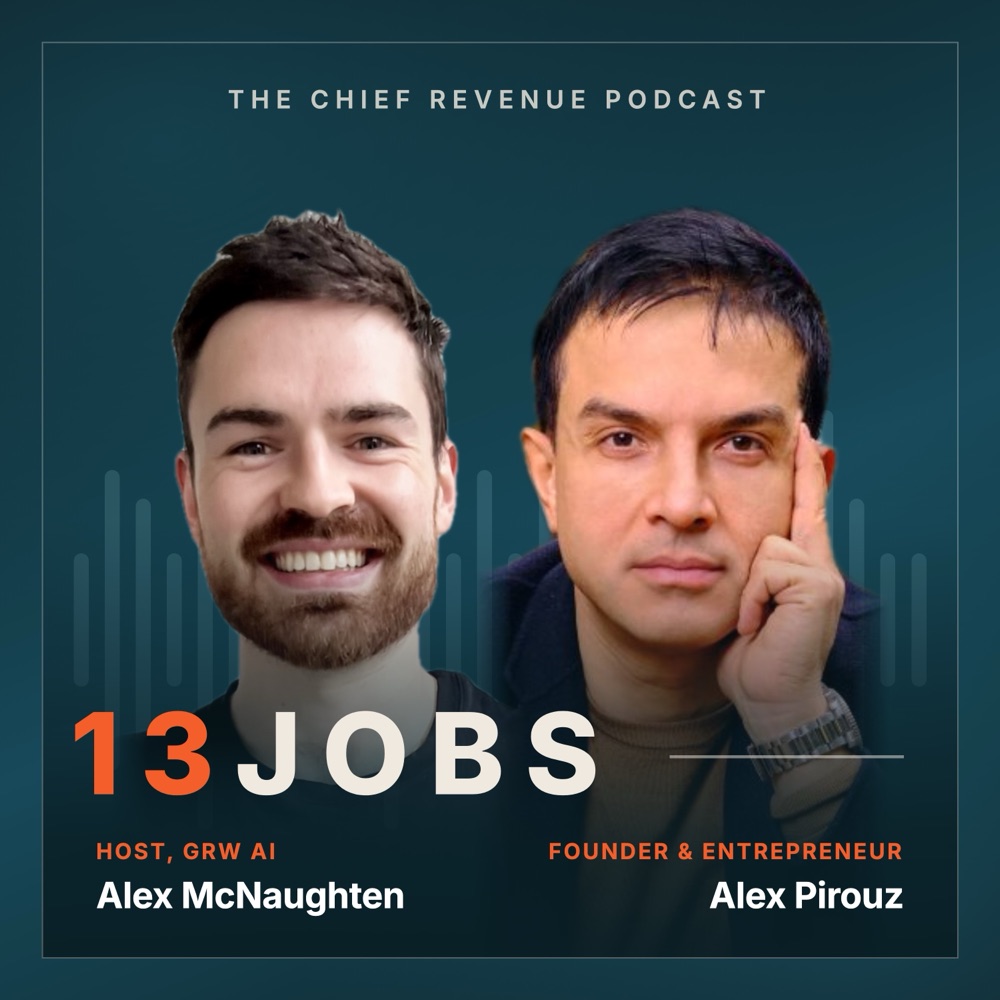
Don't pitch, serve
Alex lost close to a million dollars across four businesses before he turned 26. What changed was a mentor, and doing what the mentor said.
 Hosted by Alex McNaughten
Alex Pirouz · Founder & Entrepreneur
Alex Pirouz is a multiple-time founder based in Sydney. His first venture was at 13: his parents could not afford the Atari he wanted, so when the school offered one as a prize for raising the most money for charity, he talked local shop managers into giving him chocolate close to its use-by date and sold it door to door. He raised $1,600 and won the Atari.
He left school halfway through year 11, started his first real business at 22, and failed at four of them by 26, losing close to a million dollars. The turnaround came from a mentor. He now runs an advisory and investment company alongside Linkfluencer, the LinkedIn marketing agency he founded in 2014.
In this episode, we discuss:
- Chocolate door to door, and the Atari he could not be bought
- Four failures, close to a million dollars, and the mentor after
- Learning counts for nothing without implementation
- Only selling something you would want someone to have
- Two ears, one mouth, and the move to consultative selling
- Making people apply, and saying out loud that some are not a fit
- Things happen for you, not to you
- Getting out of a slump: environment, questions, a mentor
- Turning up as the same leader through a divorce
- Don't pitch, serve, and why LinkedIn is a networking event
- Most of a LinkedIn strategy is not on LinkedIn
- The one thing: get a mentor, then do what they tell you
Quote of the show
“Things don't happen to you, things happen for you.”
Key takeaways
- Selling is a life skill before it is a job. It is one of the three things a founder cannot avoid, alongside leading people and raising money, and it shows up everywhere else too.
- Take the sale away. His agency made people apply for a strategy session, qualified them in the form, and told them plainly that 18% of the people they speak to cannot be helped. Buyers decide for themselves rather than being talked into it.
- Qualifying out builds the business. Committing to five or seven years changes who you are willing to sell to. Selling someone a service they do not need buys a churn and a bad review.
- Implementation is the whole difference. He goes to nothing unless he leaves with three or four things he will act on. Out of 35,000 people trained, only a small fraction ever did anything with it.
- Things happen for you. The line that carried him through four failures. Not a bad thing happening to him, but a lesson arriving about spending three hundred thousand to start a business rather than three.
- Step up when it is your turn. He went through a divorce and nobody at the office knew. If you tell audiences to rise to a challenge and then do not, you cannot stand on the stage feeling honest.
- The LinkedIn strategy is mostly the sales process. Who to target and why, what a profile says to them, what the follow-up asks for. Jumping from a first message to a sixty minute call is where most of it breaks.
Transcript
Alex, good to have you on. How you doing?
Yeah, very good. Thanks for having me. Appreciate it.
Yeah, thanks for agreeing to come on the show and looking forward to diving into a few things with you today. So for those of you who don't know Alex or don't follow him on LinkedIn already, he's a multi-time founder of businesses, entrepreneur, expert on kind of LinkedIn and social. But I'll let you give your give your story for those who are interested.
Yeah, sure. So my entrepreneurial journey started when I was 13. My parents couldn't afford to buy, I don't know how old everyone is on this session that, you know, you guys are tuning in, but, you know, I really wanted an Atari and you remember Atari?
It was before my time, but I know what it is.
You're making me feel old now. But yeah, I won Atari. My parents couldn't afford one, and so I hounded them for 6 months, realized that strategy wasn't working. So, uh, I just went to school the next day and the principal announced that the kid who raises the most amount of money for charity would win this Atari.
So I think it was just fitting, you know, when you really want something, I think these sort of things aren't a coincidence. So anyway, I obviously didn't have a lot of money, so I went to couple of local Franklins back in Sydney because that's where I grew up. Now I think they've been brought out by IGA.
So, um, I convinced the managers to give me chocolate that was going out of date within the next couple of weeks. And yeah, so I went door to door and sold those at, um, you know, around my area. And I got kids to buy them off me at a little bit of margin, and then they could sell on, sell it themselves.
So Long story short, I made $1,600 for charity. I won the Atari. That started my entrepreneurial journey, so to speak. Never very good academically. I left halfway through 11, quit school whilst my parents were overseas. A bit of a shock, but, you know, they got over it. And then I moved around in a couple of different roles and then I sort of got into my first real business when I was 22.
And from 22 to 26, failed in 4 businesses, lost close to a million bucks. And then before I turned everything around, key lesson learned there was mentoring. I was able to spend quite a bit of time with the guy that I used to sell property for. And then my next 2 businesses were a success based on the lessons that I learned from him and implementing it.
And then, yeah, since then I've been running an advisory/investment company as as well as running a marketing agency that specializes on LinkedIn called LinkFoncer. So that's the journey.
It's a pretty wild ride for, as you said, failures before the age of, what did you say, 24, 26?
26.
Yeah. Yeah. But, you know, it's through those failures that you probably learned and it's all those lessons that you then take into the next one. And that's how number 5 is then a success and number 6 is a success. So, you know, it's, I think it's really important not to look at them necessarily as failures and they're just learnings.
Yeah, 100%.
So what I wanted to talk to you today about, because I know you're passionate about this, and is this idea that as an entrepreneur or just in life, actually, sales is this real superpower and it's a superpower that just helps you get what you want. And, you know, I'd like to unpack that with you and then I'd also like to talk about how you can use LinkedIn and social tools to really amplify that even further and, you know, scale sales better.
But let's just start with like, when did you first figure out you were good at sales or when did you first, you know, get into selling?
Oh, it's probably when I convinced the managers to give me chocolate that was going out of date. You know, I was like 15 at the time, 14, 15. I wasn't, The confidence, like the confidence that I have now, at 15, I was actually a very shy type of kid. And I think, you know, going and selling door to door and having to put myself out there is what actually really started to build my confidence.
And I think the most— when I look back at— put business aside, because I think being able to sell as an entrepreneur is one of the main top 3 skills. You've got to be able to lead people. You've got to be able to sell. And then if you're looking to build a big company, you obviously need to raise capital, right?
So it's like, it's a fundamental skill you need to have even outside. Like for example, if let's say you're single and you're in the dating scene, you've got to know how to sell yourself. If you show up and you don't know how to position yourself or the way that you talk about yourself, like it's just fundamentally, it carries weight across so many different areas of your life.
So Yeah, I started when I was like 14, 15. That's when I knew after I raised $1,600 for charity, I knew that I was a good communicator.
Right. And did you ever get any kind of formal sales training or did, you know, like how did you improve? How did you get better at it through your entrepreneurial journey?
Just a lot of personal development, a lot of self-study. Uh, so reading books, podcasts now. Back then there was just books and stuff. Going to seminars. Uh, just, yeah, self-education has been the key for me and implementation. Because I think the problem we face and what I've seen in many entrepreneurs is that they go and learn.
99% will come into a room and I've, you know, presented in hundreds of conferences, I know that by the time I walk out, 95% of people, maybe more, just won't do anything with it, with the content. So I made it— I vowed that I would never ever go to any event unless I was going to walk away with 3, 4 things and implement it.
Um, so I think that's been my— I've never been the most skilled, but I've always been the most hard— like, hardest working. And I've just implemented things that I've learned. Because I know most people would just won't do it.
Well, I think that's a really good point. And I think, you know, too, you know, it's very easy to get caught up in reading and learning and podcasts just for the sake of the knowledge. But if you're not going to apply it, then what's the point at the end of the day?
Um, you're just wasting time.
What do you think makes you good at sales? Like, what do you think fundamentally you do that helps you to be an effective seller?
Like genuinely, I care about people. Like I would never sell anything that I wasn't passionate about or that I didn't believe in. I want— like I think my main purpose of why I'm actually here in this world is to make a difference. So whenever I set up any business, yes, commercially has to make sense because that's how you build a successful company.
But ultimately, the, you know, this background to that is building products and services that you know are going to have a positive impact on either someone's life or their business. So I think that's what makes me good at sales because then you can easily resonate and put yourself in, in their shoes and to understand the pains that they're facing.
You have more empathy. Um, and yeah, you just— that helps you dramatically in being able to sell.
Yeah, I think that's a really good point. All the best sales reps that I've ever coached over the years, the ones that really, you know, the ones that are great, the ones that really consistently crush quota, they are all very much others orientated. They're not self orientated. Like they're going into sales conversations with prospects and customers and it's all about the customer.
And they're asking a lot of questions and they're empathizing and they're putting themselves in the customer's shoes. And it's not about, hey, here's what the outcome is that I'm trying to achieve. So I'm, yeah, I'm glad you called that out. And I think it's also, it's, you know, it's that belief that you're genuinely, you're out there to help people.
You're not out there to convince them to buy something, you know, you're not out there to try and pull the wool over their eyes. You're there to help them fundamentally.
A mentor of mine a long time ago said, look, You know, God gave you 2 ears and 1 mouth. You got to use it in the same ratio, right? And so I learned the more you listen, the more information you gather, and the more information you gather, the better you can sell. Um, and I've learned, and I think sales has evolved, like now I think it's more consultative strategic selling, um, especially in the B2B market.
I don't know too much about B2C because I just don't have that much experience in it. But yeah, strategic selling is something that I thrive on and I think it's something that works far more effectively now compared to other techniques. Obviously it depends on industry and location, all that stuff.
How do you think it's changed? Like what do you think, where was it and yeah, what's that shift been and maybe when did you notice this?
From what I've experienced and look, this isn't across all industries because I haven't spent time in every single industry.
Sure.
From what I've experienced is that before, it used to be hard selling what worked. You call people up, one-time closes. And now what I've realized is that it's more about drawing people in, getting them to make the buying decisions themselves rather than being sold that end product. For example, we had a service called campaign management, which was basically where we'd take over someone's profile, write up their— write it up, come up with the messaging scripts, the target market, and run a campaign for them.
So everything was taken care of. The way we sold that was we got people to apply instead of saying, oh, you know, you should do this service, it's going to be amazing, we're going to get you so many leads, it's unbelievable, you're going to make a ton of money. We this is selling someone why they should do it.
Instead, we said, listen, we've tested this across, you know, a cohort of 12 people. It's got these results. We're not actually sure whether it's going to get you the result. The only way we're going to find out is if you book in for a strategy session, which you need to apply for. And then in that application form, we used to ask them key questions to identify whether they've got money, whether it's the right time, whether the right prospect, how big is their deal value and things like that, that makes— so when we get on that strategy session, they're all ready to go.
It's just a matter of finding out a fit. And we got on to like, and the way we positioned it, we said, look, 18% of people that we speak to generally are not a fit. We can't help them. So there's no point telling you you should do this service if we don't even know whether we can help you or not.
So that's what I mean by like that strategic consultative selling where you take it away from them and say, hey, let's have a conversation. But really there's some strategy behind that.
Yeah, I think what you just said there about being really open and honest and upfront that you might not be a good fit for someone, you know, I think that's such an underappreciated part of selling and good selling is qualifying out and being the first rather than trying to fit a square peg in a round hole.
But if someone is genuinely not a good fit for your product or service, you know, hey, you know what, you're not the right fit. Maybe you should go speak to these guys over here because they'd be better for you.
That's it.
And you know what, that positive interaction you have with them, maybe they'll refer someone through to you later on, you know, maybe 1 in 10 or 1 in 50 people who you speak to and qualify out, maybe they're gonna refer someone to you because they had such a good time speaking to you and you added some value to their world.
Yeah. And I think, you know, what most people you see is being sold. So when you do the opposite, automatically you're going to stand out. And I think a lot of entrepreneurs, they're very short-term thinkers. Like, I'm building— when I start a business, I'm committing to 5 to 7 years for this business to be a success and to exit, right?
Mm-hmm.
So if I'm thinking like that, I'm not going to try to sell every single person that's not a good fit because that's not building a good reputation for the brand. But if most people are thinking, oh, I've just got to hit my quota this month, just got to hit those sales, and that's not how you build long-term success.
Yes, short-term you might generate a few more sales, but ultimately you're selling people into a service they don't even need. So they're just going to be disgruntled anyway.
And they're going to churn. They're going to churn. You'll lose them quickly. They'll cause bad reputation. One bad review is worth 10 good ones, right?
Exactly.
So yeah, absolutely. One thing, other thing I'm curious about is, you know, through the journey, because you got into entrepreneurship young and entrepreneurship and sales, you know, they're both high stress environments at times, high pressure. Is there anything that you've found over the years that's helped you to deal with that, to deal with the pressure, deal with the stress?
I don't know where I picked this up, but it's been a— it's helped me a lot through very dark times. And it's this quote, you know, things don't happen to you, things happen for you.
Hmm.
You know, I'm on an interview. I'll be back. I'll be there. Sorry about our Christmas party. Over here.
No worries.
Yeah. Things happen for you, not to you. And so when, you know, I was going through the struggles in terms of, you know, one failure after another, losing hundreds and hundreds of thousands of dollars, I always think to myself, all right, this— I'm not a bad person, right? Why would this stuff happen to me?
Okay. I need to learn to grow, to better myself, be more strategic here. Maybe don't spend $300 grand starting a business. Maybe I should start with $2,000, $3,000 instead and try to build it up. So I know that helped me get through a lot. And for some reason, again, I don't know where this has come from, maybe my childhood, I don't think that I was born to work for someone else.
I was born to create products and services that would impact people's lives. And that's my calling. So I guess it's when you feel that ultimately that's what your purpose and passion is, it's hard not to continue. Like, the why is so big, and I think that's probably what it all comes down to.
Yeah, I remember hearing fairly recently from someone that you should kind of be grateful for the failures because they're, they're lessons. Each, each failure shapes you, and, and if you, if you're hum— if you approach failure like humbly and kind of almost, what's the word, self-critically, then you'll figure out how not to make those same mistakes again.
You'll learn from, you'll learn far more from that than you will from, you know, the wins. Yeah, it's interesting you say that as well. And like, what about like, because sales is such a mental game.
Yeah.
I feel like sometimes it's one of the hardest things for people to get right. And I was chatting to an entrepreneur today and he feels like he's in a bit of a slump recently and he's been struggling to kind of win deals that, you know, 6 months ago he would be able to close in his sleep and he just feels like he's in this slump and that everything he touches is turning to sh*t.
Have you experienced anything similar? And if so, how do you get out of it? How do you bring yourself back to that kind of game face, you know, mindset that you need to win?
Yeah, well, being in the right environment I think helps. Being around winners, being around people who've gone through similar challenges, being around people who, um, are supportive. I think environment is huge, huge, um, for that. So I don't know what his or his or her environment is like, but that, that would be my first thing.
Second thing is like understanding this is all part of the journey. Like, if it was easy, everyone would be doing it. You wouldn't be— okay, maybe, maybe some people love cleaning and they're passionate about cleaning, but if, if it was easy to be an entrepreneur, to be successful, maybe they wouldn't be doing cleaning.
Maybe they wouldn't be working in a cafe as a barista. Maybe so. Like, it's part of the process, and I feel that helps me get through a lot of stuff because I go, okay, well, I've had some really good wins. This is just part of the process to the next big win. So I see it as an accelerator to helping me get to where I want to be.
Uh, and I— and then you've got to do stuff that will break yourself out of the funk. So like, if I'm in a slump, which I have been a lot over the years, I ask myself why. Why am I in Well, you know, this, this, and this isn't happening. What am I doing differently in these situations?
So I think it's asking questions, then having a mentor that can help you and challenge you. Because at some point when you're having a funk, it's, it's about stepping up and doing something courageous.
Hmm.
So, and then you— some people are good at doing it themselves. They don't need someone to tap them on the shoulder and say, hey, come on, let's go. You can do this. Maybe you just need someone to sit there for 20 minutes one day and keep pushing him to make call after call after call until he gets the sale.
So these breakdowns are actually— because this quote that stuck by me as well, a breakdown is only a, uh, is only helping you, you know, build into something greater, not just in yourself, but In what you achieve, right? So it's like you're getting broken down to be able to build back up.
So I don't know. No, I think you made some really good points. I think the environment's a massive one. I think sometimes people underestimate the importance of the environment, whether they're, you know, they're working in, they're living in, the people they're spending time with, all of that stuff. Like it has a massive impact on your state of mind, your state of being.
And I think, I, I think having folks around you who can help pull you up, I think that's really important at times. I think the other thing on this, I know, and I was just sort of what I was saying to this entrepreneur today, is like, you just, at the end of the day, it comes down to you though.
And like, you just have to be it sometimes, even if you're feeling sh*t, even if you had a bad day, you just had an argument with, you know, partner, whatever it might be, you know, you've got a sale in front of you, you've got a big opportunity in front of you, sometimes you just have to just game face, you know?
Yes.
Put all that sh*t away.
Game face. I gotta be on. And you need to like find that in yourself to just be able to turn it on. And like one thing I've always encouraged people to do is like, it's very hard to worry about yourself and your own problems when you're focusing on someone else.
Yeah.
So instead of worrying about your own sh*t, focus on the person you're talking to instead. Like if you're fully like 100% engaged in them, what they're saying and asking them good questions, very hard to worry about the problems that you had Yeah, you know, in your day. And that can sometimes be what helps get people out of it as well.
Um, and sometimes it's just about stepping up. Like, just because, like, so a couple of years ago I went through, uh, a divorce. And most people, when I, like, when I was going into the office, no one even knew. Everyone, I was, I had a smile on my face. I was just the same leader as I was when I was married, um, compared to going through this divorce because I think to myself, listen, people don't care about my problems.
People have their own problems. I'm not— I need to step up. If I'm telling— if I'm going out there speaking on stage and telling people that, hey, life is going to present you challenges and you need to step up when they do, and then a challenge comes into my life and I don't step up, I don't even feel congruent within myself to be able to get up on stage.
So like, literally, I would not be able to go and present because I'd feel so fake. So because of that, naturally I have to do it because I can't get up and do my job then if I don't. So.
Such a good point. Um, changing tack a little bit here is, um, I want to bring it to LinkedIn and LinkedIn's been, you know, it's a platform that's how it's being used has changed quite a bit over the years. And I think it's had perhaps during the whole pandemic times a bit of a bad reputation around people getting pitch slapped daily by people doing, you know, poor outreach, some questionable content, blah, blah, blah, you know, like there's a long list.
But, you know, I've definitely noticed some grumbling from people. What do you think it takes to be, you know, and if we put it from a sales perspective anyway, sales or personal branding perspective, What do you think it takes today to be successful on LinkedIn? Genuine.
Genuine. Yeah. Not, not, you know, pitching, serving. I always say don't pitch, serve, you know, go into every relationship. Look, you know, we've all heard the quote, your network is your net worth. It's not who you know, it's, well, it's who you know and what you know, but So you're on a platform that is the biggest.
It's the biggest social media networking site around the world, and then you're there pitching to every single person that you meet. How do you think that's going to be success? Like, how do you think you're going to be successful?
Yeah.
So it's like me going to a networking event, and then every single person that I meet say, okay, hey, this is what I do. You want to buy? Hey, I do SEO. $2,500. Have you got your credit card? Like, I'd literally get thrown out.
Yeah.
So what makes you think that's going to work in an online environment where they don't even see you? So some of the physio, like, you know, the touchpoints that you have when you see someone, you don't have online.
Yeah.
So I think being genuine, actually caring for people, you got to have the right strategy. Too many people are following and implementing strategies that aren't proven. There's a lot of practitioners in this industry, very few— sorry, a lot of educators, not enough practitioners. Too many people who've gone and listened to a podcast or read a book and all of a sudden they're now becoming a LinkedIn expert.
So there's too much of that. You really need to find a company that is a specialist and who has experience in your industry. So Um, a lot of, yeah, a lot of things. The most important thing I would say is execution because, you know, out of the 35,000 people we've trained in the last 9 years, I would say very small percentage have implemented.
Not because of our training, it's just, it's, it's the way of life. People learn and they don't do anything. Whether that's because of fear whether because they don't think they can do it, whether they, I don't know, don't put the time or aren't committed. Just gotta execute and you do, you'll get the results.
It's not that hard. It's not rocket science.
Yeah. Well, I think the execution piece is the key, right? Like, so I'm no LinkedIn expert, right? But week in, week out, I'm posting content and I'm posting stuff that seems to resonate with my audience. We've got a podcast. We do stuff. Now, is my strategy perfect? Hell no. There is very little strategy in what I'm doing on LinkedIn right now, to be, to be, to be perfectly honest.
But it works. And some of the biggest deals we've ever won as a company have come directly from the podcast we put out 6 months ago or an article I wrote 2 months ago or—.
2 months ago.
Yeah. You know, like all of that stuff. It's something, you know, people read it and they're like, okay, well, these guys are at least serving their community. They're writing educational stuff. They're giving first. They're not just hitting me up saying, hey, you wanna buy my sh*t? So, you know, I think, I think that's absolutely right.
And I love your analogy of looking at it like a networking event. And would you go up to someone in person and say, hey, here's what I do, wanna buy it? You know, of course not. So—.
You just have a, you have a, what do you call it? Like an ATM machine. You go, hey, can you just swipe your card? Have you, I can wait for you to do an internet transfer if you want. Like, it's crazy what's happening. Yeah.
It is crazy. You mentioned the word strategy and look, without going into too much detail because it's probably a longer conversation, but, you know, at a super high level, like, what does that mean? Like, what is a good strategy right now?
So think of it— by the way, I just realized I've got very little battery.
Okay, cool.
So if we can just pause for 2 seconds, I can go get my charger. I'd hate for it to just cut out whilst we're talking.
Let me press pause now. Awesome.
Okay. Okay.
And we're back and we've got a laptop that's being charged so we won't just fade out. But yeah, so back to my strategy question. Yeah. So what is that, you know, again, without going into massive detail because we've only got a few minutes left, but you know, what's a good strategy? What's a winning strategy on LinkedIn right now?
Look, I always tell people, look at any social media or marketing strategy as a puzzle, right? And LinkedIn is no different. So in order for this picture, uh, to be put together, there's so many moving parts and it's all got to fit in. So part of it is making sure that you understand your sales, because a lot of people think having a winning strategy on LinkedIn is all about what you do on LinkedIn.
It actually isn't. So if you don't have the right sales process, if you don't know who to target, if you don't know why they're the best people to target. Because a lot of people jump onto LinkedIn and go, I'm going to target, I don't know, wholesale, retail, and construction. But then if you break down the numbers, you go, hold on, it's taking you 35 hours— or sorry, let's say 3.5 hours to close a deal in construction, whereas in retail it's actually 2 hours to close the deal, and you're making more money within, so you're spending less time closing deals and you're making more money.
Why are you focusing on wholesale, not retail? So like there's so much that goes to getting your sales process right, your audience right. And then once you've done that, then it's a matter of jumping on LinkedIn and saying, okay, what are the pain points this audience has? What are the challenges? What are the objections that I face?
How am I different? What, what makes me unique? And what are the market generalizations? So you've got to ask all these questions so then you can write a profile that actually connects with that audience rather than just going and talking about— no one cares about you. Yes, you've got to tell your story and you've got to do it in a way that it's social on your, on your profile, but then you've got to resonate with them as well because ultimately they're going to jump on your profile.
They go, who the hell is this guy? What's he all about? And then if you tell them all about yourself and nothing in that is mentioning how you can actually help them or relating to them, obviously you're not going to get conversations opening up. So your profile is important. Coming up with the right scripts is important.
Um, so you get your profile done. We use Sales Navigator, which is this premium tool on LinkedIn. Yep, you probably know of it. So to create your audience, and then you've got to create the right messaging scripts that will get the conversations going when you send an invite and your follow-up message. So, um, and then, you know, there's tracking, measuring afterwards.
Most people just set their campaign up and never look at the data, and so they don't make refinements to continuously improve it. So there's so many different elements to it. That's, you know, they're the sort of pieces that people need to be aware of.
Yeah, look, I think the key bits you mentioned there around just understanding who your customer is and why they're your customer and how are you gonna sell to them and, you know, what do they care about and what's the message? I think that is fundamentally where so many people go wrong. I think it's such a good call out as people just don't know who they're targeting.
They got the scattergun approach and they don't have a consistent way of converting them either. So you could throw them leads, they wouldn't even know what to do with them half the time.
Or you know who you're targeting, but you don't have a good sales process, a refined sales process. And I see this happening all the time where we get people the leads, they think they've got a good sales process, but it doesn't work because they're trying to get people from a conversation that's just started on LinkedIn to a 60-minute Zoom call.
Like, that's a big commitment going from, hey, 20 minutes I'll give you, that can then go to a 1-hour meeting. But to go from a conversation to a 1-hour call, the percentage of that is much, much lower.
Yeah, exactly.
You could be doing all these things, your messaging could be great, your profile is awesome, you got the right target market, but fundamentally that bit is broken, you're not gonna— it's, it's It's all gonna fall.
Alex, I wanna ask you the one question that we ask everyone when they come on the show because I'm just noticing the time slipping away and I know you've got a Christmas party to get back to. But, you know, knowing everything you know today, go back to your first kind of sales gig, your first time in sales.
What's the one thing you wish you knew?
The value of mentoring. It's night and day between what— who you can— who you are and who you can be. Mentoring is the, the path, in my view anyway. Mentoring, listening, and doing. Because you could have a mentor listen and not do anything. Goes back to what we were saying earlier. So I think mentoring has played it— well, has played— definitely played a pivotal role in my journey.
Um, and I wish that more entrepreneurs, whether you want to be a great marketer, salesperson, entrepreneur, recruiter, just get a mentor that's been there, has been there, done that experience. Pick their brain, implement everything they say, and just have them as sounding board, and you'll be far more successful.
I think that's a really good, uh, really good place to finish. Um, thank you for jumping on. It's been a pleasure to speak to you. Where can people connect with you, find you if they want to, you know, consume your content or get in touch?
As long as they don't send me a pitch. I'm joking, on LinkedIn. So they can find me on LinkedIn, Alex Peruz. I think there's only one Alex Peruz on LinkedIn, so it shouldn't be hard to find. And then also LinkFoster, which is our marketing agency. So if you're looking to learn how to better utilize LinkedIn, to generate leads, create business opportunities, sell more.
So that's linkfluencer.com. That's pretty much it.
Awesome, Alex. Hey, thank you so much. It's been a pleasure chatting to you today. See you soon.
Thanks for having me. Appreciate it.