All episodes
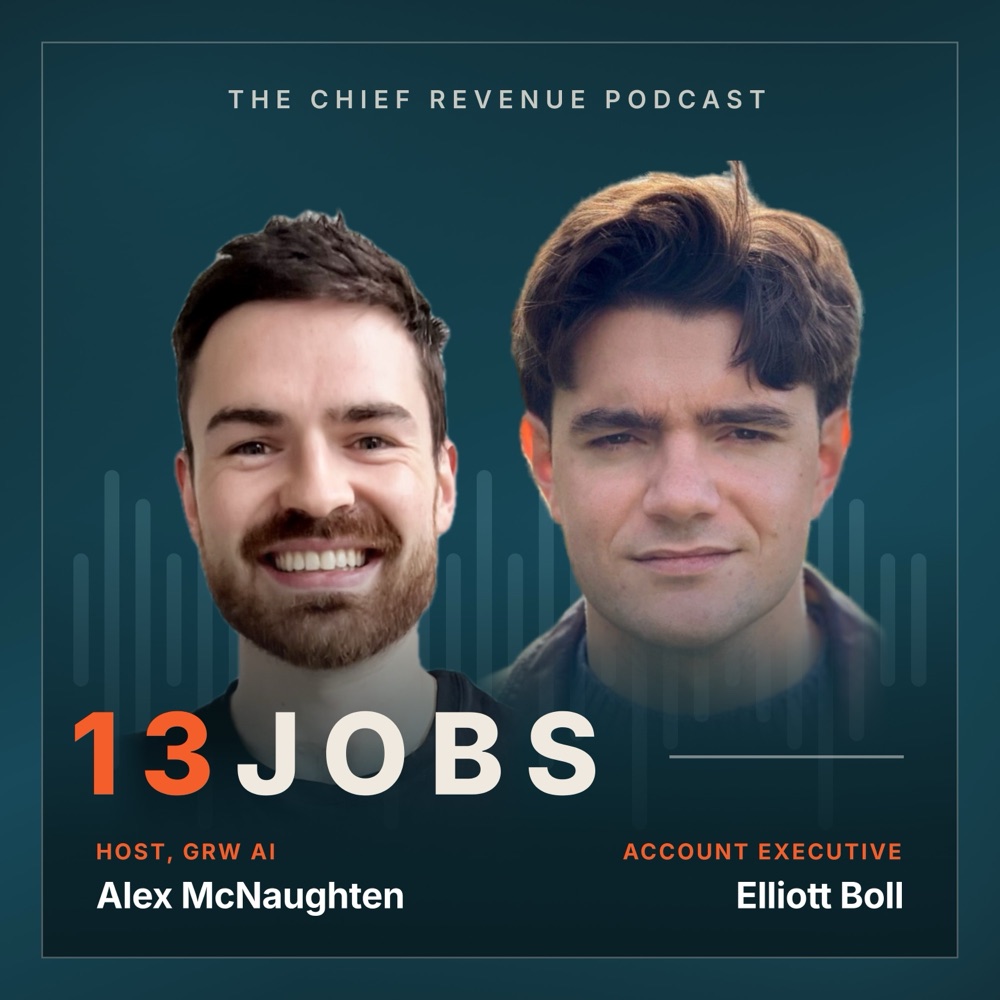
Owning your own development with Elliott Boll
Episode 067 · Mar 10, 2025
Owning your own
development
0:0022:16

Owning your own development

Elliott went from almost quitting sales to top performer by deciding the skills he lacked were his problem to solve, not his company's.

Hosted by Alex McNaughten
Share

Elliott Boll · Account Executive

Elliott Boll is an account executive at Sales Impact Academy and the co-founder of The Sales Millennials, a community of more than 16,000 salespeople built around getting better at the craft.

He had been selling for around four years when this episode was recorded. He struggled in his first sales role and almost walked away from it, then became a top performer after deciding that the skills he was missing were his own to go and get, and has performed at that level since.

He holds a degree from Imperial College London and is based in the United Kingdom.

In this episode, we discuss:

  • Four years in sales, eating mud early, and an obsession with getting better
  • Where to start when your org has no enablement team and no coach
  • The day it clicked, and why ownership underpins everything that follows
  • Acknowledging the real problems, then setting the uncontrollable ones aside
  • How the goal evolved from paying for lunch in London to something bigger
  • Three ways to work out what you actually want: write it down, ask people, hold it loosely
  • Success leaves clues, and how to reverse engineer a top performer
  • The fear of approaching someone several steps ahead of you
  • His biggest mistake: joining with one foot in
  • The self-development loop that compounds: calls reviewed, gaps spotted, reps practised
  • An hour a day against the average rep's fifteen minutes a week
  • The one thing he wishes he had known on day one

Quote of the show

Someone's success feels inevitable as soon as they all-in commit to getting what they want.
Elliott Boll, co-founder, The Sales Millennials

Key takeaways

  • Ownership is the switch, not the tactic. Call shadowing, formal plans and time with top performers all work. None of them start until you decide the gap is yours to close.
  • The hard market is real. It is also not the job. Acknowledge the headwind, then put it down. What is left is the part you can act on, and it is more fun to work on anyway.
  • A vision you never wrote down is not a vision. Set aside deliberate time, talk to people already where you want to be, and treat the answer as a hypothesis that will move.
  • Success leaves clues. Find whoever is top of the leaderboard, copy the specific things driving it, and get repetition and feedback from them directly.
  • Top performers almost always say yes. People at the top make time for anyone whose intent is clearly to get better. Remote makes it less accidental, not harder.
  • You cannot swim in two lanes. One foot in produces one foot of results. The commitment comes before the performance, not after it.
  • An hour a day is the whole gap. The average rep invests somewhere between zero and fifteen minutes a week in their own development. That difference is the answer to why they are average.

Transcript

Alex McNaughten

Elliot, thanks for coming on. How are you doing?

Elliott Boll

Oh my God, Alex, thanks for having me. Very well. How are you going?

Alex McNaughten

No, I'm really good. Thanks. It's good to have you on the show. And for those of you who don't know Elliot, who haven't come across him before, you are the co-founder of the Sales Millennials, which I'll let you tell us a little bit more about. And then you also an account exec at Sales Impact Academy.

So I'm really excited to speak with you today. But tell us a bit about yourself. Give us your— tell us your story.

Elliott Boll

It's a short story so far. So I've been selling for around 4 years. I did lots of adversity, eat mud at the front, became top performer, and I've been like fortunate to be top performer thereafter. The kind of key themes in my career is like I'm obsessed with getting better and being the best.

And so you mentioned the Sales Millennials. We've got a group of people with a similar attitude. I share how things have worked for me and it might not work for you. And I share a little bit like you're doing. I'll speak to people that are way more successful than me or have helped me in my career and pick their brains.

Again, all in the spirit of getting better and winning and having fun.

Alex McNaughten

Yeah, it's brilliant. And you're quite humble. You've built quite a community there. But by the looks of things, it's certainly, what was that, over 10,000 people?

Elliott Boll

I think we're at 16, just over 16,000. I'd give you the to-the-digit number, but let's go with over 16,000.

Alex McNaughten

Yeah, pretty impressive. So today we're gonna talk about something that I think is gonna really resonate with the audience. Which is development and, you know, developing yourself as a sales professional. So tell me what it means for you and then let's frame this up, you know, development, how do you think about it?

Elliott Boll

Can you help me with that? Can we like get the question a little bit narrower? Because development, I could riff forever, Alex.

Alex McNaughten

Cool. Well, maybe let's start with A lot of reps, not all reps are blessed with amazing enablement teams and not all reps are blessed with amazing coaches in their organization and resources and all that sort of thing. And I know you're a massive proponent of self-development. So let's maybe start there in terms of how do you go about improving?

Like, where did you start? How did you get into it?

Elliott Boll

Yeah, there's a short story and I mean, basically what happened was I was stuck and I had loads of problems and I wasn't performing in my first sales role and I almost had an attitude problem as well where I didn't want to be in sales and something clicked on that day where I said, I'll quit.

The sales job once I've shown that I can be successful in it. And thereafter, what happened was this sense of ownership, which meant the skills that I didn't have and the things I didn't know I needed to do were now my problem or my opportunity. So I think that's kind of the key theme.

And then with that, there are various things like engaging your manager and building a formal plan or speaking to top performers or call shadowing, the various different activities you can do, but it's underpinned by this sense of, what would you call it, Alex? Ownership, accountability?

Alex McNaughten

Yeah, and I sort of, I think I was gonna highlight that, that that's to me the most interesting part about it is, and I hear this a lot, is people complain, oh, I'm not hitting my number, I'm struggling with this, that, and the other. And you often hear that's followed by because of X and Y reasons, because the market's hard right now, or because of, you know, whatever it might be.

And I think what you just described there is like true ownership of the reality you were facing and also ownership that you would do something about it. Is that fair to say?

Elliott Boll

Yeah. And can I just add, I get the opportunity to speak to a number of young reps and the— but the problems that come up that are true problems, they come up a lot. And what I've— I guess what I would credit success to is the idea of putting those two aside. We can acknowledge that they're real and maybe the market's hard or there's not, but ultimately you've got to think about the goal, like your personal goals and dreams, how the job contributes to that.

And if those are compelling enough, then you ultimately have to look at it as a problem to solve. And so the uncontrollables are put to one side and the things we can affect to get us to the outcome that we want want become front and center. And it's, I mean, it's a little bit more fun than that.

It's more fun that way. And I presume that's something you've noticed when you look over your shoulder at the success you've had.

Alex McNaughten

Yeah, definitely. I think I'm a massive fan of like total ownership, and, and if something goes wrong, it's my fault. And, and even if it was partially due to external forces, it's still my fault really. Because you've gotta anticipate and be aware of external forces. So, you know, I'm a big fan of that.

And also for what you just said there, it's, you can only control your actions. You can't control a lot of the other things. So you may as well focus on what you can control. So yeah, I'd agree with that. Just outta curiosity, you know, you talked about having that like vision for where you want your life to be and how the job kind of helps with that or feeds into that.

Um, was that something you always were very clear about, or did that develop over time in terms of like that vision for where you're trying to get to or for life?

Elliott Boll

Yeah, that, that's something that's evolved over time, and I think as you achieve certain things, like the possibility of, but like belief in opportunity gets a little bit bigger, so there's more scope for imagination. But I think crudely, very early on, it was a financial thing. I'd never had a job before, come from a humble background.

I, as a student, had like pennies to live on because I was in London and a pipe was, was too expensive. So, um, that, that was initially it. And like I said, I didn't initially see myself going into a sales career. And I kind of fell, fell into it, as it were. Um, but over time, as you, you kind of, you earn a little bit of money or you have a little bit of success, the, the kind of goals and stepping stones to bigger goals evolve and start mapping themselves out.

But I mean, that's crucial. If you know where you want to go, that, that's kind of the, the one thing that can keep you rolling.

Alex McNaughten

For people who are unsure about this, do you have any tips around how to figure out or even start to visualize what that goal is? Because I think a lot of people actually struggle with that.

Elliott Boll

And this, you're so right, it's a topic that resonates especially with us younger folk, potentially coming out of college or uni or just getting a first job. I think for me, there are 3 things that you can do, and the first one is just think about it. So write things down, actively spend energy thinking about Like what it is that you might want, what it is that you don't want.

Then from there, you have the ability to go and speak to people that are in those, like how we're having this conversation today, Alex, through LinkedIn. I'm like humbled to be able to speak to you with the success that you've had to share a few of the stories that I have. So you can go and speak to people in the positions that you want to be in or seemingly in those positions and understand a little bit more about it and what it takes to get there.

And then the third thing is have a hypothesis. Like, you might not be right the first time, and that is okay.

Alex McNaughten

Yeah.

Elliott Boll

But as you go along that journey towards that North Star and gunning after it, you're gonna figure out the goal, the target's gonna move, and then you'll eventually end up at something that like sings with your core. And, uh, and then hopefully we'll refer to this podcast and we found out— I don't know what— add a few points to that because it's a, it's a really interesting topic for me too.

Alex McNaughten

Yeah, I think the key is the action. You know, everything you said there is an action. So, you know, it's write it down, it's go speak to someone about it. You know, it's actually set time aside to deliberately do this. And I think, you know, a lot of people don't make the space for this, which is why they struggle with it.

And you have to be deliberate. You can't, You can't, you can't map and map out or create a vision for what your life should look like and that you want it to look like. You can't do that subconsciously. It is a deliberate act. And, you know, my view on it is absolutely it will change.

But, and it's okay that it does, it might change every 6 months. If you're doing really well, it might change really, really regularly, but that's cool. But you've got to do it. And my view is that you may as well, because you only live once. So you may as well try and live as much as you can in that time and make it, you know, design your life in the way that you will, you'll be happy with when you look back.

I know that sounds, that's quite philosophical, but, you know, I genuinely believe that. So you've got this vision, then talk to me around the process of actually starting to acquire the knowledge. How did you go about that process of actually going out there and acquiring the knowledge and the skills that you need to be successful?

Elliott Boll

It's a little bit like the point that I just made is there's someone in the business that you're in or even in a different business in the same space that has had the success that you want or is at least top of the leaderboard in the role that you're in. So my first, success leaves clues.

I think someone famous and rich said that once and you can kind of reverse engineer the things that they're doing that are causing their success and that's a great baseline. It might not be you, but if you copy model practice, get repetition and feedback with that person on the things that they're doing to drive their success, you've got an absolute— like, you've got kind of everything you need to at least achieve the success that they're having over time.

And, and go on.

Alex McNaughten

No, I was gonna say, I think a lot of people are too scared to do that, is what I've noticed in, in coaching a lot of reps and interacting with a lot of reps over the years, is that A lot of people are actually too scared to go approach that person who, you know, is maybe, you know, a number of jumps, steps ahead of them in their career, um, someone they look up to.

Um, did you have that fear? And if so, how did you overcome it of like being vulnerable and saying, hey, you're where I want to be, how can you, how can I do that?

Elliott Boll

I, I think there's an element like my career, my first job was in an office. And I put like put my hands together. I was so blessed for that. And I've worked remotely since, but in in the office, I had like every informal opportunity, whether it was grabbing a coffee or going for a walk to the shop or going for lunch or evenings out.

Like I'd have all these different interactions to build the relationship. And I think once you build a relationship with someone, that uncomfort or unease around asking for things or kind of asking questions, learning and showing where you want to go, that falls away. So I was very fortunate in that sense. But since I've been in remote organizations and I've done it quite proactively, what I found is that those that are performing the best, they always have time to help someone as long as they're clear with their intention is to get better.

It's ambition, it's hunger. And the idea is if you can pay it a little bit forward, then it tends to work quite virtuously. So yeah, I think for those that have unease with it, go back to the big A, which isn't Alex, it's action.

Alex McNaughten

Action.

Elliott Boll

Have a go, and if you're told no, then maybe we can revisit the subject. But I, I'd be surprised if that, um, if that happened.

Alex McNaughten

Yeah, and, and I think it's certainly easier at an office, like if you work physically with people, it's definitely easier because you did highlight something here. You've got the informal opportunities where you just kind of rub shoulders with people and you can build relationships a bit easier. When you're remote, you definitely have to be more deliberate about it.

But even then, most organizations have Slack or some, some sort of internal comms tool. Just find the person you want to talk to. Like, it really can be as simple as, hey, I'm trying to do X. Would it be a silly idea to sit down with you for 15 minutes and ask you a few questions?

Most people will say, yeah, sure. Like, most of the time they'll say yes. And if they don't, then God, maybe that's saying something in itself that maybe you shouldn't learn from them anyway.

Elliott Boll

Yeah.

Alex McNaughten

Unless they, or maybe they just have a really good reason and they're just not in a place where they could help you. But, you know, the point is it's actually a lot easier than people make it. Talk to me around some of the mistakes that you've made. Through, through, you know, it's like, what's been the biggest mistake you've made in your sales career so far?

Elliott Boll

I have to get the bloody laundry list out, Alex.

Alex McNaughten

Well, you can give me 3 if you like.

Elliott Boll

The biggest mistake, I think honestly, and it was a really good learning and I'm glad I had it early on, it was that it was the mistake around not committing all in.

Alex McNaughten

Okay.

Elliott Boll

Like, I think so many people will fall into a sales career or fall into a job and they're unsure, they're hesitant if it's like the perfect job for them or something like that. And I think that's quite a natural thing, but I think there's 2 mindsets. One is, oh, I'm gonna see what this is like, and we're kind of like one foot in, maybe one and a half if we're lucky.

And then the other one is like, I'm here now, I'm gonna make the most of this opportunity, and you two-foot it. And that level of like commitment, all in, like putting your name against your number and saying, I'm gonna be successful whatever it takes, like it was an attitude I'd had previously in football, in my whole life really.

And so as soon as I clicked back into that, everything started working out for me. And yes, there was hard work and early mornings, late nights, and all the other horrible things in between, but I think ultimately like I have no— like, someone's success feels inevitable as soon as they all-in commit to getting what they want.

Alex McNaughten

And then, and I agree with you totally there, you— I remember once someone said you can't swim in 2 lanes, uh, and you know, you can't be good at anything if you're trying, you know, if you're not committed to doing that one thing really well. If you're trying to do 5, 10 other things, you just you can't perform.

So I think that commitment is a really big one. And then, you know, on the flip side is what are some of the most valuable lessons you've learned in terms of, you know, practically speaking that have helped you perform and be a top performer?

Elliott Boll

I think it's something that a lot of people miss out on is this, again, it's an idea of owning your own self-development, is continuously feeding calls to your manager to review, emails to review. You can share them with peers, role-play practice, spotting the gaps where you're, where you're doing things differently to top performers and then plugging those in quite specifically and again deliberately.

So it's the same theme as like feedback, coaching, conversations, modeling. If you're doing those things, then like you will inevitably get to where you want to be.

Alex McNaughten

How often do you spend on your own self-development in any given week? Do you track it?

Elliott Boll

I don't track it. I would typically do a minimum of an hour a day, but then even outside of work, I'm listening to podcasts and having conversations with mentors or networks. So I mean, it would tally up quite a lot. And I've also, I'm in the position where I'm selling Sales Training Addicts.

And so I get to drink the own champagne as it were. There's live coaching. We've got an incredible opportunity as well. So Right.

Alex McNaughten

But you're spending at least an hour a day?

Elliott Boll

Oh, at least an hour a day, confidently. Yeah.

Alex McNaughten

That's, it's very different to what the data I've seen shows where the average rep is spending somewhere between 0 and about 15 minutes a week. And that is the difference. And I think for salespeople, who are not investing in their own learning and wondering why they're not top performers, that's kind of the answer.

It's because the best people are always learning, they're developing, they're sharpening their toolkit. There's, you know, sales is one of those skills that you can never truly master. You can always be a bit better. You can always be that bit more prepared for the meeting. And, you know, it's It's always something that I've noticed is that the top performers always significantly outlearn those who are just mediocre in sales.

I'm gonna ask you this, the one question that we ask everyone when they come on the podcast, which is knowing everything you know today, you go back to your first day on the job in sales. What's the one thing that you wish you'd known?

Elliott Boll

The one thing that I wish I'd known. I want this to be an impactful soundbite, Alex, but I feel like I'm gonna let you down. Um, I, I think it honestly, it's, it, it's The one thing I wish I'd known is like activity early days beats all. And let me explain that a little bit.

Alex McNaughten

Yeah.

Elliott Boll

Because if you're like, you learn so much through those conversations and through those failures. You're also practicing like failing and being okay and doing more. But the third thing is like, just think about like you have to do a volume of activity. You start thinking about how to make that more efficient. And so it just drives you to have like the best habit and work ethic, but then also you're accelerating your learning as well.

People around the room are gonna wanna invest in you because you're putting it all out there. So I think it sounds a little bit old school and it makes me sort of sit back a little bit, but ultimately, if you want success in a sales role, like do the most work and your success will inevitably come.

Alex McNaughten

So basically do the reps, do the reps and—.

Elliott Boll

Do the hard stuff.

Alex McNaughten

Yeah. And, you know, the results will come. It's not groundbreaking advice and it should be very obvious, but it's a great reminder for people because sometimes it's the simplest bits of advice that are actually the most impactful when it comes to sales is certainly what I've noticed. So yeah, thank you for that, Elliot.

I think It really is. And it can be that simple. And, and I think you've shared a number of, of these things today, which is own it, own your development, take action, go looking for it and invest in yourself regularly. And, and then just do the activity. And if you combine all of that together, the results will come.

Elliot, this has been— I've really enjoyed this chat and it's an area I'm really passionate about as well. Where can people connect with you if they want to consume, you know, if they want to reach out, if they want to consume your content, if they want to be, you know, sign up to your newsletter, all of the good stuff?

Where's the best place to find you?

Elliott Boll

LinkedIn. I'm pretty active on LinkedIn. If you message me, we can probably have a chat where we both learn. It's Elliot Bowles, as you can see probably on the screen. And then if you're, I mean, if you felt a little bit of an itch today and you wanna join a group of people that are learning and get a little bit of content that directs you with some of the stuff that have particularly helped me, and again, some stuff from clever people like Alex and others, then on my profile, you scroll down a bit, there's a link to join the Sales Millennials.

There's around 16,000 of these sort of frothy, hungry salespeople looking to get better. So yeah, we'd love to have you.

Alex McNaughten

Awesome, Elliot. Thank you for that. And, um, yeah, looking forward to chatting with you again soon.

Elliott Boll

Wonderful. Thanks for having me on. It's a pleasure. And, uh, yeah, good to get to know you more.