
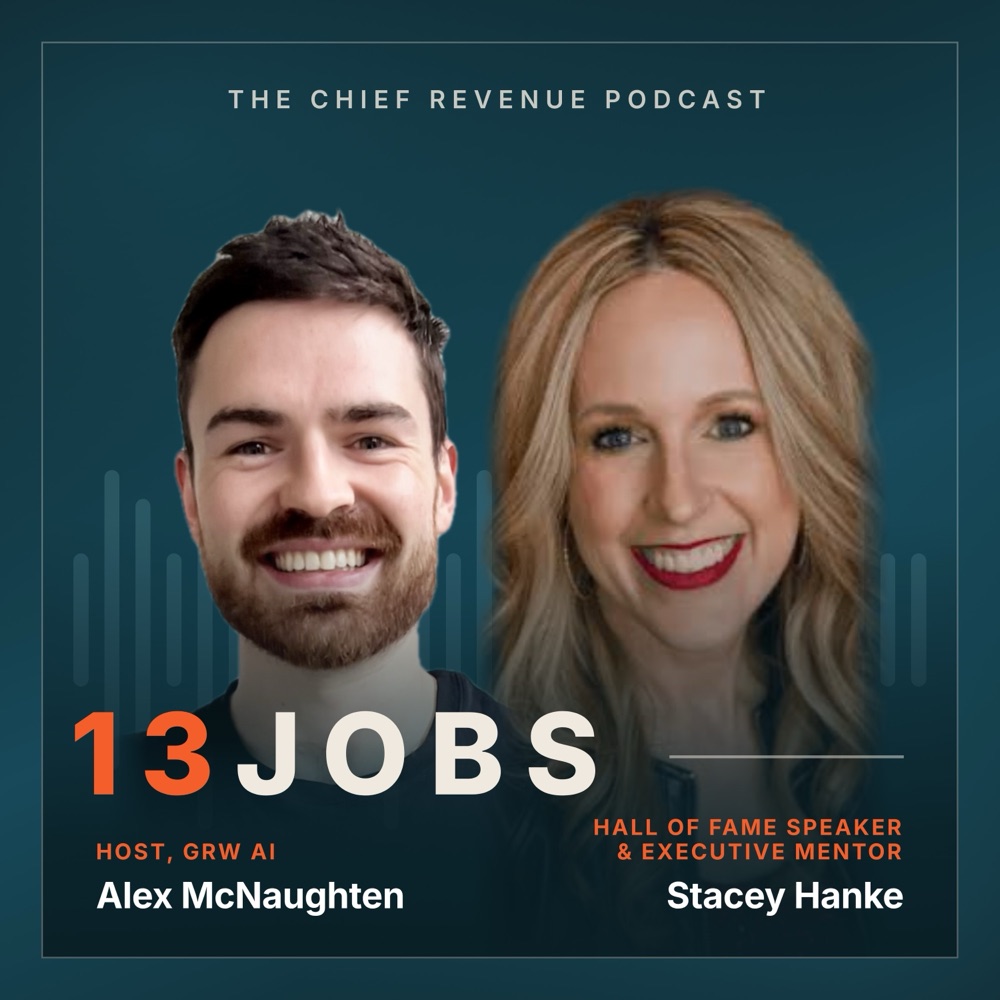
Communicating with influence, Monday to Monday
The gap between the influence you think you have and the influence you actually have is wider than anyone expects, and Stacey works on closing it.
 Hosted by Alex McNaughten
Stacey Hanke · Hall of Fame Speaker & Executive Mentor
Stacey Hanke is the founder of Stacey Hanke Inc. and a Hall of Fame speaker, executive mentor and author, working with Fortune 500 executives and their teams on communicating with influence.
The Monday to Monday philosophy behind the work holds that influence is not a performance you switch on for the big moment. It is how you come across in every interaction, and the gap between how you believe you land and how you actually land is usually wider than anyone expects.
The most recent book is Influence Elevated: Maximizing Your Connection Monday to Monday.
In this episode, we discuss:
- More connected and more disconnected than ever, and the noise problem underneath it
- How video calls put a spotlight on people who communicate inconsistently
- Matching body language to message when you have no idea what the other person is carrying
- Eye contact against eye connection: only speak when you can see eyes
- What your background is telling people about your brand before you speak
- Losing warmth and empathy, and why trust is built on both
- Mindful listening, and catching someone's own words to use back
- The second, third and fourth level questions that turn questioning into a conversation
- Brevity, and why passion is what makes people say too much
- Two kinds of consistency, and practising when nobody is watching
- Two things to start today: one honest person, and your own recordings
- Go to the places that are uncomfortable
Quote of the show
“We're more connected than we've ever been, but yet we're more disconnected than we've ever been.”
Key takeaways
- Noise is the obstacle now, not attention. Everyone you speak to has had a dozen conversations before yours. What cuts through is showing up the same way every time, not showing up louder.
- Eye connection, not eye contact. Only speak when you can see eyes. On video that means the camera. It is the clearest trust signal you actually control.
- Your setup is read before your message is. A half-cropped head, a ceiling fan, clutter behind you. People process all of it while you talk, and it costs you the attention you needed.
- Inconsistency costs you the opening. If the person who walks into the room is not the one they met on screen, they spend the first few minutes resolving the difference instead of hearing the recommendation.
- Brevity is a sales skill. Passion is what makes people speak in paragraphs instead of sentences. Pauses leave room for what matters to the buyer rather than to you.
- Practise like an athlete, not a performer. Every conversation is game day because your reputation rides on it. How you communicate when nobody is watching decides how you communicate when the stakes are high.
- Ask for feedback on one thing. Feedback on a whole call is unusable. Name the single habit you are working on, have someone watch for it, and record yourself so you can see the progression.
Transcript
Stacy, thank you for coming on the show. Good to see you.
You too. Thanks so much for trusting me with your followers.
So for those who don't know, Stacy Hunke is a renowned executive mentor, Hall of Famer professional speaker, and a bestselling author with a new book on the way. But Stacy, tell us a little bit about yourself and yeah, really excited to get into the conversation.
Yeah, me too. I'm excited because it feels like it's a really good fit for everything that you've got brewing and this podcast, your followers. We focus on helping mostly leaders be more aware of how much influence they really have rather than what they believe to be true. And I know that's a really big statement because no one on your podcast knows me yet, but it's, it's really giving people a chance to look through the eyes and ears of their listeners to make sure that how they're coming across really does support their personal brand, their reputation.
And you and I both know all of that. This whole idea of communicating with influence, communication is the core to everything that we do. So whether it's someone that's listening right now, they want to improve their relationships in their personal life, or they're the business leader, the founder, the sales professional, communication is such a make or break.
And especially over everything of how the world has changed in the last 4 years with the many ways that we can connect, I truly believe it's more important than it's ever been before. So I can't wait to kind of dig into that and, and give your followers some how-tos.
So I think like leading us perfectly into the topic, which is sort of like what's changed for leaders in terms of influence. So let's start high level. Like you mentioned the last 4 years, you know, what's changed in the last 4 years?
You know, we're more connected than we've ever been, but yet we're more disconnected than we've ever been. Biggest change is there's a lot of noise.
Okay.
There is so much noise. An example, I have no idea how many conversations you've had before you and I are here today. And because of all the noise, so it's social media, it's still emails, it's this hybrid world, virtual, in-person. And then you have leaders or founders of companies who have people that they see in offices, some people they never see, or they'll just see here.
With all that noise, it's making it more difficult than ever before to consistently communicate with influence Monday to Monday. That's, that's one of the biggest changes that happened. Number 2, we've all, we all need improvement in our communication because it's such a muscle memory skill.
Sure.
We all need improvement. Once though, the fact that we all went virtual, I think this virtual platform, whichever platform you use, has put a spotlight On our inability to communicate consistently. Give you an example. How many times have you maybe met maybe a client in person and they give you this certain perception and this certain experience that you have with them?
Then you get with them on a Zoom or a Teams call and you're like, who are you? Basically, why do you show up more ineffective here, for example, versus in person? So it has really raised this bar of how are you going to break through the noise? How do you create a consistent brand while still being the authentic you and whatever that means to you across all these platforms?
I can definitely like relate to what you're saying there around the noise, right? Like it is, it's, and I think AI is like thrown even more noise in the world because now content is just everywhere and there's just like so much of it. And, you know, I've noticed in last couple of years, my email inbox, LinkedIn inbox is just 10 times more full than it ever has been and it was already quite full.
Right.
So, you know, I definitely hear you on that and then you throw in the virtual side of things as well. And so what does that actually mean? Like if I'm a, you know, not if, I am a leader of a company and, you know, I'm, if I'm thinking about this, like what needs to change maybe from how I act or my behaviors, like how I communicate?
Like, yeah, like what are some of the things that leaders can do?
Yeah, because there's so much noise and whoever you're trying to influence, you have no idea what they're thinking about. How many Zoom calls have they been on? You know, then the things in their personal life that are coming at them. The key is making sure that your body language and your messaging, it's consistent because there's nothing worse that I'll demonstrate this.
You come on a call with me and first, let's say you can only see my head and you see my ceiling fan, right? And then things are just like disastrous behind me and you're wondering how organized is she. And then on top of it, I, you know, I just don't come across like I really care because, you know, I gotta catch up on these emails, like all this stuff, right?
And these are all things that we have seen.
Yeah.
And what I've also noticed is so that, that's one element is the body language and messaging. It has to be consistent that when you come on these calls or when you meet with someone in person, you really are communicating with more empathy. Your message meets whatever lane that they're in, what they know about your topic, what they need to know to take the action you want them to take.
But it's a big experience, right? Do you come on here and it's someone that they can trust you, but they can trust you through a screen? And yes, there's skills to be able to do that. Well, then, Alex, you elevate it. What if you've got any of your followers right now? Sometimes they have board meetings or they're in a boardroom and they have people in that boardroom with them and they've got team members that are virtually coming into the meeting.
Well, that, that's a whole other element. Are you consistent? Are you creating the same experience for the people in the room with you as well as those that are virtual? And then the third layer is, well, you see me here. You create that experience or you create that perception of me. You meet me in person and it's a completely different perception.
It's a different experience because of how I behave, because of the words that I use. So when we work with clients, Alex, we really dig into the body language and the messaging. Are those 2 consistent? And most of the time people focus on what I just have to get the message out or I'm going to show you my fancy PowerPoint slides.
There, there's so many components to body language messaging. If you've got a deck or the level of interaction that you're doing with the group here, all of those need to be consistent. They need to be effective in order to break through the noise, grab someone's understanding of your message to get them to act.
So it's really taken a close look at the way we communicate it. Even a year ago, the way we communicate 4 years ago, it doesn't work because of the many situations that we're all in now.
So if we dig into the virtual side of things, which I'm particularly curious about because so much of business is done virtually and so many relationships are built virtually today, what should someone be conscious of in terms of how they show up on camera so that they can, you know, build more trust and connect with people Because I think, like, if I speak about myself as an example, like, I find connecting with people in person so much easier, like, so much easier.
Like, it just feels a lot more natural. And, you know, like, it feels more of an effort to communicate at times when you're virtual. So yeah, I'm just curious, like, what does best practice look like in a virtual setting? And let's start with a one-on-one conversation.
Yes, let's bring up, because you brought trust. So what my team does is we'll talk about if you want to communicate trust, How do you do that? Where in the body language does that come across? And it's all in what we do with the eyes. Now, you might be familiar with eye contact.
Sure.
We elevate that concept and we call it eye connection. Simply means only speak when you see eyes. So, for example, if I— we first met via Zoom before we started to record and I was talking to you, but I really wasn't connecting because I just looked busy and you can see just the movement of my eyes.
I come across not trustworthy. So it's, it's this whole idea of, yes, you may have 10 people on this meeting. You have to think about how does everyone perceive you, though, which means you've got to stay connected with the, with the camera. Well, how else do you build trust is the level of interaction that it's not me coming on a meeting with you, Alex, and suddenly I just go through the agenda.
To me, virtually, you have to elevate The way you interact with in-person conversations, you have to elevate it here virtually, especially if you've got some individuals who don't have their cameras on. That's a whole nother level. So this level of interaction means asking really targeted open-ended questions. And the open-ended question I'm not referring to is, how are you?
Like, that, that just, it's closed, right? But it's, what is going on right now in your culture that led you to wanna have a conversation with me today? And then you have to be mindful, right? You need to be mindfully listening to what is Alex saying, because what you say to that answer is going to give me your words to help formulate the next question I'm going to ask you so I can dig even deeper.
I definitely—.
No, no, finish your thought. Finish your thought.
I was always coached when this whole virtual thing first happened. Everyone always said to me, my coaches, Create as much as possible, create an experience when someone sees you virtual as if you were sitting across the table from them. So it's things like, I have a stand-up desk, so we'll just, we'll just have some fun with this today.
But I know you've seen this before, right? Where it's just my head and you can see part of my light, you know, and this kind of fluttering is going on. Well, I'd never sit across a table like that with you.
No, that's a good point.
See the difference of— we, my team and I, we really try to create this environment that when we do meet in person with our clients, we don't walk in. And the last thing I want anyone, any client to say, oh, that's not what I was expecting. You look totally different. Because the minute they have that inconsistency, now they're distracted by the inconsistency.
Now I would have to work through that distraction before they can even hear what I'm recommending.
How important. So this year, there's a couple of things I want to pick up on there. So like, focus seems like a big part of it, as in like genuinely being present in the conversation.
Yes.
Looking at the camera as if, you know, I'm sitting across the table from you. And also, you know, I think it's very easy when you're remote to, you know, have things popping up on your screen, your phone's going off, like it's very easy to be distracted. Even easier actually. So, you know, focus is being a big part of that.
How important is your background and like what is around you when you're on a call in terms of, you know, influence, building trust, all of that sort of thing? Like how important is the environment?
Hands down because it communicates your personal brand, right? And I'm not saying you have to deck out your background. What I'd be careful with, I can give you some examples like a And a good example, I was coaching someone and she was asking about her background and she had a fake background behind her.
And I said, well, let's take a look. That way I can help you. And she undoes her background. It was like she had hoarded just stuff for years. I mean, it was so stacked up behind her. So I said, okay, either we're going to just keep a fake background for you or we got to fix that.
Then I had someone else where he said, you know, what is your opinion of backgrounds? I'm not comfortable showing mine. I said, can I see it? And he unveils it. Now, here's someone that's an extreme introvert. He undoes his blurred background and there's like 6 guitars hanging on the wall. I'm like, who are you?
And he goes, oh, I'm in this band on the weekends. And he had a piano off to the side. So I said to him, I go, it was 2 more weeks before I was going to mentor him. I said, how about this? You really need to try this out. How about just a week?
And if it goes well for a week, then do another week. How about for the next week, just let people see your background and watch what they say. Just see how it changes. And for him, because he was such an introvert, he said it was the best thing he had done because it started the conversation.
It helped him do a little networking, socializing. And he said, gosh, we, you know, I love talking about my music. So it calmed me down for me to really focus. On the moment. It's so important. And again, I think it's for leaders, it's an opportunity for them to show something about their personal and professional life within reason.
Again, I'm not asking you to expose all this stuff, but there is an opportunity, especially for leaders, or I'm thinking founders of companies, and they've got their whole teams that are coming here to just get to know you a little bit better, which is another part of influence. I write about this in this next book.
One of the chapters is all about warmth and empathy.
Right.
And Alex, it sounds so common sense even when I say that. I, I do think over the last 4 years, because we've been pulled away from these in-person connections consistently, we're losing the ability to communicate with warmth and empathy. Isn't that what influence— isn't that what trust is really built on? For someone to just feel like, oh, you understand me, You hear where I'm coming from.
You have really taken the time to adjust your message to me. I'm going to start to trust you because I know you care.
What does that actually look like? Like, what does warmth and empathy actually look like, practically speaking?
I think it's a combination of some of the things that we're talking about.
Okay.
It's getting like when you and I first got on the call, we started just asking questions, right? But it was more open-ended questions. I don't know if you caught that.
Sure.
And it was just, I really wanted to get to know you before we started recording. It's a lot of it is definitely the eye connection. A lot of it's not the distraction. Because if I am trying to secretly just check to see what text messages are, you know what I'm doing.
Totally.
Right. And it's, it's being that mindful, mindful listening, being in the moment. The other piece of warmth and empathy is When someone says something to you, are you all into the conversation that you can start using their words and including them in your conversation?
Oh, interesting. So like almost like mirroring back what someone's saying to them.
To some degree.
Okay. Right.
So it is, I have to use this example, you know, Saturday Night Live. You've seen, there's a, this is an old skit and it was called The One Upper.
Okay.
I don't remember the 2. I think it was 2 actresses that did this. And they started to talk about, oh, what do you— where's the recent vacation you went to? Or what would you do this weekend? And they're talking, talking, and the person next to them says, well, my weekend, it was constantly always upping the next person.
Yeah.
So we do some of that in our workshops when we talk about mindful listening, that it's really, if I ask you, Alex, what is the most exciting project right now you're working on?
Do you want me to answer?
Yeah, let's— project you worked on.
Uh, building my new startup, like, for sure.
What is it that makes it the most exciting right now?
Um, it feels like the culmination of 12 years of experience coming together with an incredible team to do Something that none of us could have done individually.
Tell me a little bit about what that team looks like. So you see what I'm doing? I'm listening to what you're saying and I'm just gonna catch it. Now, that's awesome for any of us. I'm thinking especially your sales audience. So many of our conversations are impromptu. Like even this, we didn't prep this.
You didn't give me questions. We have no idea where this is going to go. And when I go on a sales call, it's a brand new call. I don't really know a lot about where this person's coming from. I'll ask an open-ended question. Usually it is, what's going on right now on your team?
What's going on in your company that led you to want to have this conversation today? And then as that person's giving me the answer, Alex, I'm listening to nuggets, takeaways. I take that and then that's going to be my next question. So suddenly that idea of warmth and empathy is, wow, You're actually listening to what I'm saying and I can feel that you're really driving to what is important to me.
Right. And it's those like second, third, fourth level questions rather than, I don't know, like if I think about like the classic bad sales example of that is like I'm going through my 10, you know, checklist checkbox questions and I'm not even listening. Yeah, no, completely. Like I'm barely listening to you and I'm just like, yeah, okay, tick, tick, qualified, you know, and it's like that's like the complete opposite of what a true conversation actually feels like.
Because even when I was asking you those questions, I could have said, you know, what company do you run? Tell me. Well, my company.
Yeah.
Versus there's just that moment of, wow, okay, you're actually taking interest in what I do. And Alex, everything that I'm talking about, the key to me to elevating our influence and creating this consistent brand is that we're doing it all the time. We're practicing eye connection, for example, we're practicing asking open-ended questions.
I even do it in my personal life or when I travel is when I practice it a lot. So say I'm in the backseat of an Uber or I might be at dinner by myself because I'm on a business trip and I'll start asking inquisitive questions, open-ended questions to the person that's taking my order.
Part of it is I truly am curious about other people. It's also a practice. I think that's one thing that most people, leaders miss that when I talk about influence, it's not just for when you have to pitch to the investors or when you do that sales pitch. This to me is true influence is you are practicing these skills of influence all the time.
And that's what also creates a consistent brand. I wouldn't want to be practicing eye connection right now with you when I didn't do it over lunch with my husband.
What else comes into influence other than, you know, we sort of talked predominantly about communication up until this point. What else comes into influence? Like, what else is important to get right?
I think brevity.
Brevity. Okay.
Majority of us say too much.
Yeah, I'm a classic waffler. Yeah.
And I do it too, right? We talk, we take too long to get to the point and suddenly that impacts influence because it sounds like the conversation is all about me.
Okay.
And it's my long-winded sentences. It's no pauses. Suddenly I'm speaking in paragraphs rather than sentences. After a while, you'll tune out. It's too much, or you'll get frustrated and you'll either think, well, email's a lot more interesting than what's going on here right now, or you just get frustrated. When people get frustrated, they'll either interrupt or they're just going to tune out.
I think brevity by far, especially for sales professionals, at least those that I've encountered, We get so excited, we're so passionate.
You should be.
That's part of your drive. So passionate about your product, your service you're offering that we forget that the person you're trying to influence to buy may not care. And through your pauses and taking time to always think on your feet or to adapt your message on the fly, that's what's going to really land with what's important to them, not to just you.
Okay. What else? Brevity, communication, like style.
Consistency.
Okay. Consistency. Consistency.
We talked about that.
What does that mean? Is that, is that like consistency of like how you show up, consistency of message, like, and I guess like what makes that so important?
Yeah. Consistency is, I define it 2 ways. Consistency is my body language is matching what I'm saying right now.
Okay.
Versus my body language not matching what I'm saying. I mean, you see the difference, right? So body language matches what I'm saying. Second is again that if you and I had lunch later this week, I'm confident this is what you're going to see and experience. It's going to be the same thing, that level of consistency.
And I'm not saying, I want to make sure your followers don't think I'm saying you have to be a perfect communicator. No, no, no. It's being conscious that when you're losing your listener, what is it that you're doing?
Hmm.
It is when you are one person at home, for example, you are umming and ahhing and taking forever to get to the point when you talk to your family, but suddenly you don't do it here. You're going to impact negatively your authenticity because it's not going to be the true you, right? It's not going to be the consistent you.
So the consistency is, my, my coach always says to me, true, True consistency is when you're doing what you say you're doing, but you're doing it when no one's watching. Think about like an athlete, Alex. Think about just how I'm a big college football fan here in the US. I always think about like however they practice Monday through Thursday or Monday through Friday is what you're going to see most likely on Saturday, the Saturday game.
And that's true for anyone that, like an athlete, a musician, actor, actress, it's the repetition I was on a podcast last week. He was from London. He used to be a professional rugby player and we were chatting about this idea of consistency. He said, yeah, he goes, I remember, you know, back in the day when I was playing professional rugby, if we needed to correct a behavior, a play, he goes, we didn't sit down, strategize it, put together a PowerPoint slide and then present it to the team.
No.
He's like, no, no, no. We went out in the field and we did it. And that's the whole idea too of the work that I do is I'm constantly saying to individuals, I can talk to you about brevity and eye connection. The true change, if that's what you want to make, is you physically have to do it.
So thinking like an athlete, how consistent they are with their momentum behind the practice really does determine how do they perform when the stakes are high. For us, every day is game day, right?
Mm-hmm.
It's finding the practice because, you know, conversations are high. I think every conversation is high stakes because your personal brand is on it. Your reputation is on that conversation. The fact though that thinking about in a week for your followers, how many conversations they're going to have this week, every single one of those conversations, they could be thinking about how do they show up.
What do they say? What do they leave behind that conversation?
What have we not covered that's really important from an influence perspective?
I'm sorry.
I said, what have we, what have we not covered that is crucial to this topic of influence?
Yeah. Like, if your listeners are right now thinking, okay, well, this is great and everything, but what am I supposed to do with this? I think the 2 steps that you, you easily could start today, and this is in no order, is find someone in your personal life and your professional life that, you know, would be honest with you to give you feedback.
And the question I always ask is, how do I come across? What perception do you create of me? Or if I'm working with my team and they might be joining me on a sales call, before we get on the sales call, I'll say to them, I'm trying to make sure I don't go long-winded.
Or I want to make sure I come across trustworthy. Would you watch for that? Would you listen for that? The feedback is flawed most of the time because how many times, Alex, have you been told, good job, that was great, nice work? You're like, all right, not helpful. Sounds good. But to really, you know, really prepare for that feedback.
So do that. Second, we have the power of some really pretty easy technology, and it's Recording yourself, whether it's an audio recording, whether it's video recordings. Like, once you send me this recorded podcast, I'll look at it, I'll rip it apart. It'll be humbling, but it's the only way I know how everyone else sees me versus how I feel.
Biggest mistake we make, Alex, if I feel good, I must be coming across confident. I would just be careful with that.
Yeah.
And, and watch yourself, listen to yourself. I'm guessing you probably watch some of your playbacks or listen to some of your recordings as well. And, and, and the piece of everything we've talked about here, Alex, why recording is so important, because you never reach the destination when it comes to I'm officially influential and I'm good to go.
No.
This is journey. Just enjoy the journey as long as you're constantly checking in with yourself to just take a look at what everyone else is seeing and hearing.
I really liked what you were saying. She's bringing back to the feedback piece around asking for feedback on a specific thing, because I think this is a mistake that people make, you know, like in sales they do, we, you know, in, in the profession we do it all the time where, you know, we listen to recorded calls and then it's like, hey, you, you end up getting feedback on the whole call and it's like, it's too much.
It's like you're actually better off like listening to the start of 10 calls and just critiquing someone on the opening and being really specific. And I was talking to— and this is top of mind for me because I was speaking to a really successful chief revenue officer, Kyle Norton, who's at owner.com right now.
And he was talking about this and he kind of used the sports analogy of like when you're trying to improve something, you focus on that specific thing and you practice it again and again and again. Or you get feedback on that specific thing, because we can't take on feedback of like absolutely everything that went wrong in this podcast, for example.
Like, it would be far better for your— like, if someone's listening to it back, or if someone is like jumping on a call with you, it's like, hey, just like watch for this one thing. Like, this is something I'm conscious of, just watch for that. Yes, because then I can actually work with that.
Uh, exactly, manageable at that point. So yeah, it was just interesting that you called that out.
Exactly. I had that a few times thinking about the whole golf scenario because I played golf years ago. I didn't keep up with it. I would really be bad right now. And I remember my first golf lesson. The golf coach says, you know, let's swing the club. Let's see what you've got. And he started coaching me.
And then it was 2 weeks later, I had my second golf lesson and I show up for number 2. He says to me, swing the club. And I had not practiced in between each session. I swung the club once and he says to me, you'll never be a good golfer. And I remember thinking, whoa, like, right, that like really hits.
And he went on to say, you didn't practice, did you? I'm like, I didn't. And it was that idea of, wow, if I don't practice, like nothing's going to happen. And from there it was, he did this, that's kind of where I got the idea. The next lesson he would always say, okay, so what do you want?
What do you want feedback on? And, and we would just break it apart. But kind of like golf, you never go to a golf lesson and they say, all right, we're playing 18 holes. No, it's today we are going to putt for 60 minutes.
Yeah.
And that's how you can use the feedback that you get that you ask for and then just keep practicing, like repetition. Record yourself though along the process so that you can see the progression or the digression. It could go both ways. But at least then, you know, once we've got that feedback, it's like the starting point, right?
You know where you need to go, what you need to do to get to where you want.
That's it. And I think watching recordings of yourself is never great. And I've watched old recordings of my very first podcasts and I'm like, oh God, what am I doing? That's, you know, that's awful. It's always uncomfortable. And like, even, you know, I'll watch this one back and I'm like, oh my goodness, like, you know, you didn't look at the camera enough, you said um too many times, etc., etc.
And like, there's always things we can improve, and you'll only notice it if you put in the work to actually listen to it back. And I love what you said about it's not like how you feel in the moment, because you can feel great, you can feel like the conversation's flowing, you can feel amazing, you can feel like you've asked the smartest questions in the world, and then you listen to it back and you're like, oh my God, why didn't I ask this?
Or Like, that was a glaring obvious hole. Like, that, that would have been interesting, you know? And it's like, there's so many opportunities to be better, and even if they're just little refinements, but add those up over weeks, months, years, and then, you know, you look back at 4 years, 5 years ago, and it's like you're in a different stratosphere to where you started.
Totally. You're hitting on something that's really important. It's self-awareness. The thing I've learned the most over the years by always watching my playbacks, video, audio, is when I'm with you right now, I'm catching things that my coach is currently coaching me on. And my level of awareness is so high because of this and because of the feedback I get from my team or my coaches.
That's the other, the key that when you're in the moment of a conversation, you know, when You turned left with your message. You totally went off track and you know where I need to go. But with, I think without this, you will continue to go off of feeling versus what reality states.
Stacy, this is a great conversation. We could probably run another podcast, just keep going on this. And we're at time. So I wanna give you an opportunity to tell people where they can find you and connect with you if they're interested. But before that, I just have one final question, which is, knowing everything you know today, go back to your very first, like, day on the job, like, first professional role, like, you're in, you know, day one in the workplace.
What's the one piece of advice you'd give your younger self?
Continue to go to places that are uncomfortable. Because when I reflect back and still today, I don't like being uncomfortable either. The times that I was most uncomfortable, the greatest learning came out of it or the greatest reward, whatever that was. And not to be afraid of that. It's just part, we know this, you know, what common sense is not common practice.
We know that to get comfortable with being uncomfortable probably is the biggest thing that'll change you. Because if it doesn't challenge you, it won't change you. Just being willing to go to those places. I'm much better at it now than I was years ago, but I always felt like everything had to be perfect.
And at this point, it's more try it. You really have nothing to lose unless you really mess up. But no, you have, you have nothing to lose, and you'll be surprised The more you go to that uncomfortable place, I think the faster you take steps forward.
I love that. And I think it doesn't get easier to be uncomfortable. I think you just get braver and better at it.
That's— yeah, because you see the reward to it. The actual discomfort, I still hate it.
Totally.
I don't like going there. It's— I know though, there's a better chance of a greater reward, whether that's growth or that's productivity, whatever it is, versus if I stay where I'm comfortable, nothing happens.
I've really enjoyed this conversation. Where can listeners find you, connect with you? Tell us a little bit about your book as well that's about to be released.
Yeah, the greatest place is always social media, right? We're out there pushing resources. You can get connected with us through LinkedIn. You can find that connection truly on our website, which is my name, Stacy with an E-Y, H-A-N-K-E-I-N-C. And that's where you're going to find information about this new book. November 12th is the launch date, and it is Influence Elevated: Maximizing Your Connection Monday to Monday.
We would love to offer to your followers, Alex, and they can get the key QR from the post that I'm guessing that you'll be sharing. The QR code is a complimentary ebook to Influence Elevator.
That's super generous and we'll be sure to put that one in the social media posting. Stacy, thank you for coming on the show. I've really enjoyed this and yeah, looking forward to having another conversation like this again in the future.
Me too. Good luck to you. Thanks again, Alex.