All episodes
Make it hard to get on the team with David Dulany
Episode 023 · Nov 30, 2022
Make it hard
to get on the team
0:0024:37

Make it hard to get on the team

David's rule for standing up an SDR function: be stringent at the front, move fast when it is not working, and never confuse training with coaching.

Hosted by Alex McNaughten
Share

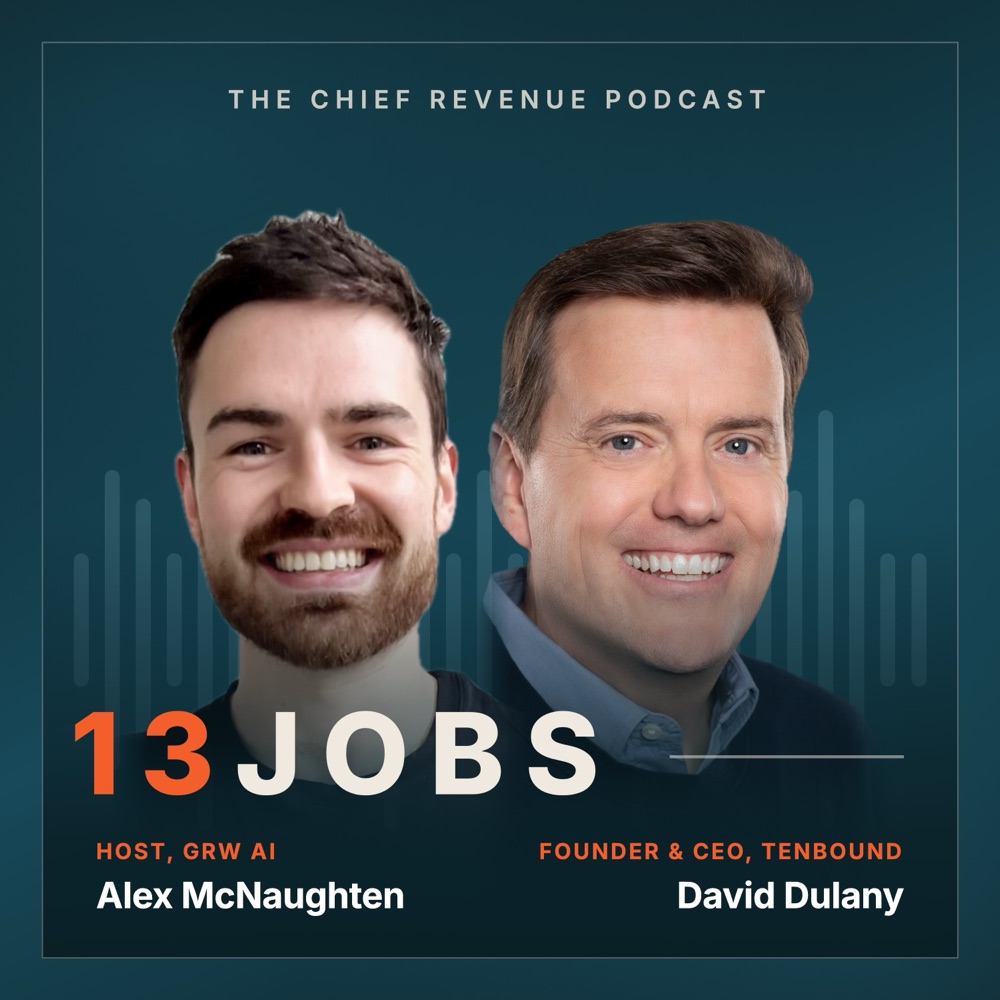
David Dulany · Founder & CEO, Tenbound

David Dulany ran sales development teams at tech companies in Silicon Valley before founding Tenbound five years ago as a research and advisory firm dedicated to sales development. Tenbound has become the hub of the category, with a research centre, a market map, a tool directory, training and consulting, and its own conferences.

He also wrote The Sales Development Framework, which lays out how to start, lead and scale an SDR programme.

In this episode, we discuss:

  • Running SDR teams in Silicon Valley, then founding Tenbound
  • The calendar that tells you it is time to hire
  • When an SDR team is the wrong answer
  • The sweet spot where the model reliably works
  • People, process and the technology stack
  • The minimum stack: data, an engagement platform, a CRM
  • What changes as the company gets more sophisticated
  • Training imparts knowledge; coaching stress tests it
  • Recruiting a team, then standing there reading the scoreboard
  • A playbook starts as a few pages in a document
  • When a new hire says the playbook does not help them
  • The one thing: make it hard to get on the team

Quote of the show

Data is the lifeblood of sales development.
David Dulany, founder, Tenbound

Key takeaways

  • Two signals say hire an SDR. Sellers with empty calendars doing their own prospecting, or inbound leads falling through the cracks because nobody has time for the second touch.
  • Sometimes the answer is no. A relationship-led enterprise motion measured in years, or a self-serve product-led one, both get worse with an SDR inserted into them. Do not adopt the model because everyone else has.
  • Three buckets, in this order. People, covering recruiting through performance management. Process, meaning a playbook, scripts and templates. Then the stack.
  • Table stakes technology is short. A data source, a sales engagement platform and a CRM, plus some way to hear the calls. Without the last one you are coaching blind.
  • Training and coaching are different jobs. Training is the curriculum. Coaching is what happens when that curriculum meets a real call. Many SDRs have no manager doing the second, and some managers have never been shown how.
  • Neither has to be a big programme. An hour a week of training, and asking reps to bring a recording or two of their own emails to look at together. Anyone can run that.
  • The playbook is a living document. Start with a few pages on the industry, the personas, their pains and how the product helps. When a new starter says it is not relevant, that is the instruction to update it, not to shelve it.

Transcript

Alex McNaughten

David, thanks for joining us today. How you doing?

David Dulany

Hey, I'm doing well. I'm so grateful for the opportunity to jump on.

Alex McNaughten

Yeah, thanks for giving up a little bit of your time. So for those of you who don't know or follow David already, David is the founder and CEO of 10bound and he also wrote a book called The Sales Development Framework. So David, tell us a little bit more about yourself.

David Dulany

Yeah, absolutely. So I, you know, earlier in my career had been running sales development teams, SDRs, BDRs, etc. At various tech companies here in Silicon Valley. And about 5 years ago started 10bound as a research and advisory firm that helps companies to, you know, learn, build, and grow their sales development program. So that's what we've been working on.

On the advisory side, you know, we work with the companies to help them with their playbook and with their scripts and systems operations directly with tech companies. And then on the The media side, we run events and conferences focused on the SDR world. So.

Alex McNaughten

Very cool. And today we're going to talk a little bit about setting up SDR teams and how to get the most out of SDR teams because, you know, here in New Zealand, you know, a lot of growth companies over the last couple of years have really been scaling up this part of their business.

So I thought it'd be interesting to talk to you a little bit today about what are the dos and don'ts of setting up an SDR, you know, a successful SDR function. So, you know, let's maybe, let's maybe start with, you know, you're a growth, you know, we imagine growth company hasn't got an SDR team right now, but thinking maybe that's the, maybe that's the right play.

David Dulany

Yeah.

Alex McNaughten

When should you or should you not look at setting up an SDR team?

David Dulany

Yeah, that, that's the key question, right? Because you want to set it up for success right at the beginning. And, and, you know, just looking back as we were coming up through the sales world in the past, salesperson did everything, you know, you were prospecting, you were following up on inbound leads, you were running calls and closing and even taking care of the customers.

And that's really changed with the SDR model. And we just found that by, you know, dividing out the job into separate functions, you could really specialize. So if you think about the sales development function, it's all that front-end hard work that goes into outbound prospecting and following up on all the inbound leads that come in.

And so if we think about that, The one thing, if you're, you know, looking at your sales pipeline, and especially the number of meetings that the salespeople have each week, and there's not enough, and, you know, who does ever have enough of those? But if there's not enough, then one thing is, you know, do we need a dedicated prospector really focused on filling up the salesperson's calendar with qualified appointments.

And, and one way to look at that is, if it's you as the founder, or you have a salesperson, and their calendar doesn't have enough qualified appointments during the week, and they're doing a lot of the prospecting themselves, that could be the inflection point of when to start to think about it. The other thing, or you know, that happens a lot is you're getting inbound leads, you're— you've got inbound leads, they're coming in, there are various qualification levels.

And there's leads falling through the cracks, you just don't have time to get to everything, or you can just touch them once or twice. That could be another opportunity to potentially start an SDR team to really cover those.

Alex McNaughten

Are there any very specific situations where it's not appropriate to have an SDR team? You know, whether it's for a certain kind of product or sales cycle length or— yeah, are there any kind of categories where you'd say, actually, you know what, it makes no sense to have an SDR team? Or does it really apply in pretty much any B2B context that you just described?

David Dulany

Yeah, that's a great question. There definitely are times when it's not appropriate. And when there's a couple of things that I can think of offhand is if it's a relationship-based enterprise sale where it takes years and years of, you know, building up your credibility within the marketplace to just get into a handful of accounts and grow them to be massive, you know, customers.

You know, it's a different type of motion that doesn't really lend itself to this. And then on the flip side of that is if it's a very self-service, you know, high velocity, and, you know, you even have some companies that they call it product-led growth, where it's basically all the steps can be taken without even interacting with the salesperson.

That, that, that might not be appropriate for an SDR to get involved because they might just be, you know, complicating the process unnecessarily. So there's definitely, you know, business to consumer. You know, a lot of times the consumer has a different motion than the business to business sales motion and an SDR, you know, doesn't necessarily lend itself to that model.

In some cases. So yeah, there's a lot about— actually, that's a really good question because, you know, you don't want to just do something because everybody else is doing it. Obviously, it's like it's got to be on a case-by-case basis.

Alex McNaughten

Yeah, exactly. And I know it's a question that a number of founders have asked. So I was curious about your take and that makes total sense in a very, very large enterprise context where there's only a handful of clients. It makes more sense that because of the length of that relationship building period that you wouldn't spread it over multiple people.

David Dulany

So— Exactly. And just, you know, one last quick thing there. There's sort of a sweet spot that you see at least over the last few years with software as a service, business to business where There may or may not be any inbound leads, and the salespeople have a lot of open real estate, you know, on their calendar, you know, going up to the even the enterprise level.

But in that case, you definitely, you want to take a look at if the sales development model would work for you, because there's a lot of case studies and a lot of track record of that size and type of company having success with the model.

Alex McNaughten

Right. Yeah, that's certainly what we're seeing. In terms of, okay, so, you know, Company X has decided they want to set up an SDR function. What are some of the key considerations as they get it going? Like, what do you need to make it a success?

David Dulany

Yeah, so just to, you know, cut to the chase, there's essentially 3 big buckets of, you know, the focus of when you're thinking about a sales development team. There's the people, the processes, and the technology stack. And this is the big 3 of most consulting gigs, you know. You're gonna take a look at whether there's issues or a plan of attack for each part of those.

Those, those 3 big focuses. And so if you think about people, there's the recruiting aspect, there's the onboarding aspect, there's the training aspect, there's the coaching aspect, and then there's the performance management aspect, along with, you know, the, all the other things that go into managing people. There's the process where Do they have a playbook to follow?

Do they know what they're supposed to be talking about? And do they have scripts and templates and all the things that they need to be able to do a good job? And then finally, the technology stack, you know, do— there's sort of table stakes of technology that you need to have in place to make sure that the team is successful.

And Can you afford, you know, a few of those? Are they in place? And then how well are they aligned? So those are the 3 places to start when you start thinking about this.

Alex McNaughten

I'd like to start— actually, we'll start with the last one because I know it's a question we get all the time, which is basic SDR stack in your view. Like, what is— what are the fundamental pillars of tech that you should really have if you want your SDR team to, to get a good ROI?

David Dulany

Yeah, I mean, that's the killer question. So, so we call data is the lifeblood of sales development. So there's got to be some kind of data source. And the better the data source, the more effective the SDRs are going to be, they have to have good contact information. And so that could come from your own database, it can come from multiple vendors, it can, but there has to be some kind of data source.

So that's number one. And then the data has to go into some kind of tracking program so they can keep track. So they call it sales engagement platforms. And there's, there's a number of those that essentially act as, as the communication platform and the prioritization platform for the SDRs to make sure that they're being effective in their communication.

And then behind, behind that, there has to be some kind of customer relationship management software. So that they can be in sync and interacting with the rest of the marketing and the sales team, and that the deals can go into an opportunity object. And then maybe, you know, beyond that, that's sort of the table stakes.

You've gotta have at least data, you've gotta have some kind of sales engagement platform, and you've gotta have a CRM. The other quick thing I would say that is important is some sort of monitoring of their phone calls and their emails and making sure that you're able to get real-time data and coach the team because otherwise you're kind of flying blind.

Yeah.

Alex McNaughten

I'm glad you've broken it out into those areas because I think one of the things that, that we've noticed with New Zealand companies is they often underinvest in the tech. And then what it unfortunately leads to is that the SDR function not being, not being as efficient, not being able to do as much as they should, or spending too much time, for example, building lists, which is not an effective use of, you know, which is not necessarily the most effective usage of their time.

The data ideally should be there or partially there for them so they can actually hit the phones and actually be doing more outreach activity.

David Dulany

Yeah, 100%. And, you know, it really, it kind of depends on the lifecycle of the company that's hiring the SDRs and putting the SDR program in place. Because if it's a brand new company with a founder, you know, and some investment, and they're, they've identified the problem that they need more sales appointments, then they're not going to be able to invest in the most comprehensive sales stack, they're gonna have to just get it down to the bare bones and hopefully hire someone who's entrepreneurial and can make it happen with that.

But then as you go up the level of, you know, sophistication and success and complexity of the company, they should really, really think about how to optimize the tech stack for the SDRs. And even, even, you know, more sophisticated companies have revenue operations teams who literally their whole job is to make sure that we're enabling the SDR so that they don't have to do a lot of grunt work in order to do the job.

Alex McNaughten

And I think one of the other things you talked about is having visibility of what the team is doing so you can coach as well. I think that's a really big one and it's often, it's another gap we often see is that it's hard to coach if you don't have that visibility, you know, if you're not recording calls or using a tool like Gong or something similar.

So you can actually see where are my reps going wrong, you know, what are they doing well and where are they going wrong and do that kind of on-the-job coaching.

David Dulany

It really is. Yeah.

Alex McNaughten

And that kind of brings me to the people side of things. So you split it out. And I noticed you split it out in terms of training and coaching.

David Dulany

Yeah.

Alex McNaughten

Just explain that difference, please, for the listeners.

David Dulany

Yeah, definitely. So training, if you think about training, it's imparting knowledge and it could be a set curriculum that people have so that they can learn the product that you're selling, the objection handling, the sales skills. Etc., where you're sitting down and you're, you know, running a training course so that they have that structured knowledge and they can go and use it.

Coaching is when they're in there using the stuff that they learned in the training on a daily basis and really stress testing the training that they have against real situations. And being able to look at how they have been using the training in those real situations and offering advice and guidance on a daily basis to be able to course correct and be more successful.

And if you think about it, it's just not something that happens a lot with SDRs. It's because a lot of them don't have an actual manager. You know, they're just out on their own. Or the manager is maybe really good at training, but they don't, they don't spend enough time doing the coaching.

They might not even know how, really. So, so it's just really important to be able to focus on both of those.

Alex McNaughten

Certainly what we're seeing as well is that the ongoing education and the ongoing coaching piece is always— and sometimes it's not even I say it's not even sales leaders' fault, but they just are so time poor, you know, and especially in a high-growth environment, they've got a million things. Maybe their team's grown really, really quickly and they don't have the time or they haven't structured their week well enough so they can fit that coaching in.

And that's kind of where we've come in a lot of the time with organizations is wrapping around these education and coaching programs around, you know, SDRs and SDR hires. But exactly how important is it? Like, how important is that on the job coaching piece?

David Dulany

Oh, I mean, it's so critical because a lot of people get into the SDR job as their first job out of university. They're new to the business world, first of all, and then also the industry and the personas that you're calling on. It's really hard to understand what their pain points are and what they're dealing with on a daily basis.

So you're kind of throwing them to the wolves. To some extent, and not to have a structured training program where you're educating them on, you know, those various factors, and then not to have any coaching. You know, I'll take it beyond that. The analogy is, say you have a great sports team and you recruit all these great people, and you just go out on Sundays and stare at the scorecard, you know, or the scoreboard.

And just keep, keep, you know, haranguing people because their score isn't high enough. I mean, that's essentially what we do. So it's not fair really. And it leaves you set up to fail.

Alex McNaughten

Yeah, you're right. And especially with— fly here— especially considering that you're right, so many SDRs are junior, they're, you know, it could be their first ever professional role. And yet sometimes we're just throwing them in the deep end and saying, go make some calls without that support and structure around them. Last question I have, or second last question I have for you is you mentioned playbooks and scripts and so on.

What's kind of the bare minimum? What should be in a playbook? Because this is something we— is often a big gap that we see with growth companies in particular if they don't have this well-defined. What should be in there?

David Dulany

Yeah, big time. And I just want to, you know, go back to one quick thing that you said in the business owners are really busy, the managers are really busy, nobody has enough time to do this. And I don't want to make it sound like training and coaching has to be this, this huge thing.

It's essentially just scheduled at least once a week to do some training with the team. I think everyone's got time for, you know, that. And then as far as coaching, have the SDRs bring you in, you know, some of their— if you can get call recordings or some of their emails responses that they've got, and just have them prepare, bring it to you so that you can take a look and offer, you know, coaching and advice.

So I just wanted to make sure everybody knows anybody can do this. It's not super time-consuming, but they really do benefit from that. And then when it comes to the playbook, it's again, not— it sounds like this big thick binder that you carry around, right? It doesn't have to be like that. It's basically create a Google Doc or a, you Microsoft, you know, Word document, and, and start adding in information about the industry, the, the people that you're calling on, the main pain points that they have, and then how your product can help to solve those.

You know, even if you just start with a few pages to give them that context, you know, that, that's the beginning of a playbook. And, you know, as you, as you move further along, You'll start to get feedback from the market, you'll start to develop the sections. And eventually it becomes, you know, an onboarding document that you can use for the next SDR.

But it's got to start somewhere as a central repository of information. Yeah.

Alex McNaughten

And, and it's an evolving document too. I think sometimes people forget that, that doesn't have to be perfect on day one. It's just have something there and then build it out over time.

David Dulany

So look, definitely. And, you know, what happens sometimes with playbooks is a new, a new person will come in, they'll open it up, they'll go, this, this really isn't, isn't helping. It's not relevant to me. And I would challenge that to say, okay, let's take it back to whoever made it or whoever the manager is and make it relevant.

And make sure that it continues to evolve. It's not just sitting on a shelf somewhere.

Alex McNaughten

Exactly. David, I've just had an eye on the time and I know you've got a hard stop. So I just want to ask you this one last question and then we'll wrap up. Knowing everything you know now today, and then you go back to your first, you know, first ever leadership, sales leadership role where you're looking after a team of SDRs.

What, what's the one thing you wish you'd known then that, you know, now?

David Dulany

Oh boy.

Alex McNaughten

Just one.

David Dulany

I mean, I think, you know, spend more time in the recruiting process and really making sure that you're bringing the right people on the team at the beginning. Make it, make it really hard to get on your team. And, and then if it's not working out and, you know, it's probably too late at that point.

So make a move fast and go back to your recruiting process. Because really, one A-player can make such a remarkable difference on the success, and it becomes your success as the leader versus, you know, settling.

Alex McNaughten

Yeah, I think that's a really good point. We didn't even touch on the actual people side. That, you know, much today. But that's a whole topic in itself. And, and it's why when we're helping companies find SDRs, we are so stringent in the assessment process. We really put them through their paces, use software assessment as part of it as well, because you don't want to make the wrong hire.

Uh, you know, it's better to have a thorough, like you said, make it hard to get on the team. Um, David, it's been a pleasure to have you on today. Um, Where can people find you if they want to connect with you, engage with your content, follow you?

David Dulany

Yeah, absolutely. It's just tenbound.com and I'd recommend jumping on the newsletter because we're always putting out new content and events and definitely want to stay in touch with everybody.

Alex McNaughten

Thanks, David. Appreciate it. Chat to you soon.