All episodes
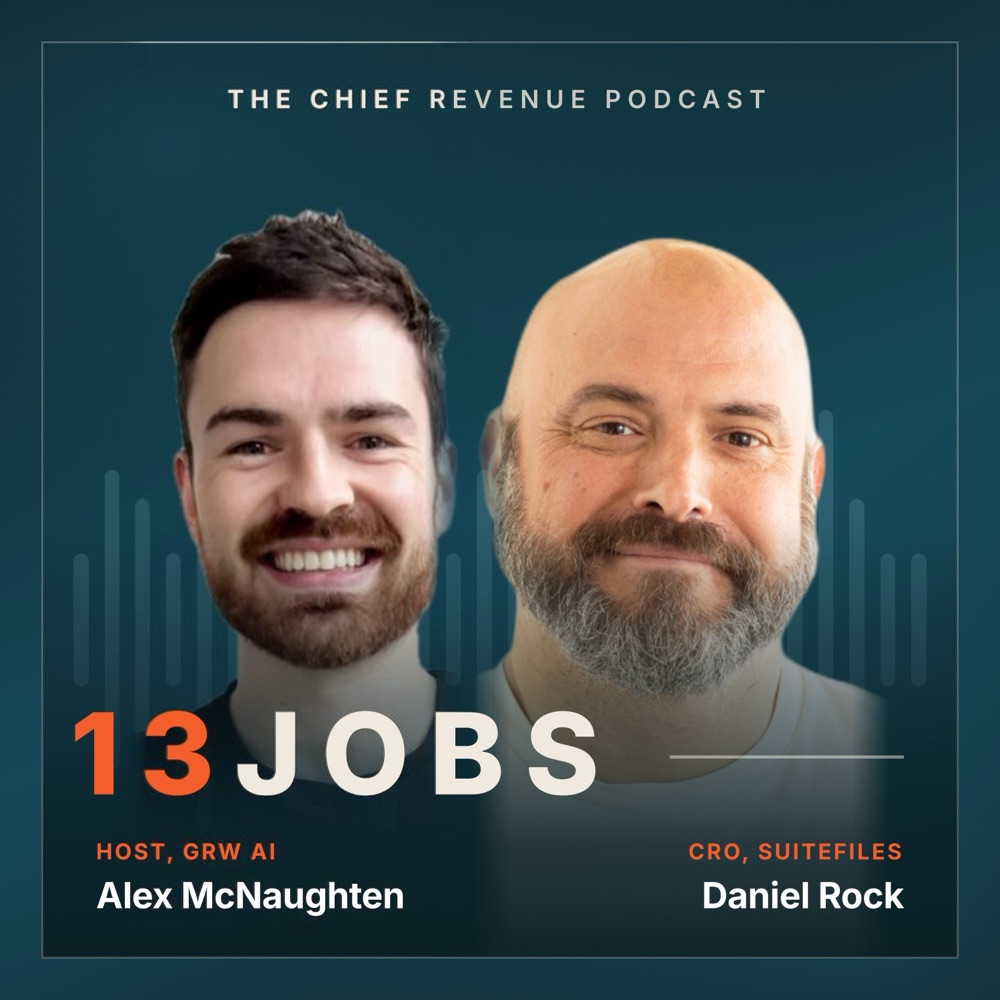
How to Be Human When Selling in the Age of AI with Daniel Rock
Episode 077 · Nov 2, 2026
How to Be Human When
Selling in the Age of AI
0:0028:39

How to Be Human When Selling in the Age of AI

AI has removed the floor from selling, so the only way up is a higher ceiling: curiosity, listening and never accepting the first answer, from a CRO who learned it the hard way with his own team.

Hosted by Alex McNaughten
Share

Daniel Rock · CRO, SuiteFiles

Daniel Rock is Chief Revenue Officer at SuiteFiles, where he still runs a live sales team, and the author of Curiosity: How to Be Human When Selling in the Age of AI, a short book on raising your ceiling as a seller now that AI does the basics. He has been in sales for about 22 years, the last 10 to 15 of them in SaaS, selling across IT, telco, recruitment, tax and software in New Zealand, Australia, the UK and the US.

He came into sales sideways: an IT manager and network admin who rang his telecom account manager out of boredom with the servers and was working at Telecom New Zealand six weeks later, just as it had bought Gen-i and Computerland. He is a heavy AI user and a Grw customer, and a vocal critic of AI slop in outbound. He writes at danielrock.co.

In this episode, we discuss:

  • From IT manager to Telecom New Zealand in six weeks, then 22 years in sales
  • Why write a book in 2026: efficiency versus efficacy, and the same AI email from 16 people
  • The floor is gone: AI does the basics, so the only way up is raising your ceiling
  • Learning the hard way: the rep who could not remember which deal he was working on
  • Efficient but less effective, then paying attention to metrics, pipeline reviews and quality
  • What better looks like: close rates nudging 40% from demo to sale
  • Leading indicators over tail metrics: shrinking demos, reviewing every agreement that goes out
  • How SuiteFiles uses AI: coaching, HubSpot hygiene, workflows and Taylor asking the questions
  • A daily morning deal review for every rep, and sentiment over stage weighting for the forecast
  • One revenue dashboard pulling HubSpot, Grw, Warmly and analytics together
  • How AI changed hiring: self-aware people who use the tools to compensate for their weaknesses
  • Interviewing for thinkers: what did you last learn, and how did you learn it
  • Never accept the first answer: open, probe, confirm, and the need behind the need
  • Buyers arrive better prepared than ever, so get off the checklist and solve the problem
  • When you are not with the decision maker: make your champion look good
  • Why senior people are more honest: less fear, more context
  • Advice to his younger self: listen more, especially now AI takes the notes

Quote of the show

“AI will do the basics for you now. The mediocre has no floor anymore. So the only place you can go to get better is by raising your ceiling.”
Daniel Rock, CRO, SuiteFiles

Key takeaways

  • The floor is gone. Raise your ceiling. Clean CRM, timely follow-ups and tidy admin used to make you a competent seller. AI does all of that now, so mediocre has no floor left to stand on. The only way to get better is the human side: skills, curiosity, presence.
  • Efficiency is not efficacy. The same AI-written email landing from 16 vendors is efficient and useless. It also damages the reputation of sales as a whole. Measure whether the work lands, not how much of it you can push out.
  • Watch for thinking leaking out of the process. Once transcripts, emails and HubSpot flows were automated, one rep could no longer say which deal he was working on. Demos got shorter because nobody was taking notes. Daniel caught it by paying attention to leading metrics and the quality of what went out.
  • Use the notetaker to be more present, not less. Knowing the notes and next steps are captured is a gift. Spend it on eye contact, more questions and more listening, instead of talking more because the safety net is there.
  • Let the AI ask the questions. Every SuiteFiles rep gets a morning review of their deals and gaps and talks it through with Taylor. Daniel gets pipeline sentiment, because sellers are optimists or pessimists and rarely realists, and one dashboard that joins HubSpot, Grw, Warmly and analytics.
  • Hire self-aware thinkers. The person you hire has changed more than the roles you need. Ask what they last learned and how, what rabbit hole they went down, what tools they used. Someone who admits they used Claude to research is being honest, and that is the point.
  • Never accept the first answer. People give the easy, sanitised answer first, and sellers hear a feature to pitch. Ask why, what the impact is, tell me more. Get off the buyer's checklist by finding the need behind the need, and make your champion look good to their boss.

Transcript

Alex McNaughten

Dan, good to have you on the show. How are you doing? So for those who don't know, you are a very experienced sales leader. You've, you know, you've, you've been in sales a long time. You've run sales teams for a long time. Currently, uh, Chief Revenue Officer. But tell us a little bit about your journey, um, how you ended up here and what you're doing now.

Daniel Rock

Sure, will do. Um, so yeah, the gray hairs and the bald head probably give away the length of time I've been doing this. So yeah, I've been in sales, I was working out the other day, about 22 years, I think. Um, but started out as a techie, so very different, not probably not your standard sort of entry into sales.

So started out as an IT manager, network admin, and I rang up my telecom account manager one day and said, hey, I'm kind of bored of the tech stuff. I like the business problems. You know, I've just done it. I've just done a really big, um, sort of tech rollout that we've done from a business perspective rather than the, oh, we just need some new tools at the place I was at.

And I've really enjoyed that aspect of it, not playing with the servers and the desktops and stuff. So I rang up, um, rang her up and said, hey, look, I'm looking at this. Literally started working at Telecom New Zealand 6 weeks later. They just bought back then when it was Gen-I and Computerland.

They'd literally just bought 2 IT companies and didn't really know what to do with it. So the timing was kind of, Serendipitous in a lot of ways. And then I've sort of been doing that ever since. I've been in SaaS now for far too long, um, probably 10, 12, 15 years in SaaS probably.

Um, and just really kind of been doing what I do and trying to constantly learn. And I think that's probably the biggest thing for me is how do I keep learning? How do I keep getting better? You know, how do I help my team get better? So that's kind of my background in sales, I guess.

Alex McNaughten

Awesome. Um, yeah, definitely non-traditional, although to be honest, I don't think there is a traditional path into sales. Like everyone I speak to has had some interesting journey and we've all kind of fallen into it. Um, and you're also writing, well, you've actually written a book, um, very recently, uh, which you shared with me and, and it's, I've just started.

It's great. Um, tell me what prompted you to want to write a book in 2026?

Daniel Rock

Yeah, I think I wrote a LinkedIn post yesterday going, let's pick the most futuristic medium I can, and then now let's just write a book instead.

Alex McNaughten

Um,.

Daniel Rock

I think it's an interesting conversation. I think there's a— how we consume information now is in soundbites, right? It's, it's on TikTok, it's on Instagram, it's in Reels, and we consume everything in, in little sort of digestible chunks. And I think sometimes we lose the ability to to look at the bigger picture.

And look, this isn't a long book, it's 150 pages or whatever it is in terms of paperback size. So it's a short book and probably easy to consume in smaller chapters. But for me it was that, what's the best medium to get down the thoughts that I've got around? And the book's called Curiosity and How to Be Human Selling in the Age of AI, because I think that's one of the things that, and I'm sure we'll talk about this a little bit, but AI is fantastic.

I am an incredibly heavy user of AI. I'm a Very loyal customer of Grw. It's a fantastic product. But I think sometimes when it's used badly, you get into this efficiency versus efficacy debate. You know, what makes us good at using it and what makes us quick at using it. And I think a lot of what we're doing at the moment in the, in the world, and certainly in the world of sales, is anyone's in any kind of leadership role or buying role, um, you'll get deluged with the same email from 16 different people, but it's exactly the same email referencing the exact same LinkedIn posts.

As to, and why that makes you a good fit for their product. Um, and that's a great efficient use of it because we get loads of emails out. Yeah. But it's a terrible efficacy use of it because people don't read it and it's rubbish and it just, it, it kind of tarnishes the reputation of salespeople.

You know, we're not the most, uh, we don't have the best reputation of an industry as it is. And I think a lot of the AI slop that comes out is making that worse. So I wanted to take it from the point of, look, how do we use these fantastic tools and the, this this gift of, you know, the way I describe it in the book is the floor is now so high.

Like, you know, the floor, there's no room to do the floor, right? One of the things as a salespeople used to be able to do is if you did the basics well, like your CRM hygiene, your follow-ups well, you could be a reasonably competent, efficient salespeople by just doing the basics.

Alex McNaughten

Yeah.

Daniel Rock

AI will do the basics for you now. The floor is, the mediocre has no floor anymore. So the only place you can go to get better is by raising your ceiling. And I think that you do that in the humanity side of things, and that's where your skills, your fundamentals, your abilities as a salesperson, that's where you can make the difference and get better now.

And that's kind of the premise of kind of my philosophy and my viewpoint on sales and, and in the book is that how do we get people to be better and raise their ceiling when they've got this gift of being able to start at a level that, you know, when we started, you couldn't start at, you had to do all those basics yourself.

No.

Alex McNaughten

No, exactly. I'm curious because we touched on this just before we started recording, but let's go a bit deeper. Like, how did you come to this realization? Because, you know, this, you know, AI has been around a little while now and, you know, I agree with your framing. Like, it is a gift, but it needs to be used like responsibly.

Otherwise, you know, it can certainly do more harm than good as a salesperson. But like, talk to me around like your journey figuring this out with, you know, your current team, your current org.

Daniel Rock

Yeah, look, I think, yeah, I think at our organization we learned the hard way, right? I think when we first bought in, you know, started building ChatGPTs that would take meeting transcripts and build out emails and build out HubSpot flows and would do all of this, we started to, and I'm not gonna name the salesperson, um, because that would be mean, but we, we, he said, he made me go, I can't remember which deal I'm working on.

You know, before he was using that, the volume was there. But he would, because he was so heavily involved in each deal and he would know what he was doing, he'd be able to rattle off about, you know, when you are, what, where you are at in a deal, what you're talking to, what your stage is at.

And then when you started using these automation tools and streamlining, the deals started to blur together because you, you're kind of, a lot of the thinking has been taken out of you. And that's also the danger with note takers a lot of the time. You know, we used to write down.

Alex McNaughten

Yeah.

Daniel Rock

Note takers, we don't do that. So it doesn't necessarily tick in unless you work on it. So I think one of the things that really our journey was, we got really efficient and it was great. I think our efficacy probably dropped a little. And then we looked at, well, how do we get better at that?

You know, and then we looked at other tools, we looked at Grw, we looked at other things. So how do we actually use these tools to get better? And how do we make us better salespeople, give us more time? And that was it. That was the journey we went on. And that's kind of what inspired me about this thinking is.

Well, you still need to do the sales skills well. The sales skills haven't gone away. What, what your role as a salesperson is different to what it was— I was gonna say 10 years ago— different to what it was 3 years ago. Yeah. You know, where what both the way that you sell, the way your buyers interact with you is very different.

So you've— we had to adapt and you do that by learning, right? You make mistakes, you go, ooh, that's not the quality that I would've expected. That's not, Oh, my close rates might be dropping slightly, or, you know, those sort of things. How do I fix that? What's the root cause? And you do that by paying attention, right?

You pay attention to what your metrics are saying, what your salespeople are saying to you when you're doing pipeline reviews, what your quality is, all of that kind of stuff. And so yeah, learning the hard way is probably the way we did it. It was that, okay, we've got really efficient, but we need to get better at the execution.

And I think we're now, you know, we've had a fantastic start of the year. Or first half of the year. And I think that's because we're learning how to use these tools in the best kind of ways.

Alex McNaughten

Give me— so that's really interesting. Um, and, you know, like, first things first, like, that, like, paying attention piece is very easy to overlook. Um, it's very easy just to get in them, in the motion, and, you know, oh, I'm so efficient, and just keep running. But, um, the fact that you, like, actually notice this stuff starting to slip is really interesting.

And then, like, what you said about that rep who just, like, couldn't tell you what was going on across their deals is fascinating. And I do think that is the danger if you outsource all of your thinking to these AI systems. You mentioned that now you're focusing on improving certain things and doing things well.

Can you give me some examples of what that actually tangibly looks like across your org?

Daniel Rock

Yeah, in metrics, I can do that in terms of revenue, like we're you know, one, our close rates are up as high as they've ever been, if not higher. You know, we're nudging 40% close rates, um, from demos to sale, which is, is fantastic. But I think for us as well, it's things like obviously average deal value has gone up.

Yeah. All of the kind of the telltale sales signs, you know, your cost per demo, all of that stuff, all of those metrics are improving. And they're obviously one of the things that I think businesses will do is they look at that and go, great. But they're actually, they come at the end.

Alex McNaughten

Mm-hmm.

Daniel Rock

Right? Those metrics aren't the ones you see. It's things like, I, you know, I pay a lot of close attention to individual close rates, activity rates, but reviewing the quality of things that are going out, making sure that we understand, you know, every, every, you know, it sounds old-fashioned, but I review every agreement that goes out because Look, honestly, AI writes a lot of the agreement stuff and the proposal stuff, and it should, but they still need to be checked, adjusted, and looked at by a human to make sure it's in the right tone, it's in the right stage.

We're saying, we're not telling the client we can do things that we can't. So it is, it's that paying attention to the details, looking at the leading metrics, not just the tail metrics. So for us, it is that activity rates, it is that Our demos getting really short. You know, one of the things that I noticed early on when we started using some of these tools is our average demo length would go down.

And I was like, well, why is that? And I think it was because we kind of got lazy because we knew the stuff. You got into a routine because they'd stopped taking notes and they'd stopped doing these things that you did previously. So the length for the demo shrunk. Mm-hmm. Um, now that, and perhaps we started talking more again and listening less because again, we weren't taking notes.

So it's actually looking at those sort of indicators around, well, why are those behaviors happening and what do we change to make them get back to being more human, being present? And now actually use it the other way. It's now a gift. We know someone's taking notes. We know what the next steps are going to be coming out of that meeting.

So we can actually be more present. You can hold that eye contact, talk, use it as an opportunity to ask more questions and not go back to the old way. So it is that. You know, making sure you understand how to use the things, not just the way that it's default set up.

Alex McNaughten

How are you using, um, you know, AI across your sales org today? And like, what have been the most transformational use cases that you have?

Daniel Rock

That's a really good question. There's a few things. Um, and we're using it a lot. I went to, I was fortunate enough to go to CRO Summit in Austin. Um, a couple of weeks ago and they were talking about how teams are doing it. And I'm like, yeah, we've been doing that for a year.

And sometimes, you know, like it's, I felt it was really rewarding to feel like that we were ahead of the curve in a lot of ways. And look, obviously we use Grw and we use Grw as a sales coaching tool. We use it as a HubSpot hygiene tool, an automation tool. Um, we use, you know, I've, I think we were, got quite adventurous with some of the workflows that we were doing early on when you first started releasing those.

Um, in terms of what automations can we do, how can we help the team get better? So coaching, automation, efficiency, but also we get Grw to ask, you know, Taylor asks us a lot of questions. Well, what about this? What about that? What about this? And we've got it prompting us to make us think.

And I think that's one of the things is it's really easy to just take the first answer. And I talk about that a lot in sales, you know, accepting the first answer is the worst thing you can do in sales. And it's also something AI will often do. You know, and so it is, ask us the question, do you have this?

I'm preparing this. I need this information. So doing things like that, using it as a sounding board, but also—.

Alex McNaughten

Just stopping you there, Dan. Are you saying that you're kind of like using AI almost as like, it's like doing like deal review for you almost? Like it's kind of like digging in and like getting the rep to actually, um, you know, articulate where they're at in the deal and what they might be missing, et cetera?

Daniel Rock

Yep, yep. So each rep gets a daily morning review going, hey, here's the deals you're working on, here's some gaps, da da da da da. And then they talk to Taylor about what do they need to do, how they need to be better at it. So we do that every morning for each rep.

We also— I also get a review saying, hey, here's what the pipeline looks like, here's the sentiment, you know. So I look— one of the things it does help from a leadership perspective, and this isn't— this is Grw, and I've also got some stuff I use Claude and ChatGPT for in various different forms, but it's looking at sentiment and looking at What's real?

Because back in the day, CRM—it's in a certain stage; it's got a certain weighting. Okay, that's my weight forecast. Da da da.

Alex McNaughten

Yeah.

Daniel Rock

You know, salespeople are either pessimists or optimists; they're very rarely realists. And I think that you know that ability to dig in and go, "Hang on, this is saying this. Is it really?" And then you kind of using AI to dig into that a little bit more rather than just reading email and the ability to do that on scale rather than having to sort of sit there and read a.

Meeting transcript and 20 emails and stuff for each deal each time. But we also, I also use it in a lot of terms of bringing data in from various sources to see what works. You know, one of the things that I've built, um, which is a revenue dashboard, which uses inputs from all of the tools that we use.

So HubSpot, Grw, Warmly, you know, all that Google Analytics, everything that we do, I bring into a single dashboard and then mash up into various forms to see, okay, what marketing campaigns, um, like we've got a couple of initiatives that we're using in terms of like a couple of integrations we've run. Well, how many demos that we've got are those integrations being talked about?

And how many of those will end up being a customer? Now you can capture that data in HubSpot if the rep is good, but even then it's point in time. It's not evolutionary. So for us, it's that ability to really look deeper into what does the deal pipelines look like? Are we hitting the projects that we're working on?

What does the future look like? Are we going to hit targets? Doing some gap analysis. So It's like having a personal assistant, a business analyst, and all of that tied up in one. And it just makes you, as a revenue leader, it just makes life a lot easier.

Alex McNaughten

Has it made you rethink like team structure or hiring and, you know, and like what roles you need versus don't need in the organization?

Daniel Rock

Yes, it has. I think it enables you to scale certain roles that you perhaps would have hired that you might not now because you, the team can be more efficient. I think probably even more than that, it's the type of person that you hire has changed a lot.

Alex McNaughten

Okay. Say more about that.

Daniel Rock

So you need people that are gonna be innovative thinkers who are going to use AI, are gonna use the tools that are gonna make them better. And I think that rather than it just being, hey, I've used this and it helps me write an email, et cetera, it's okay, well, how do you make your day get better?

How do you, What are your weaknesses and how do you use AI to help compensate from those? Because I think that's one of the biggest things that AI can do for us now, you know, is it can help us cover, not cover up our weaknesses, but it can help us compensate for them.

You know, anyone you ask, any of my team, they'll tell me, they'll tell you admin is the thing that I am worst at, right? It just is.

Alex McNaughten

Same.

Daniel Rock

But I can, you know, it just, I'm terrible at it. Um, but Claude's fantastic at that. It can map out my diary for the day. It can bring in stuff from Grw around, hey, here's the deals you need to work on. It can go and look at, you know, hey, I've got a deck that I need to produce each week and these are the data sources it needs to come from.

Okay, produce me the deck each week and then I'll go in and I'll go in and edit it rather than have to do this whole reporting deck each time. Claude does 80%, 90% of the work for me. So it is, it helps with the stuff that you're weak at. And I think when you're looking to hire people, it's people that are self-aware enough to know what they're not good at and be able to find ways to use the tools to make them better at it.

Alex McNaughten

Like, how do you screen for that? Like, you know, interviewing and hiring salespeople is notoriously difficult as it is.

Daniel Rock

Yes.

Alex McNaughten

And then, you know, I feel now we're, you know, looking for quite a specific kind of person, kind of thinker actually. Like we need, like, I think like the level of critical thinking perhaps, and like may have gone up in sales now that we have access to like different technologies and, you know, the game has just changed a bit.

Like, how, how do you identify that?

Daniel Rock

It's not easy. Um, and if I had a magic bullet, I'd bottle it and sell— or magic potion, I'd bottle it and sell it. But, um, there's a few things I do in interviews around salespeople that I've always done, and I think those questions become more important. It's the non-standard questions, right? It's not the tell me about your pipeline, tell me about your activity stuff, which you do have to ask because you have to flesh out the, the rubbish that people pretend to do and have not done.

But for me, it's things I like to ask, things that, you know, what's the last thing you learned and why was it interesting to you? How did you learn about it? You know, so it's those thinking questions. So, you know, tell me about something you researched. What tools did you use to do it?

Why did you do it?

Alex McNaughten

Yeah.

Daniel Rock

You know, so really trying to understand their thought processes, understand the way that they get to an answer. And, and I'd be concerned if someone said, I didn't use Claude or I didn't use ChatGPT to do that because You know, that's, I'm looking for someone that's gonna tell me that they did that because that's honest, right?

And so, yeah, I think that, yeah, anything that, and the other questions along those lines, you know, what's the last book you read? Okay. You didn't read a book. That's fine. What was the last really interesting thing you found out? What, what, what are you, what's the rabbit hole you're gonna go down?

Or you last went down when you started looking at something on Wikipedia, whatever those things might be. I just sort of wanna understand how people think, what their thought processes are, how they consume information, cuz that's gonna tell me a lot about the way they use the.

Alex McNaughten

Yeah. One of the things we've been asking folks in, you know, basically across every role is like, what have you built recently? And whether it's personal or professional, like, what have you been building? And just like that gives you a really great insight into how do they think and, you know, how do they problem solve.

And, you know, we'll try and dig in a few layers there in terms of the process of that and even get them to show us if it's something they can show us. And that's been really helpful because, you know, you kind of want everyone to be a builder at this point. Like you kind of want everyone to be able to go and solve problems.

And, you know, I think that's what this technology has kind of done is it's kind of leveled the playing field. Like you don't need to go to your engineering team every time you need something now. It's like, hey, like have a stab at it first. Like you could probably get 80% of the way there, you know?

Back to your book though, you know, there was some, and I might be getting this slightly wrong, but there was a quote in there, something like, you tattoo never accept the first answer onto every salesperson. If I get that right, like where did that come from?

Daniel Rock

I write about this later in the book for people who, for founders and people who aren't sales. And there's a principle, right? Which is open, probe, and confirm. Effectively. And it's that as salespeople, we are some of the worst people at confirmation bias, recency bias, you know, all of those things, right? We hear what we want to hear.

Alex McNaughten

Yeah.

Daniel Rock

And there is, when I say don't accept the first answer, that doesn't mean you accuse your, that the other person of not telling you the truth. It's—.

Alex McNaughten

Sure.

Daniel Rock

It's that, why? Tell me more about that. What's, why did that happen? What's the impact of that? You know, can you expand on that please? Because most people will give you the easy answer to start off with when you ask them a question, especially if it's one that makes them feel uncomfortable, or you're trying to dig into a business problem, you're trying to sort of work out why something's not working for somebody.

Quite often they'll give you, and it's not likely to be deliberate, but a sanitized answer.

Alex McNaughten

Yeah.

Daniel Rock

You know, or an answer that's easy for them to justify in their mind, or Just something that they don't have to explain too much of. They're not gonna spend 20 minutes telling you about the problem. They're gonna spend 30 seconds going, well, this is what my problem is. And you shouldn't accept that as the gospel truth, cuz what will happen for most salespeople, they'll hear that and go, I've got a feature that fixes that.

And they'll jump in and tell you about the feature that fixes the problem, the small problem they've got. And what they haven't done, and back in really old sales parlance, and I don't think I use this in the book, thankfully, is that, oh, that, you know, the need behind the need. Yeah. I need this.

Well, actually what they need is this problem to be solved and this is the symptom or the cure for what the symptom is that they think it is, but it's actually not what the business need is. And that's what I mean by never accept the first answer. It's really, really easy, especially now when people are doing demos and discovery on the same call.

You know, it's, we're condensing the sales process. Our buyers come in a million times better prepared than they ever have been. Yeah. Because, you know, they have the same AI tools we do. So they come in, they know who we are, they know what we do. They think they know the greatest fit for us because, you know, ChatGPT or Claude or Gemini or Perplexity has said, right, here's the 5 systems that you should go and look at and here's their strengths and weaknesses.

Yeah. So if you just kind of reiterate that, you're not gonna find out anything about that that's gonna allow you to get off of a checklist.

Alex McNaughten

Yeah.

Daniel Rock

Because buyers will often have a mental checklist. Do you do this? Do you do that? Do you do this? Yes. Great. Okay, fine. You need to get off the checklist and you only do that by understanding what the problem is and being a problem solver. And I talk a lot about that in the book.

The whole point of being in sales is to solve problems, is to help people and solve problems. Because otherwise, what's the point? You know, customers aren't going to be happy. You're not going to fulfill a need and you're not going to know what the problem is you're trying to solve, or you're not going to know how to help them unless you go beyond that first question and that first answer.

Alex McNaughten

Yeah. And I think like where a lot of people, um, stop is they might get to like the business problem, but they don't go beyond that into like, okay, well, how does this impact this individual or the individuals that I'm talking to? Like, how do they relate to this? What do they care?

What are their personal kind of problems or goals or things that they care about? Um, and I think if you can connect the two, then you're, you know, your win rate's going to go way, way, way, way up. Yeah.

Daniel Rock

Yeah. It's a, it's a really interesting one and it's a really important one when you're not necessarily selling to the commercial buyer or the financial buyer, which is, you know, quite often people you know, we'd love to be in a room with the ultimate decision makers all the time, but often you're not, right?

And if you're not, one, you first of all, you've got to find a way to get to that person, which is a big part of it. But it's also, well, if you're not, how do I make this person look good in front of their boss?

Alex McNaughten

Yep.

Daniel Rock

Right. How do I make this person seem awesome and that they've brought the best thing in the world and it's going to— and you do that by understanding what they need. What does that person need? And what does that person, how am I gonna make that person's day better every day?

Alex McNaughten

Yeah.

Daniel Rock

You know what?

Alex McNaughten

Yeah.

Daniel Rock

What's this per— how am I gonna make this person enjoy their job? And if they do that, they are gonna be your biggest advocate in the world and help you to get the decision maker. If you just address the business need, which, you know, a lot of time that person may not really care that much about because their business need is not what impacts their day-to-day.

And in fact, sometimes the software they might be trying to buy, for instance, might make their day-to-day worse, even though it makes the the, uh, the business need better.

Alex McNaughten

Yeah.

Daniel Rock

How do I make that person my advocate? And I do that by understanding what their specific needs and emotions and pain is that I can make better.

Alex McNaughten

I'm curious if you've observed, um, this too, is that the further up the chain and organization you go, often the more honest people are and the less, um, less you have to work to kind of get the real truth. Like, this is something I've always noticed is like when I speak to like the CRO, of an organization, even large organizations, very honest.

They'll kind of in 15 minutes be like, here's the situation. Because they almost get to a point where they're like, okay, I've got 15 minutes. I want to figure out whether it's even worth investing another 5 to 10 minutes in this conversation or not. So they'll come just give you the whole thing.

I'm curious if you see that as well. And, you know, or if you see different.

Daniel Rock

I think you do. And I think there's 2 reasons. One is the higher up an organization, the more— the less fear of saying something wrong people have, right? They're not— they don't feel like they're gonna, you know, you take fear out of the equation, so they're not gonna worry that they've said something they shouldn't, right?

Because,.

Alex McNaughten

You.

Daniel Rock

Know, it is— there's that. I think partly also is they have more information, you know, and I think, you know, the, the higher up or the more context people have, the more they can share. You know, if people lower down in the organization or who are, who don't have as much access to information, they can only share what they know and they may not have the full picture around everything that's going on.

They know their part of it and they can share their part of it, but they can't share everything. Um, so there's a mixture of those 2.

Alex McNaughten

That tracks. I hadn't thought of it that way. Um, especially the less fear of saying the wrong thing, which now that you've said it out loud makes Makes a ton of sense. I've got one more question for you, Dan. This has been a great conversation. We've covered a number of different topic areas and there's gold in there for listeners.

Knowing everything you know now, go back to first day on the job in sales. What's the one piece of advice you'd give your younger self?

Daniel Rock

Oh, that's a really good question. It's the same piece of advice I give to any young salesperson, which is you just listen more. Listen more always. And that isn't— listen more and consume more, I think, are the two things. So it's listen more to your customers, to the prospects you're selling to, to the people who've done this a while.

Just, you know, an old coach of mine or an old sales manager said, you've got two ears and one mouth, which means you should listen twice as much as you talk.

Alex McNaughten

Yeah.

Daniel Rock

And I think that to me, it's a cliché. It's a huge cliché, but it's very true. You know, you should be listening more than you talk as much as you can. So yeah, probably that piece I think is that. And I think in an age where AI takes notes and drafts the follow-up emails, that becomes even more crucial because it's so much easier to not listen now because there's a safety net and it's so much easier to go, oh, AI will catch that.

And I think that it's so much more important to listen now than it ever has been.

Alex McNaughten

This has been a great convo, Dan. I appreciate you coming on. Where can people find you if they want to connect with you, as well as when your book's coming out? Like, where's the best place to kind of follow along?

Daniel Rock

Sure. So they can email me, dan@rockingood.com, D-A-N at R-O-C-K-I-N good dot com. Or if they want to find out about the book, which is called Curiosity: How to Be a Human When Selling in the Age of AI, they can just go to danielrock.co. So D-A-N-I-E-L rock, R-O-C-K dot co. It's got in there, you can click a link and I'll send you an email when it comes out with a link as to where you can find it and all of those sort of things.

So yeah, you can find that on there. Um, yeah, email me or LinkedIn. People can add me on LinkedIn. That's a pretty standard place that people get hold of me these days.

Alex McNaughten

Awesome. Thank you so much for coming on the show, man. It's been awesome. And, uh, we'll catch you soon.

Daniel Rock

Cheers, it's much appreciated. Thank you.